
Personal Finance
A 3d rendering of hamburger and white cube blocks with words "BUY PAY NOW LATER"
Sherwood News

More Americans are using BNPL to buy groceries

“Funding secured” for food doesn’t sound great.

Hyunsoo Rim

More Americans are leaning on “buy now, pay later” (BNPL) services to cover groceries and meals, according to financial services firm LendingTree.

In an April survey of 2,000 US consumers, nearly half said they’ve used BNPL at least once, with 22% having used it six or more times. They’re also falling behind more often: 41% have made a late BNPL payment in the past year — up from 34% in 2024 — while 60% said they’ve juggled multiple BNPL loans at once.

But what’s most telling is how this once optional tool for splurges is now creeping into everyday essentials.

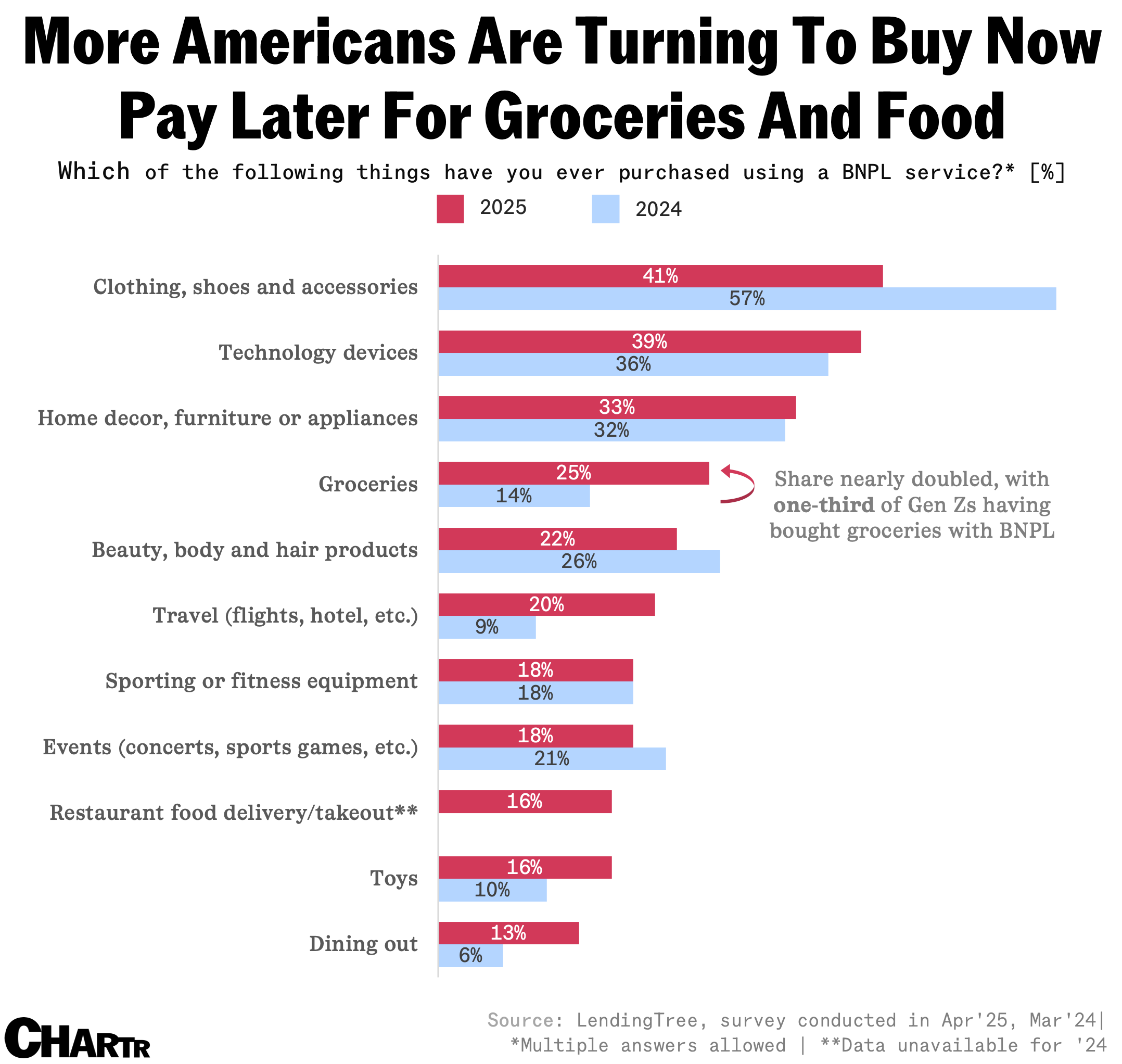
While the top three BNPL purchases — apparel and accessories, tech devices, and home furnishings — remained unchanged from last year, essentials are quickly climbing the list: 25% of consumers are now buying groceries through BNPL, up sharply from 14% a year ago.
BNPL final
Sherwood News

And it’s not just groceries. Nearly one in six shoppers are using BNPL for food delivery and takeout, with companies already responding to the trend. DoorDash announced last month it will partner with leading BNPL firm Klarna to offer installment payments at checkout. 

Behind this surge in BNPL usage lies a sharp rise in food costs.

There’s been the much-discussed “eggflation,” but more expensive omelettes are just a starter. According to data from the Bureau of Labor Statistics, food prices in the US rose 24% from 2020 to 2024, outpacing the overall inflation rate of 21%, with 2022 marking the sharpest one-year jump since 1979. There’s still little sign of relief: in its latest outlook, the USDA projected food prices would continue rising “slightly faster” than the historical average growth rate in 2025.

More Personal Finance

See all Personal Finance
personal-finance

Ahead of Mother’s Day, Google searches for “same day flower delivery” have ticked up a little earlier this year

If you’ve already made plans for a Mother’s Day gift in advance of this Sunday, congratulations. But if alarm bells are suddenly ringing, consider this a gentle reminder that, like a sizable share of the US population this time of year often does, you can still scrape together some last-minute flowers for the woman who carried you for nine months.

Data from Google Trends reveals that searches for “same day flower delivery” spike in the US in May every year, when Mother’s Day takes place. As we noted last February, the same query also gains traction around Valentine’s Day.

Flower
Sherwood News

This year, however, it appears that searches for last-minute flowers have remained elevated in the last two months after the usual peak in February — with the search interest this April actually exceeding that seen around Cupid’s Day.

Honestly, we’re not sure why searches are spiking a little early. One explanation might be that Passover and Easter have overlapped at the start of April, and Americans wanted to celebrate with some flowers. Maybe it’s a host of Claude bots that are now running errands for AI-obsessed execs — or perhaps Americans are just impulse-buying some seasonal spring blooms after an unusually warm March, without a particular occasion.

Graduate holding scroll and wearing robe, standing with parents

Which US cities give new grads the best shot in 2026?

The ideal place to start a career might be less about prestige and more about where the paycheck stretches furthest.

Latest Stories

Sherwood Media, LLC and Chartr Limited produce fresh and unique perspectives on topical financial news and are fully owned subsidiaries of Robinhood Markets, Inc., and any views expressed here do not necessarily reflect the views of any other Robinhood affiliate, including Robinhood Markets, Inc., Robinhood Financial LLC, Robinhood Securities, LLC, Robinhood Crypto, LLC, Robinhood Money, LLC, Robinhood U.K. Ltd, Robinhood Derivatives, LLC, Robinhood Gold, LLC, Robinhood Asset Management, LLC, Robinhood Credit, Inc., Robinhood Ventures DE, LLC and, where applicable, its managed investment vehicles.