
Power
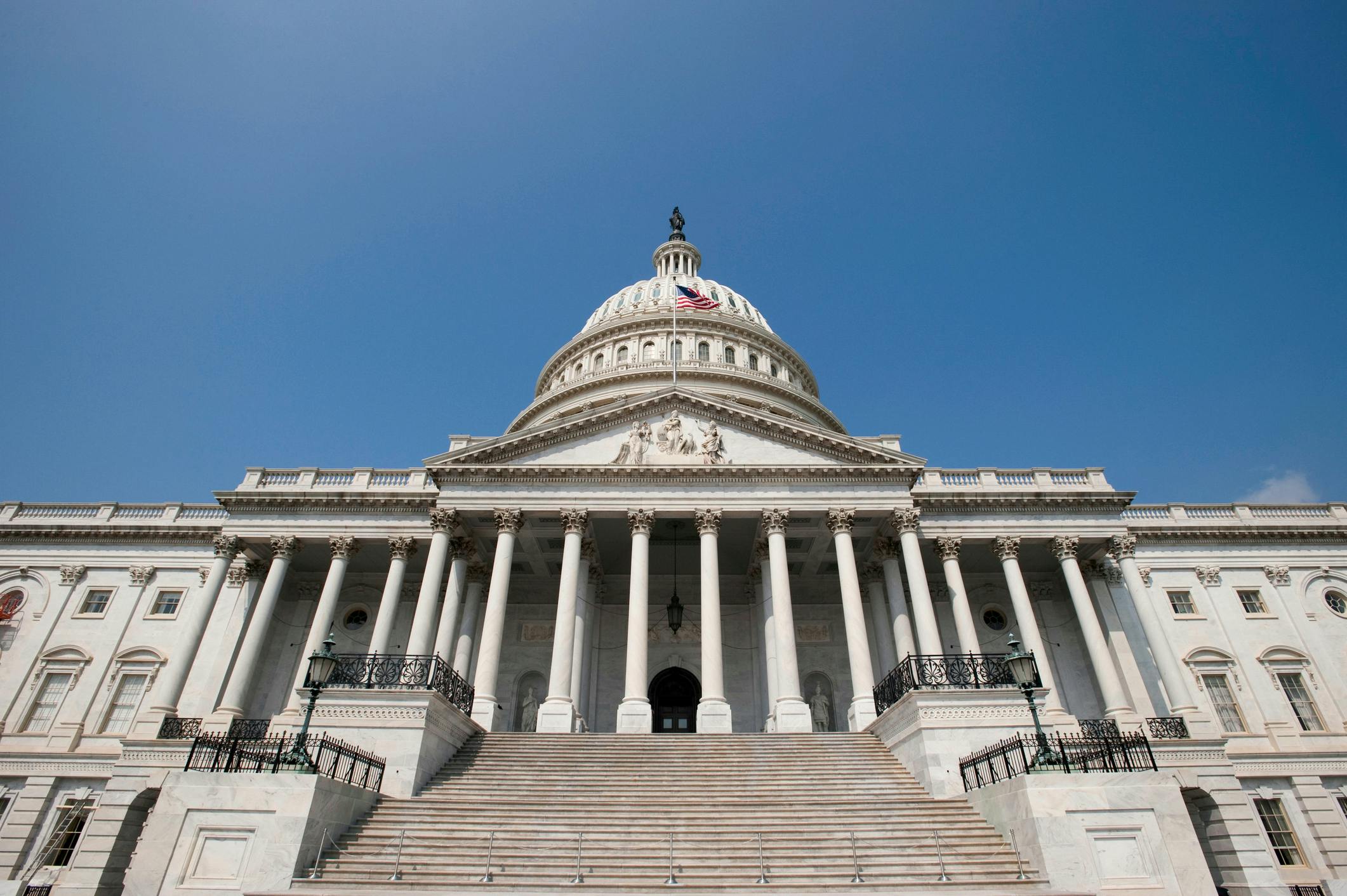
Looking up at the US Capital
East steps of the US Capitol from the ground

Congress votes to end shutdown

The over 40-day government shutdown came to an end without a guarantee that the ACA tax credits will be extended.

The House of Representatives passed a spending bill on Wednesday, which has already cleared the Senate, and once signed into law by President Trump, will end the longest government shutdown in US history.

The bill passed with a 222-209 vote, with six Democrats voting with Republicans. The bill is expected to be signed into law by Trump late Wednesday evening.

The bill funds most federal agencies through January and promises Democrats a separate vote on extending the ACA tax credits in December.

The bill does not include an extension of the Biden-era enhanced Affordable Care Act tax credits, a central sticking point for Democrats after weeks of stalemate that left thousands federal workers without pay, disrupted air travel, and threatened to cut off families from food benefits.

The ACA tax credits, which subsidize health insurance plans provided by private insurers, were part of a 2021 COVID-19 relief package passed by a Democratic-controlled Congress. The subsidies, which are set to expire on December 31, led to a boom in ACA enrollment. Keeping the subsidies would increase the deficit by $350 billion, according to the nonpartisan Congressional Budget Office.

An analysis by Wakely, a healthcare market research firm, projected that Marketplace enrollment would decline by more than half in 2026 if the subsidies arent extended. The biggest providers of ACA Marketplace plans like UnitedHealthcare, Elevance Health, Oscar Health, Molina Healthcare, and Centene fell on the news.

Without the ACA tax credits, significantly fewer people will be eligible for help paying for their plan, just as premiums are expected to rise amid soaring healthcare costs. Executives from Molina and Oscar have said that the end of the ACA subsidies will likely result in fewer healthy people purchasing plans, leaving a smaller group of sicker members, making coverage more expensive to provide.

Molina said it plans to increase rates on Marketplace plans by an average of 30%. Overall, ACA Marketplace premium payments are expected to double next year, according to an estimate from KFF.

Centene CEO Sarah London told analysts in an October 29 earnings call that the company is expecting a year-end utilization push as its members stare down potentially the wholesale loss of affordable healthcare coverage next year.

More Power

See all Power
power

New York legislature passes 1-year data center moratorium

The New York state legislature has passed a one-year ban on large data centers in the state.

The bill now heads to Gov. Kathy Hochul’s desk, where it faces an uncertain fate. If Hochul signs the bill, it would become the first such statewide ban to succeed in becoming law.

That’s far from certain, as Hochul has opposed state-level legislation over data centers. In May, Hochul said, “This is a local decision for municipalities, its land use, which is the purview of local governments. It’s not a statewide approach necessarily, but its something Im looking at intensely.”

In April, Maine Gov. Janet Mills vetoed a similar statewide moratorium on data centers.

Opposition to data centers is growing rapidly across the US. A federal data center moratorium bill was introduced in March, and at least 14 states have proposed pauses on data center construction, according to the National Conference of State Legislatures.

That’s far from certain, as Hochul has opposed state-level legislation over data centers. In May, Hochul said, “This is a local decision for municipalities, its land use, which is the purview of local governments. It’s not a statewide approach necessarily, but its something Im looking at intensely.”

In April, Maine Gov. Janet Mills vetoed a similar statewide moratorium on data centers.

Opposition to data centers is growing rapidly across the US. A federal data center moratorium bill was introduced in March, and at least 14 states have proposed pauses on data center construction, according to the National Conference of State Legislatures.

EU Commission Vice-President Virkkunen and Commissioner Jorgensen hold press conference

EU proposes “tech sovereignty package” to bolster domestic AI and chip industries

Europe is hastening its breakup with US tech as the Trump administration’s grip on American tech companies tightens.

power

White House releases watered-down executive order on AI

The White House released a weakened executive order on AI on Tuesday, a little more than a week after killing a previous version of the order after what was reportedly intense, direct lobbying of the Oval Office by tech executives.

The order’s most significant change to what was reported in late May is a shortened window of voluntary government review of new models from 90 days to 30 days.

After Anthropic’s Mythos model spooked companies and governments around the world, the White House was reportedly ready to respond with an executive order that would have given the government access to unreleased frontier models for up to 90 days before public release, to ensure safety.

Top AI companies were briefed on the proposed executive order, and a White House event with an extensive roster of tech executives was ready to go, but it was killed at the last minute, according to reports. Axios reported that last-minute lobbying by former White House AI and Crypto Czar David Sacks, along with other tech executives, helped convince President Trump to kill the order. Trump told reporters, “I didn’t like certain aspects of it. I postponed it.”

The now finalized order calls for the creation of an “AI cybersecurity clearinghouse” in concert with the AI industry, and directs national security agencies to develop and maintain a “classified benchmarking process” to review the capabilities of new frontier models.

After Anthropic’s Mythos model spooked companies and governments around the world, the White House was reportedly ready to respond with an executive order that would have given the government access to unreleased frontier models for up to 90 days before public release, to ensure safety.

Top AI companies were briefed on the proposed executive order, and a White House event with an extensive roster of tech executives was ready to go, but it was killed at the last minute, according to reports. Axios reported that last-minute lobbying by former White House AI and Crypto Czar David Sacks, along with other tech executives, helped convince President Trump to kill the order. Trump told reporters, “I didn’t like certain aspects of it. I postponed it.”

The now finalized order calls for the creation of an “AI cybersecurity clearinghouse” in concert with the AI industry, and directs national security agencies to develop and maintain a “classified benchmarking process” to review the capabilities of new frontier models.

power

Sen. Bernie Sanders: US government should own half of big AI companies in an “American AI Sovereign Wealth Fund”

Anti-AI sentiment appears to be on the rise — commencement speakers being booed at the mention of AI, local officials losing their jobs over support for data center deals, and public polling showing a continued unease surrounding AI use.

Senator Bernie Sanders (I-Vt.) knows how to read the room.

In an op-ed in The New York Times today, Sanders makes the case that today’s leading AI models were built using public works without permission or compensation:

“When a public resource generates wealth, the public should share in that wealth. A.I. is being built on a public resource far more valuable than oil: the accumulated knowledge, creativity and labor of mankind.”

Sanders plans on introducing legislation to create the “American AI Sovereign Wealth Fund.” This unusual proposal would issue a one-time tax of 50% of the big AI companies — such as OpenAI and Anthropic — paid to the US government in the form of stock. The fund would provide direct payments to Americans as it grows, much like Alaska’s “permanent fund,” which issues checks to its residents from 25% of all oil and mineral leases and sales.

While the idea of just handing over half of OpenAI or Anthropic to Uncle Sam sounds crazy, Sanders points out that AI leaders have been suggesting similar ideas recently as a potential solution to massive labor shifts caused by AI that could eliminate whole categories of jobs.

Additionally, President Trump has already signed an executive order to create a plan for a sovereign wealth fund. Trump has also been keen on the US getting a piece of the action, directing the US government to take public stakes in Intel, MP Materials, Lithium Americas, and Trilogy Metals.

Sanders also argues the public’s large stakes in these companies would give American taxpayers a seat at the table to “block decisions that hurt our citizens and to push for policies that help them.”

In an op-ed in The New York Times today, Sanders makes the case that today’s leading AI models were built using public works without permission or compensation:

“When a public resource generates wealth, the public should share in that wealth. A.I. is being built on a public resource far more valuable than oil: the accumulated knowledge, creativity and labor of mankind.”

Sanders plans on introducing legislation to create the “American AI Sovereign Wealth Fund.” This unusual proposal would issue a one-time tax of 50% of the big AI companies — such as OpenAI and Anthropic — paid to the US government in the form of stock. The fund would provide direct payments to Americans as it grows, much like Alaska’s “permanent fund,” which issues checks to its residents from 25% of all oil and mineral leases and sales.

While the idea of just handing over half of OpenAI or Anthropic to Uncle Sam sounds crazy, Sanders points out that AI leaders have been suggesting similar ideas recently as a potential solution to massive labor shifts caused by AI that could eliminate whole categories of jobs.

Additionally, President Trump has already signed an executive order to create a plan for a sovereign wealth fund. Trump has also been keen on the US getting a piece of the action, directing the US government to take public stakes in Intel, MP Materials, Lithium Americas, and Trilogy Metals.

Sanders also argues the public’s large stakes in these companies would give American taxpayers a seat at the table to “block decisions that hurt our citizens and to push for policies that help them.”

power

US regulators reportedly appear likely to approve Paramount’s Warner Bros. acquisition

US antitrust regulators appear to be leaning toward approval of Paramount’s $110 billion acquisition of rival Warner Bros. Discovery, according to a Semafor report.

The DOJ’s apparent positive analysis of the Hollywood megamerger follows a Tuesday meeting between Paramount CEO David Ellison and DOJ staffers including acting antitrust chief Omeed Assefi.

Per Semafor, that meeting included a significant number of questions about the would-be streaming giant’s theatrical release priorities. Ellison has pledged to release a “minimum” of 30 films for theaters between Paramount and WBD upon completion of the merger, and to maintain a 45-day theatrical window for films, followed by a three-month SVOD (digital rent or purchase) period before they land on Paramount+.

The DOJ has not yet approved the merger, and the agency’s current apparent analysis could shift.

It’s unclear what other topics were discussed at Tuesday’s meeting. Hollywood insiders critical of a Warner Bros. acquisition have also highlighted that any merger decreasing the number of content buyers would squeeze an already depressed entertainment labor market.

Per Semafor, that meeting included a significant number of questions about the would-be streaming giant’s theatrical release priorities. Ellison has pledged to release a “minimum” of 30 films for theaters between Paramount and WBD upon completion of the merger, and to maintain a 45-day theatrical window for films, followed by a three-month SVOD (digital rent or purchase) period before they land on Paramount+.

The DOJ has not yet approved the merger, and the agency’s current apparent analysis could shift.

It’s unclear what other topics were discussed at Tuesday’s meeting. Hollywood insiders critical of a Warner Bros. acquisition have also highlighted that any merger decreasing the number of content buyers would squeeze an already depressed entertainment labor market.

Latest Stories

Sherwood Media, LLC and Chartr Limited produce fresh and unique perspectives on topical financial news and are fully owned subsidiaries of Robinhood Markets, Inc., and any views expressed here do not necessarily reflect the views of any other Robinhood affiliate, including Robinhood Markets, Inc., Robinhood Financial LLC, Robinhood Securities, LLC, Robinhood Crypto, LLC, Robinhood Money, LLC, Robinhood U.K. Ltd, Robinhood Derivatives, LLC, Robinhood Gold, LLC, Robinhood Asset Management, LLC, Robinhood Credit, Inc., Robinhood Ventures DE, LLC and, where applicable, its managed investment vehicles.