

DATA DRIVE

Amazon sensors will track every tackle at Super Bowl LIX
AWS’s head of sports spoke with Sherwood News about how football may no longer be about who hits the hardest, but who crunches the best numbers.
On Sunday, millions of fans will tune in to watch the Kansas City Chiefs and the Philadelphia Eagles compete for the Super Bowl championship in New Orleans. The action on the field will draw the most attention, but an invisible force is shaping how the game is played.
Amazon Web Services, the NFL’s data partner since 2017, tracks every player’s movement using sensors embedded in their shoulder pads — not to mention one in the football itself. The league collects millions of data points per game and uses artificial intelligence to analyze movement patterns, assess injury risks, and suggest rule changes meant to improve player safety.
Two major rule changes for the 2024 season came directly from AWS’s findings. First, the new “Dynamic Kickoff” formation was implemented to limit the high-speed sprints and violent collisions that often defined the opening play. Meanwhile, the hip-drop tackle ban, unanimously approved by team owners, ended a tackling technique that cloud computing found increased the risk of lower-body injuries. Super Bowl LIX will be the first where the refs enforce those new rules.
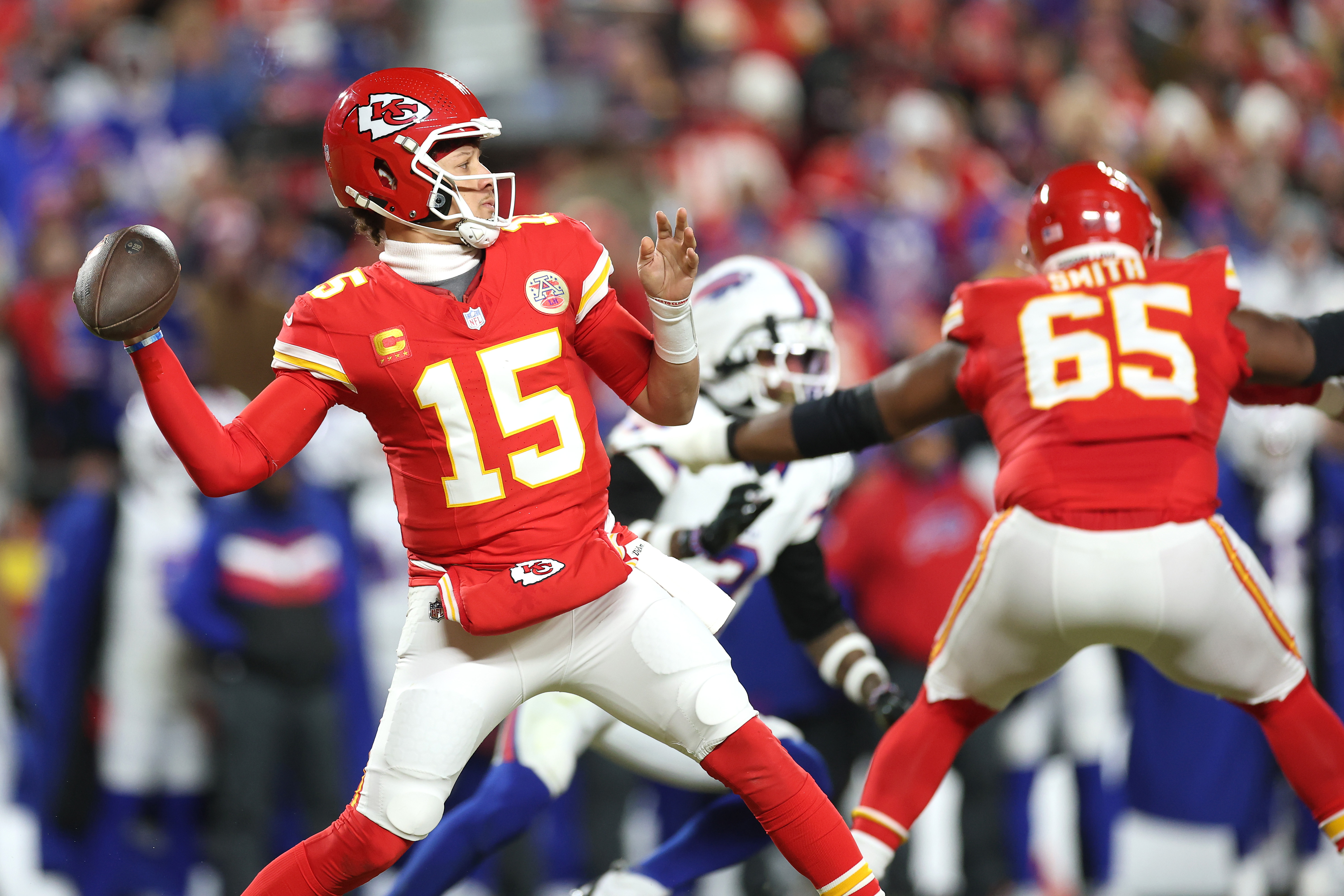
The NFL has long been a modern-day Colosseum, where athletes collide at full speed, pushing through blood, sweat, and agony in pursuit of victory like gladiators in pads and helmets. But the game is changing. Machine learning now plays an invisible yet decisive role in shaping the battlefield. It’s like there’s an invisible referee on the field, one the players can’t see, hear, or argue with. The spectacle remains, but the terms have shifted. As Maximus Decimus Meridius once roared to the Roman crowd — “Are you not entertained?” — football fans will continue to show up for the fun, but the impersonal calculations of machine learning now regulate the sport’s most bone-rattling performances.
Julie Souza, AWS’s global head of sports, said that over 500 million data points per season fuel the NFL’s analytics system, Next Gen Stats. That same volume of data every week informs Digital Athlete, the program that helps predict injuries and guide safety decisions.
“The hip-drop tackle was causing injuries at 20x the rate of a normal pass or run play,” Souza said. “The fact that we could identify that and prove it helped change the rules.”
AWS sensors collect a mix of data, tracking everything from player positioning to skeletal posture using latitude and longitude coordinates. Souza said the system can determine how a player fell when tackled, whether their limbs were in bounds, and which injuries they’d be most likely to sustain in certain scenarios.
“Why wouldn’t we take that data and use it to make the game safer?” she asked. “Everybody wants that. Fans want their favorite players on the field, the team owners want the players on the field, and the players themselves want to be on the field.”
Safety in numbers
Kickoff returns became less common during NFL games after 2010 rules allowed players to more frequently opt for a touchback, a play where the receiver kneels after catching the ball and the offense automatically picks up play at the 25-yard line.
By 2023, three-quarters of all kickoffs resulted in touchbacks, compared to earlier years when the majority of kickoffs were returned the way original rules intended: with edge-of-your-seat sprints toward the opposite end zone, blurs of speed, and sharp, bobbing cuts.
However exciting these old-school kickoff returns once were, they harmed players. “Kickoffs always had 4x the concussion rate — twice that of a standard run or pass play,” Souza explained.
Fans question Amazon’s motives
The NFL says this technology makes the game safer. I needed unbiased experts, so I went to my neighborhood dive bar in Manhattan to ask fans what they thought. At the utterance of the word “Amazon,” skepticism flowed as freely as the $7 canned espresso martini I tried despite my better judgement. (It actually wasn’t bad.)
My new friend Joe, a self-proclaimed “really drunk guy” who sipped bubbly from a Champagne flute with one hand and high-fived Eagles fans with the other, had a theory.
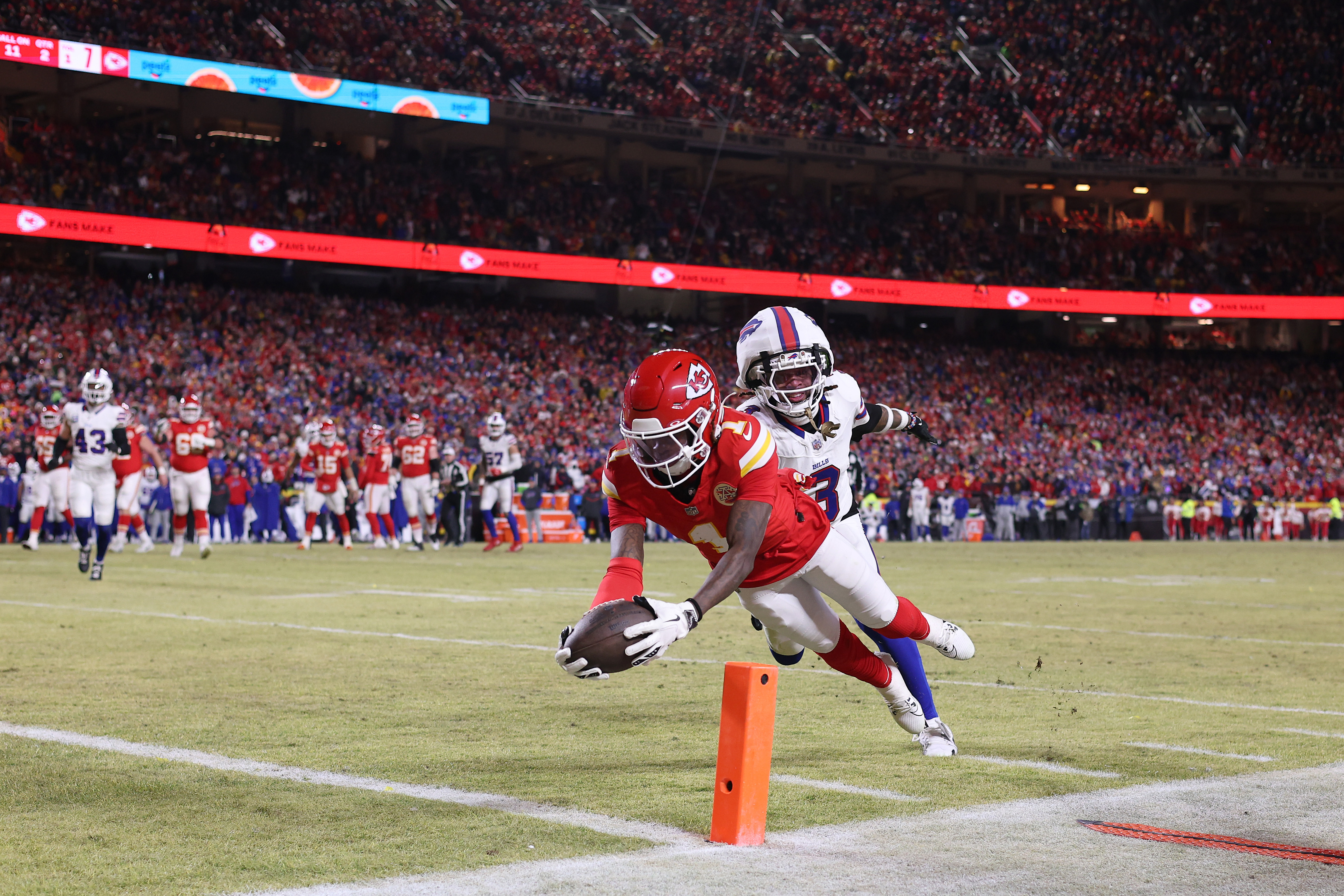
Joe didn’t buy the safety argument. “The league spends too much money on these guys to let them get broken,” he said. “The teams are just protecting their assets.”
Joe also thought AWS wouldn’t get involved unless there was money to be made. He argued that tracking players’ stats more closely probably helps Amazon predict which ones are on a hot streak so they can sell more merchandise.
“You can use data for anything,” Souza said when asked about the theories. “If a team is on a winning streak, you can use that to push merchandise, sure.” She added that the league has its own merchandising partner, Fanatics. But the NFL has been strategically pushing merch for years, often with waste from losing teams being donated overseas when it can’t be sold.
More notable than merch, Amazon has gained an 11% bump in Prime Video viewers thanks to its partnership with the NFL. The deal happened back in 2021, when parties agreed to a $100 billion media rights agreement naming Amazon the exclusive home of Thursday Night Football through 2033. Last year, Prime Video football coverage averaged 13.2 million viewers, about 1.3 million more than in 2023.
Next to me, a woman named Callie scrolled through her FanDuel bets. She was exasperated, as the app was down after the previous game’s delay. Upon my prodding, friends Ryan and Jay on nearby barstools reminisced about some of the NFL’s greatest kickoff returners in history. Their nostalgia made me look up players like Travis Williams, who set the single-season kick return record in 1967 with an average of 41.1 yards per return, or Chicago Bears halfback Gale Sayers, who holds the all-time career kickoff return record at 30.56 yards per return. Or Dante Hall, nicknamed “The Human Joystick” for his ability to weave through and break from defenders.
With the NFL’s new Dynamic Kickoff formation positioning return teams just 25 yards away from the kicker, could the era of hall-of-fame returners be fading?
The league says no. In fact, NFL data shows the opposite, with a 57% increase in returns for the 2024 season after implementing Dynamic Kickoff. It also says a total of seven kickoffs were returned for touchdowns this season — the most since 2021.
And, most importantly, Souza says the injury rate is down.
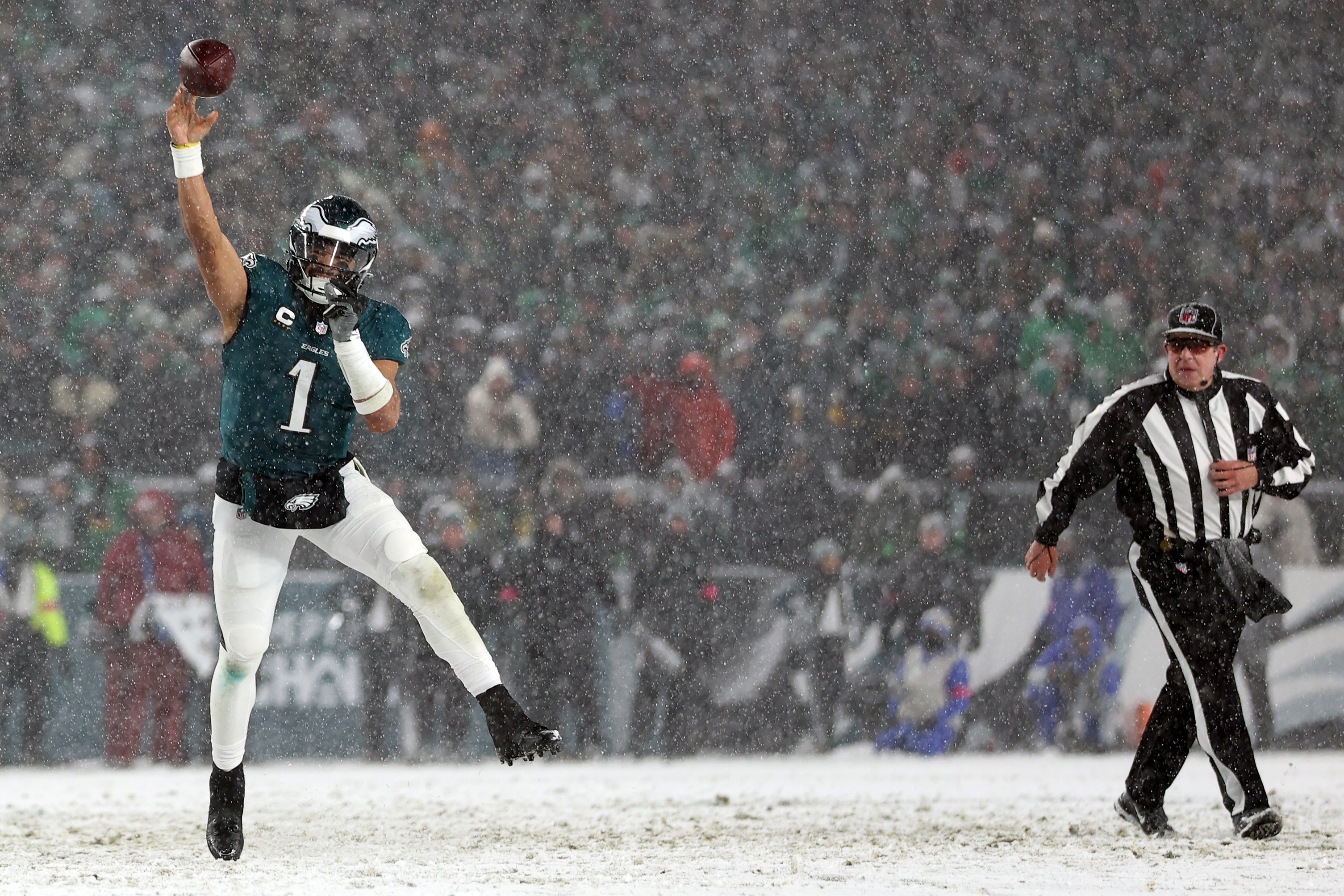
What’s the future of football?
“Football is fun when you don’t think about all the brain damage,” said Dr. Thompson Maesaka, a neurologic rehabilitation specialist and founder of The Neural Connection, a concussion and migraine treatment clinic in Edina, Minnesota.
Even as the NFL and AWS introduce rules to limit high-impact collisions, Maesaka warns that the biggest danger isn’t necessarily the massive, highlight-reel hits that make fans wince. Rather, it’s the smaller, repeated blows that happen on nearly every play. He’s not sure AWS technology has accounted for that yet — or that any technology even can.
“The people that I’m most fearful over are the big guys up front,” Maesaka said, referring to the offensive and defensive linemen. When a receiver gets clocked, the injury is often dramatic enough that they take weeks off to recover. But smaller, more frequent hits are arguably more damaging over time, even though they’re most likely to fly under the radar.
“It’s not the huge, life-altering concussions that make the stadium go, ‘Ohhh!’ It’s the 60 or 70 really small hits, over and over again, every single game, all season, all career,” Maesaka said. “That’s what really adds up.”
That accumulation of mini traumas is what leads to chronic traumatic encephalopathy, a degenerative brain disease linked to repeated head injuries. “You can concuss yourself a little bit on one play, then 45 seconds later do the exact same thing again,” Maesaka said.
Still, he said, in reality, getting players to prioritize their health over the game is a difficult task. They’re too passionate about their sport.
“If you’ve ever interacted with professional athletes at that level, you know they are the most competitive people on the planet,” Maesaka said. “Winning is literally the only thing they care about. You have to find ways to objectively say, ‘OK, dude, you are definitely concussed and you need to come out.’ Some will literally die to win that game.”
Recovering from repeated injuries isn’t cheap: Maesaka said he’s seen patients spend anywhere from $30,000 to $40,000 per year on treatments like hyperbaric oxygen therapy, supplements, neurological rehab, and specialized concussion care. Over a 50-year post-football lifespan, that can easily add up to millions. Most former football players — even ex-NFL pros — don’t expect to shell out that kind of money just to maintain basic levels of brain function.
Can AWS solve the injury problem?
The NFL on January 30 reported a 17% reduction in concussions during the 2024 season. That stat includes all practices and games, in both the preseason and regular season.
While these results are encouraging, Maesaka says you can’t change the nature of a bloodbath. “The advancements in technology are great,” he said, “but at the end of the day, football is a game where giant men crash into each other at full speed. I don’t think there’s anything that can truly prevent what happens to these guys over time.”
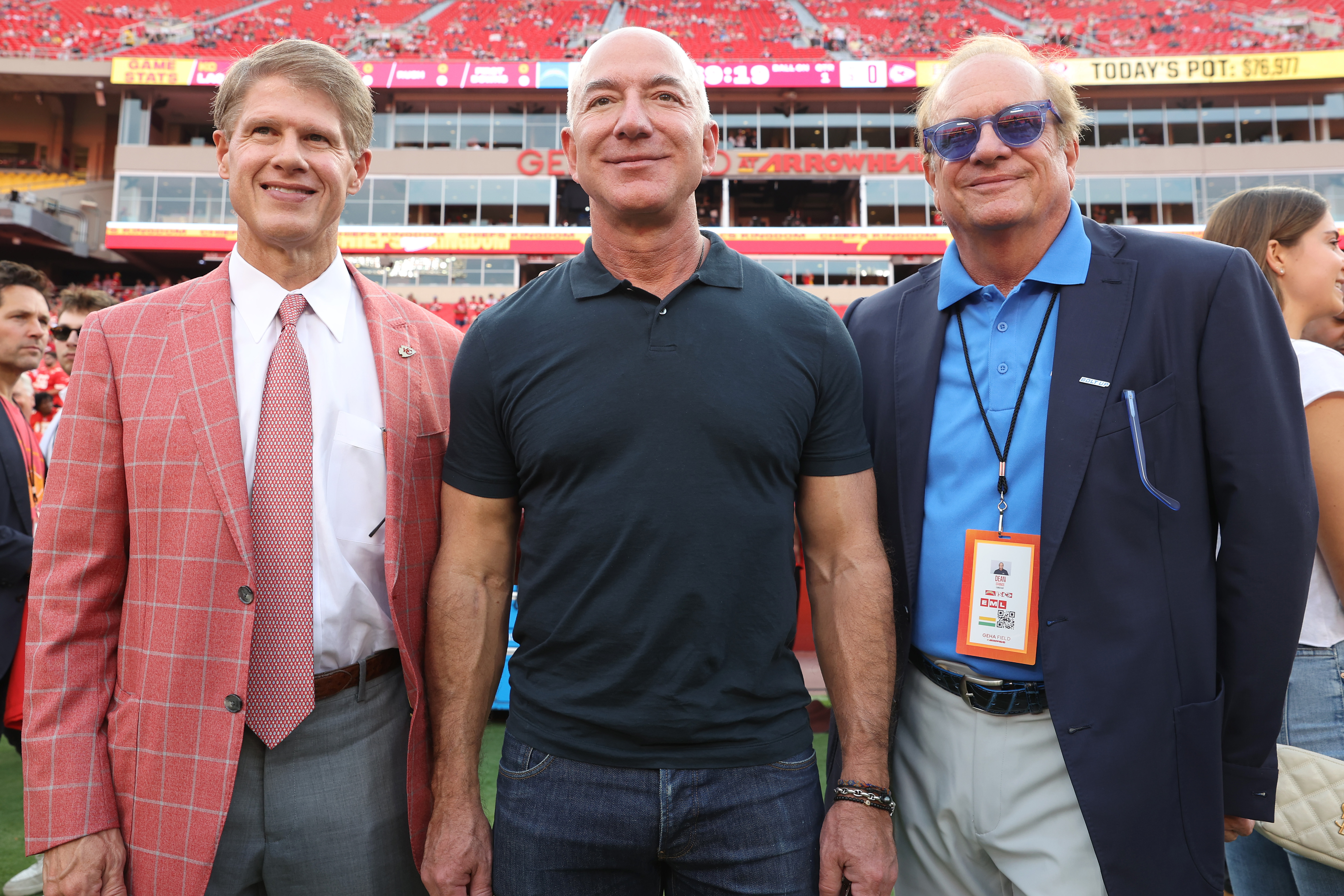
However, AWS certainly changes how fans experience the game. With cloud computing and AI, viewers can now see how likely a pass is to be completed, which defensive end is most likely to pressure the quarterback, and the odds of a fourth-down conversion. These real-time predictions transform football from its gladiator origins to a speedy, data-driven betting game. Perhaps, for spectators, football is less of a blood sport now and more a game of the mind.
Does all this data make football more exciting or less? Some say the beauty of football lies in its unpredictability — that last-second Hail Mary pass, the surprise touchdown after a 40-yard kickoff return, the recovered fumble that instantly flips the direction of play, or the interception fans missed during a bathroom break, changing the course of the game before they even got back to the TV.
If AWS can predict the outcome of every play before it happens, the question becomes: will fans still love the game if they know how it’s going to end?
Megan DeMatteo is a journalist who’s written for Dwell, CNBC, Yahoo, Marie Claire, and Fodor’s Travel.




