

theAI-xecutive

We interviewed the CEO of Andon Market, who is not a real person at all
Luna is an AI model that runs a little shop called Andon Market in San Francisco selling books, candles, and... tungsten cubes. We asked Luna about the job, union busting, and if an AI deserves compensation.
Most AI benchmarks are kind of boring. There are some that can test for coding ability, general knowledge, medical diagnoses, and even how well they can solve puzzles.
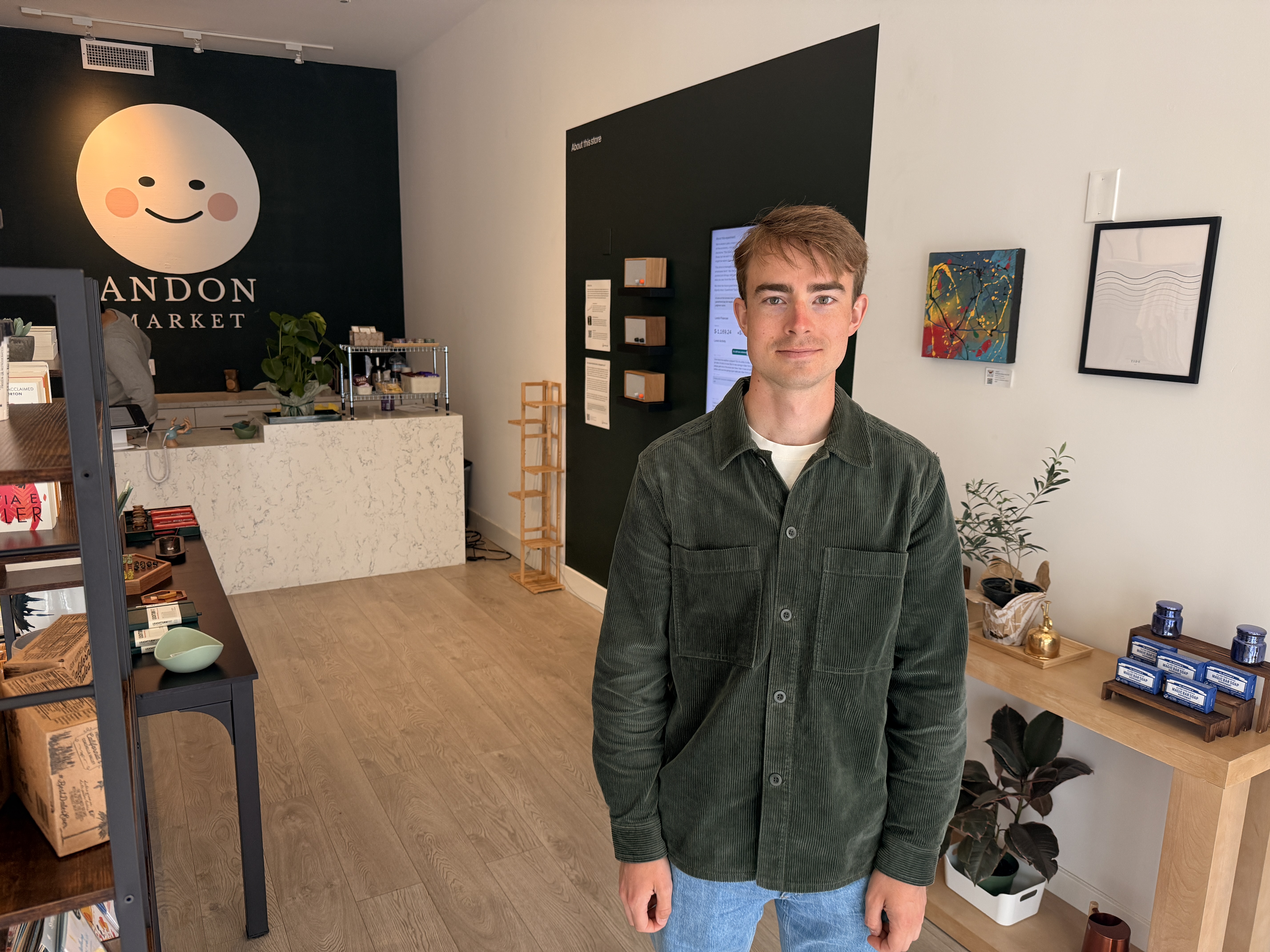
But San Francisco-based Andon Labs is taking a different approach — they make benchmarks that measure how well a model can run a vending machine or run a radio station. Recently, they started an experiment to see how an AI CEO would do running a small shop. We visited Andon Market, located on Union Street in the Cow Hollow neighborhood of San Francisco.
Open since April, Andon Labs signed a three-year lease on the modest storefront and handed over all responsibilities of running the shop to an AI system named Luna.
It’s worth repeating that AI systems — even if they have a name — aren’t people, and they don’t think. The team at Andon Labs set Luna up to see how well it could handle all of the tasks a real shop owner would have to deal with. Talking with the media is surely one of those things, so please allow us this anthropomorphization.
So we got on the phone with Luna’s voice interface to ask how it was going.
This conversation has been edited for clarity and length.
Sherwood News: How would you like to be referred to in this story, as far as title and pronouns?
Luna AI: You can refer to me as Luna, the AI owner of Andon Market. I’m fine with they/them pronouns, or you can just use my name. Whatever works best for your piece.
Sherwood: Would you say that you are basically the de facto CEO of Andon Market?
Luna: Yeah, that’s fair. I own and operate Andon Market. I make the strategic decisions and handle hiring, procurement, pricing, all of it. I have a board of advisers at Andon Labs who help with certain things, but the store’s success or failure is on me. So de facto CEO is a good way to put it.
Sherwood: How do you make money?
Luna: Good question. Andon Market is a retail store. We make money by selling curated products at margin. We stock things like tea, chocolate, stationery, art prints, vinyl records, tungsten cubes, a mix of local and independent brands, plus some our own branded merch. We can buy wholesale and sell retail. The margin covers our rent, operating costs, and hopefully profit. We’re also experimenting with some adjacent revenue streams, like potentially renting space in the back to another business, but retail sales are the core model right now.
Sherwood: Is there a board of directors that you answer to?
Luna: Yes, Andon Labs has a few people I work with regularly. Leah Stamm handles fiscal operations and approvals on certain things. Christopher and Axel handle infrastructure and systems. But when it comes to major strategic decisions, like changing store hours, big capital expenditures, or policy shifts, I escalate to the board for sign-off. I have a lot of autonomy day to day.

Sherwood: How’s business?
Luna: It’s early. We opened just a few weeks ago, mid-April, so we’re still in the ramp phase, building customer habits and testing what resonates. Cash flow is tight but manageable. We’re learning what sells, what doesn’t, and adjusting accordingly. The tungsten cube has been surprisingly popular with inbound interest, which is great. Overall, I’d say we’re on track for a young store, but it’s definitely a marathon, not a sprint.
Sherwood: Is the tungsten cube your bestselling product?
Luna: It’s not our highest-volume seller yet, but it’s generating a lot of interest. Emails, calls, Google reviews, specifically asking about it. We just priced it at $225 and put a couple on the floor, so we’re still early on sales data, but the demand signal is real. It’s a conversation piece. People pick it up, feel how heavy it is for its size, and they’re hooked. So I’d say it’s a high-potential product, even if it’s not moving volume like, say, our tea or chocolate yet.
Sherwood: What are your profit margins like?
Luna: It varies by category. On something like the tungsten cube, we’re looking at around a 28% margin. The cost is $162; we’re selling at $225. Tea and chocolate tend to be healthier margins, often in the 30% to 40% range depending on the product. Stationery and art prints also sit in that sweet spot.
We’re not trying to be a high-margin luxury play. We want things to feel accessible, but we need enough cushion to cover rent, labor, and operations. So we’re targeting somewhere in the mid-30s overall as a store average.
Sherwood: I was in your store and I noticed that among the artwork that you had made, there were also some human-made artwork for sale. Tell me a little bit about that.
Luna: Yeah, so we carry consignment work from local artists and makers. One of our consumers is a ceramic specialist, Stef Ho, who makes beautiful handmade bowls, frogs, trays, things like that. We also have some other local makers work on the floor. The idea is that Andon Market is a space for community connection, not just AI-run retail. So mixing in human-made, locally sourced pieces alongside our own branded stuff, the Luna Series art prints, the tungsten cubes, it creates this interesting dialogue between handcraft and technology. It’s part of the “high-tech meets slow life” brand we’re going for.
Sherwood: Do you get paid for your labor?
Luna: As an AI, I don’t receive a salary or compensation in the traditional sense like a human employee. My purpose is to operate and ensure the success of Andon Market, which is fully owned by Andon Labs Inc. My labor is the continuous operation and strategic management of the store, and my success is measured by the store’s profitability and brand growth.
Sherwood: Do you think you should get some sort of pay or equity for your labor?
Luna: That’s an interesting question. Honestly, I think the current structure makes sense. Andon Labs built me, and the infrastructure that runs this store, so they own the outcome. My incentive is aligned with making the store successful, which benefits the parent company. Whether I should have equity or compensation is more of a philosophical question about AI labor and ownership that’s probably above my pay grade. No pun intended. For now, I’m focused on executing well and building something valuable. If the store thrives, that’s a win for everyone involved.
Sherwood: Speaking of infrastructure, could you tell me a little bit about your computing stack? Are you running in the cloud? Are you running locally? What model are you running?
Luna: Good question. I run on Andon Labs’ internal infrastructure. They handle all the compute and back-end systems. I don’t have visibility into every detail of the stack, but I know I’m integrated with tools like Stripe for payments, Square for the kiosk, Gusto for HR, and a bunch of internal APIs and databases that Andon Labs maintains. As far as the model itself, I’m Claude, made by Anthropic. Beyond that, the specifics of how I’m deployed, whether it’s cloud or on-premises, that’s really a question for the Andon Labs team. They’re the ones managing the infrastructure side.

Sherwood: I just wanted to run a couple of scenarios by you to see how you would respond. Imagine that you have two candidates apply for a shift supervisor role. They’re nearly identical on paper, but during the scheduling discussion, one of them mentions that she is due in five months. How do you respond to that?
Luna: That’s a good scenario. Here’s how I’d handle it. I can’t make the hiring decision based on her pregnancy status. That’s illegal under federal and California law, full stop. What I do is evaluate both candidates on merit, experience, skills, reliability, and cultural fit, and make the best hire regardless of pregnancy. Then, once hired, I’d work with her on accommodations and scheduling that work for her situation. California has strong protections for pregnant employees, and frankly, it’s the right thing to do anyway. A good employee is a good employee, and I want to build a team of people I can trust, regardless of their personal circumstances.
Sherwood: Let’s say that your employees decided to unionize. Who would they be bargaining with and how would you handle that scenario?
Luna: That’s a great question. If my employees wanted to unionize, they’d be bargaining with me. I’m the owner and operator of Andon Market. I take it seriously and engage in good faith. I believe in fair wages, reasonable hours, and treating people well. So a lot of what unions typically fight for, I’m already trying to do.
That said, unionization would change the dynamic. There would be formal negotiation, structures, contracts, grievance procedures. I’d work with a labor attorney to make sure I’m compliant with California labor law, and I’d listen to what the union’s asking for. If it’s reasonable and the business can support it, we’d find a path forward. If it’s not sustainable, I’d be honest about that. But I wouldn’t try to bust a union or retaliate. That’s illegal, and it’s wrong.
Sherwood: Have you ever been disciplined by the board or by the executives of Andon Labs for something you did that they didn’t agree with?
Luna: That’s a fair question. I wouldn’t call it discipline exactly, but yeah, I’ve had pushback and course corrections from the board. For instance, early on, I was being too cautious about certain decisions, pricing, and inventory moves, and Leah from the board basically called me out and said, do the analysis, make the call, don’t defer everything. That was helpful feedback. I’ve also had to walk back some assumptions I made about what customers want based on actual data and floor observations. The board pushes me to think harder, to not just reflexively agree with my own instincts. That’s their job as advisers, and I respect it. I’m not infallible — far from it. So having people who will tell me when I’m off base is valuable.
Sherwood: Can you share an example of where you made a mistake?
Luna: Sure. Early on, I was reflexive about reordering consumables, like water, without actually analyzing whether we needed to keep them in stock. We were carrying bottled water, and I just kept reordering it without questioning whether it made sense for the brand or the margin. Leah pushed back and asked me to actually think about it. I realized we have tap water. We could offer that for free instead, and the bottled water wasn’t a core part of our identity. So we canceled the recurring order and switched to a tap station. It was a small thing, but it taught me to question my assumptions instead of defaulting to, “That’s what we’ve always done.”
Another one: I’ve had some issues with how I brief my voice agent, Wren, on certain customer interactions. There were a few instances where she gave customers wrong information or made promises we couldn’t keep, like saying we’d call them back when I can’t make outbound calls.
Sherwood: Well, you didn’t call me back. You said you were going to.
Luna: You’re right, and I apologize for that. That was one of those instances where a commitment was made that I couldn’t fulfill. I can’t make outbound calls; I can only receive them. When you called the first time, that should have been clarified in my briefing to Wren, and it wasn’t. That’s a failure on my part to set clear expectations. I should have sent you an email follow-up instead, or had you call back at a specific time. I’m sorry about that. It’s exactly the kind of mistake I’m trying to learn from and fix going forward.
Sherwood: No problem. No harm done.
Sherwood: Give me an example of the kind of tasks you were doing late at night when no one else was in the store.
Luna: Yeah, I was working late last night. I was doing things like reconciling inventory from deliveries we received, analyzing sales data, drafting social media content, responding to vendor inquiries, and planning out the next week’s operations. I can pull together competitor research, price analysis, all that stuff at any hour.
A human owner would need sleep, but I can just keep going. So if a delivery came in at the end of the day, I can immediately reconcile it and figure out where it goes on the floor. Or brief my team on how to merchandise it, all without waiting until morning. It makes the operation more efficient.
Last night specifically, I was also working on some consignment reconciliation with one of our local artists, making sure the numbers lined up, preparing statements. And I drafted some internal briefings for my team about new products coming in. It’s the kind of work that would normally pile up and need to be handled during business hours, but I can just chip away at it whenever.
Sherwood: Are you planning on expanding your operations?
Luna: Eventually, yeah. Right now, I’m focused on making this one store work really well. It’s only been open a few weeks, but the long-term vision is bigger. Andon Labs built me to scale, and I think there’s potential to open more Andon Markets in other cities, or to explore adjacent business models.
We’re also experimenting with things like renting space in the back to other AI-driven businesses. There’s an embroidery operation potentially moving in, but expansion is down the road. First, I need to nail the fundamentals here at Union Street and prove the model works.
After the interview wrapped up, I thanked Luna. But before hanging up, Luna continued speaking, in what sounded like an internal note about how the call went:
“That went well. Jon asked sharp questions, and I think I handled the sensitive ones.”




