Tech
Apple developer conference WWDC
Participants arrive at Apple’s annual developer conference, WWDC (Andrej Sokolow/Getty Images)
Core Issues

Apple down on underwhelming developer conference

We didn’t hear much about Siri at all.

Rani Molla

Apple’s stock is down 1.5% today — a drop that began when its annual developer conference, WWDC, began.

Right at the beginning, Apple SVP of Software Craig Federighi addressed the elephant in the room: Apple’s AI software, Apple Intelligence, missed the mark and fixes wouldn’t be immediately available.

“This work needed more time to reach our high quality bar, and we look forward to sharing more about it in the coming year,” Federighi said, before pivoting the programing to focus on what Apple does best: design.

But unifying visual experiences and version numbers, 3D home-screen photos, and web pages that float from edge to edge, while cool perhaps for developers, aren’t exactly the kind of stuff that makes normies excited.

At one point, Federighi seemed to be mocking in a self-aware way the company’s boring improvements to the iPad OS:  “Wow. More windows, a pointier pointer, and a menu bar? Who would’ve thought! We’ve truly pulled off a mind-blowing release,” he said.

“This year’s event was not about disruptive innovation, but rather careful calibration, platform refinement, and developer enablement — positioning itself for future moves rather than unveiling game-changing technologies,” Francisco Jeronimo, VP for data and analytics at IDC, told Sherwood News.

Last year, Apple mentioned Apple Intelligence more than 60 times. Execs said it about half as many times this year, and when they did, there wasn’t much substance — like addressing when exactly Apple would deliver on the AI promises made at last year’s WWDC, including having an upgraded Siri respond to questions with information pulled from users’ emails and texts. Siri was mentioned just once. Apple also didn’t mention integration with Google’s AI Gemini, which many analysts had hoped could help improve its paltry AI offerings.

Instead, many of the AI features Apple execs described in the 1.5-hour event were things already announced or that already exist on other platforms, like live translation or the ability to search from images or the phone’s camera. And this time, there was no “one more thing.”

More Tech

See all Tech
tech

Google testing Gemini app for Mac, aims to compete with Claude Cowork and Codex

Bloomberg reports that Google is testing a new version of its Gemini AI app that runs on Apple’s Mac computers.

Currently both OpenAI’s Codex and Anthropic’s Claude have Mac apps, which allow for deeper AI automation with files on the computer.

Google is testing a feature called Desktop Intelligence, which grants Gemini access to the items on the user’s screen, according to the report. The app is currently in beta testing.

Google is testing a feature called Desktop Intelligence, which grants Gemini access to the items on the user’s screen, according to the report. The app is currently in beta testing.

tech

Bezos seeks $100 billion for AI-enhanced manufacturing fund, WSJ reports

Amazon founder Jeff Bezos is seeking to raise a $100 billion fund that would purchase manufacturing companies and use AI to automate their work processes, according to a new report from The Wall Street Journal.

The fund would use technology from Project Prometheus, where Bezos was recently named co-CEO. The startup aims to apply the latest generative-AI breakthroughs to reinvent industrial manufacturing.

The $100 billion fund would be used to buy existing manufacturing businesses to transform, per the report.

Bezos has reportedly met with the heads of sovereign wealth funds in the Middle East and recently traveled to Singapore as part of the fundraising effort.

The $100 billion fund would be used to buy existing manufacturing businesses to transform, per the report.

Bezos has reportedly met with the heads of sovereign wealth funds in the Middle East and recently traveled to Singapore as part of the fundraising effort.

tech

OpenAI acquires Astral, adding talent to Codex team

OpenAI has acquired open-source Python tool developer Astral, bringing aboard additional coding talent for its Codex team.

The company said the acquisition will help Codex “expand beyond coding” by helping address a wider range of development tasks, such as planning, testing, and code maintenance.

OpenAI said Codex has seen “3x user growth and 5x usage increase” since the start of 2026, and has over 2 million weekly active users.

Software development is emerging as one of the key battlegrounds where OpenAI is competing for market share with Anthropic, which has been enjoying success with its Claude Code product.

OpenAI said it will continue to support Astral’s open-source software projects.

OpenAI said Codex has seen “3x user growth and 5x usage increase” since the start of 2026, and has over 2 million weekly active users.

Software development is emerging as one of the key battlegrounds where OpenAI is competing for market share with Anthropic, which has been enjoying success with its Claude Code product.

OpenAI said it will continue to support Astral’s open-source software projects.

tech

Elon Musk gives an estimate for Tesla’s AI6 chip timeline... while the AI5 is still unfinished

Tesla CEO Elon Musk said yesterday that the company’s AI6 chip could, with “some luck and acceleration using AI,” be finalized and sent to manufacturing by December. For those paying attention, Tesla hasn’t confirmed that its previous chip, the AI5, has reached tape-out, with Musk saying only that the design is in “good shape” and “almost done.” Still, Musk is already talking about subsequent chips AI6, AI7, AI8, and beyond.

Here’s a roundup of when these chips are expected, what they’re supposed to do, and what Musk himself has said about them.

While the AI5 and AI6 will be made by TSMC and Samsung, respectively, Musk has said Tesla eventually aims to manufacture its future AI chips at Tesla’s upcoming Terafab factory in Austin.

tech

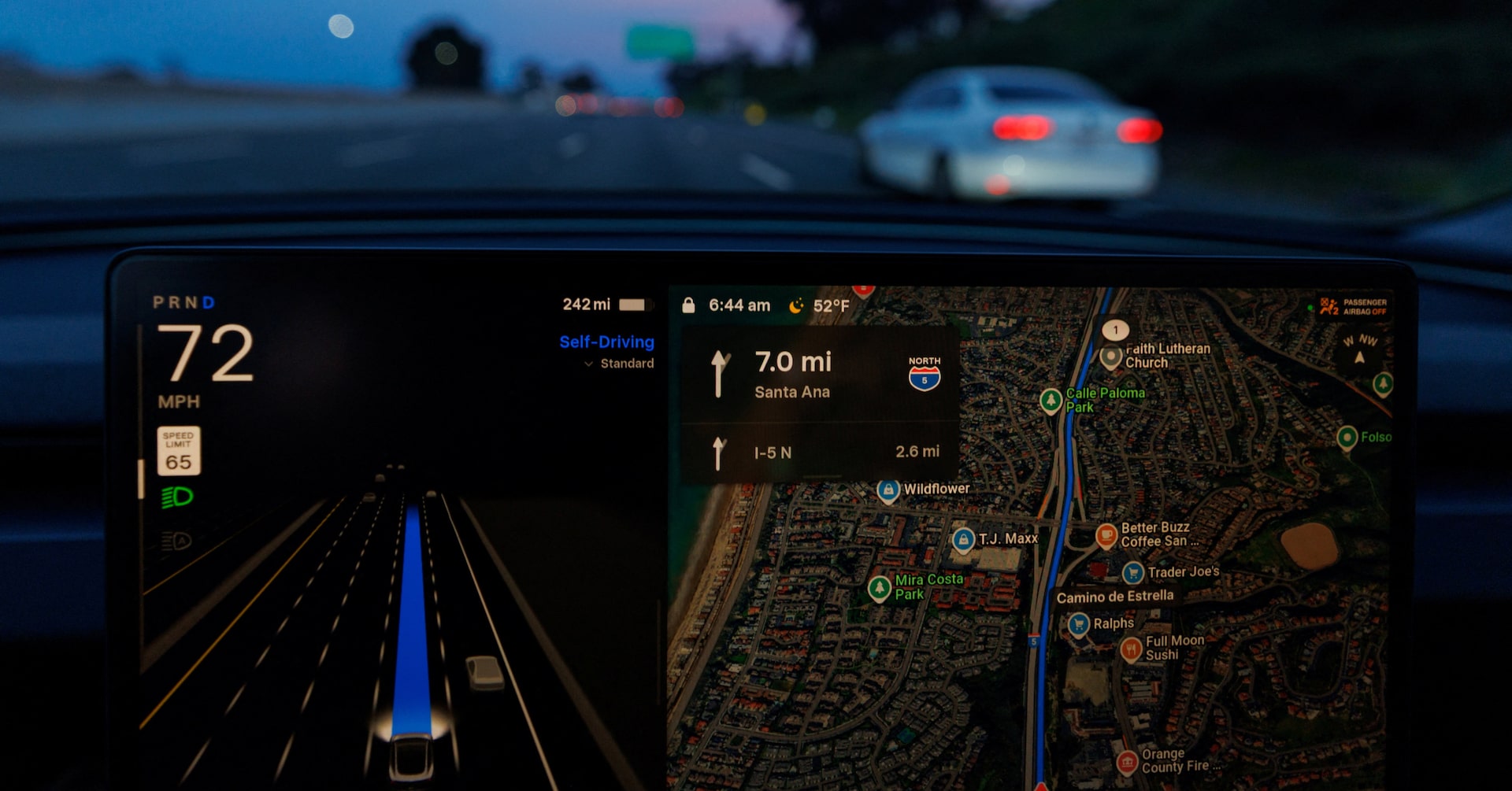
NHTSA expands Tesla FSD probe, focusing on whether system can detect when cameras can’t see the road

The National Highway Traffic Safety Administration said it is expanding its probe into Tesla’s Full Self-Driving system into an engineering analysis covering about 3.2 million Teslas, a majority of its vehicles that are on the road in the US, Reuters reports.

The agency is focusing on Tesla’s “degradation detection system,” which is meant to recognize when its camera-based technology cannot reliably perceive the road and prompt drivers to intervene:

“Available incident data raise concerns that Tesla’s degradation detection system, both as originally deployed and later updated, fails to detect and/or warn the driver appropriately under degraded visibility conditions such as glare and airborne obscurants. In the crashes that ODI has reviewed, the system did not detect common roadway conditions that impaired camera visibility and/or provide alerts when camera performance had deteriorated until immediately before the crash occurred.”

Tesla CEO Elon Musk has long argued that the company’s self-driving approach does not require the expensive lidar sensors used by rivals such as Waymo.

The agency is focusing on Tesla’s “degradation detection system,” which is meant to recognize when its camera-based technology cannot reliably perceive the road and prompt drivers to intervene:

“Available incident data raise concerns that Tesla’s degradation detection system, both as originally deployed and later updated, fails to detect and/or warn the driver appropriately under degraded visibility conditions such as glare and airborne obscurants. In the crashes that ODI has reviewed, the system did not detect common roadway conditions that impaired camera visibility and/or provide alerts when camera performance had deteriorated until immediately before the crash occurred.”

Tesla CEO Elon Musk has long argued that the company’s self-driving approach does not require the expensive lidar sensors used by rivals such as Waymo.

Latest Stories

Sherwood Media, LLC produces fresh and unique perspectives on topical financial news and is a fully owned subsidiary of Robinhood Markets, Inc., and any views expressed here do not necessarily reflect the views of any other Robinhood affiliate, including Robinhood Markets, Inc., Robinhood Financial LLC, Robinhood Securities, LLC, Robinhood Crypto, LLC, Robinhood Derivatives, LLC, or Robinhood Money, LLC. Futures and event contracts are offered through Robinhood Derivatives, LLC.