


Can AI save Pinterest or has it already irreparably damaged it?
AI content has been devouring Pinterest for months.
In March, Pinterest became the latest social platform to announce that all its content will be used to train AI models. The platform updated its terms of service, enraging longtime users. It also marked the fact that AI wasn’t just coming to the image collection site — it had already arrived.
But that shouldn’t have surprised anyone: according to research from Garbage Day, AI content has been devouring Pinterest for months. In fact, we found that literally every trend Pinterest reports as popular featured AI images, and some even link to websites generated entirely by AI.
This is one of the key moderation issues plaguing the web right now. Platforms like Pinterest want to cash in on the AI boom and allow AI companies to ingest their vast libraries of user-generated content, but they also have to filter and mark the AI content that’s already being pumped into their sites by users. Pinterest has been much slower to deal with this problem than its peers.
On March 9, Pinterest officially updated its help pages to say it “may” label pins with metadata showing an image is AI generated. A spokesperson told Futurism, “Impressions on generative AI content make up a small percentage of the total impressions on Pinterest” — which is what any company would say if it were seeking deals with AI firms to help train its models. The more AI-generated content a site has, the less valuable it would be to an AI company, given already worrisome issues of AI model collapse.
But on the site’s most recent earnings call, CEO Bill Ready told investors that “AI is deeply integrated into nearly every aspect of our user experience and advertising business.” The company has spent the past year regularly expanding access to generative AI for marketers.
In a blog post from last year, the company suggested that users take advantage of its built-in AI image generators to enhance real images, but the technology is fully capable of generating images out of whole cloth. According to what we found, that’s something users are already doing with abandon. ZDNet reported that “AI slop” was ruining everyone’s Pinterest feeds. You can see the consequences even just from Pinterest’s publicly reported metrics.
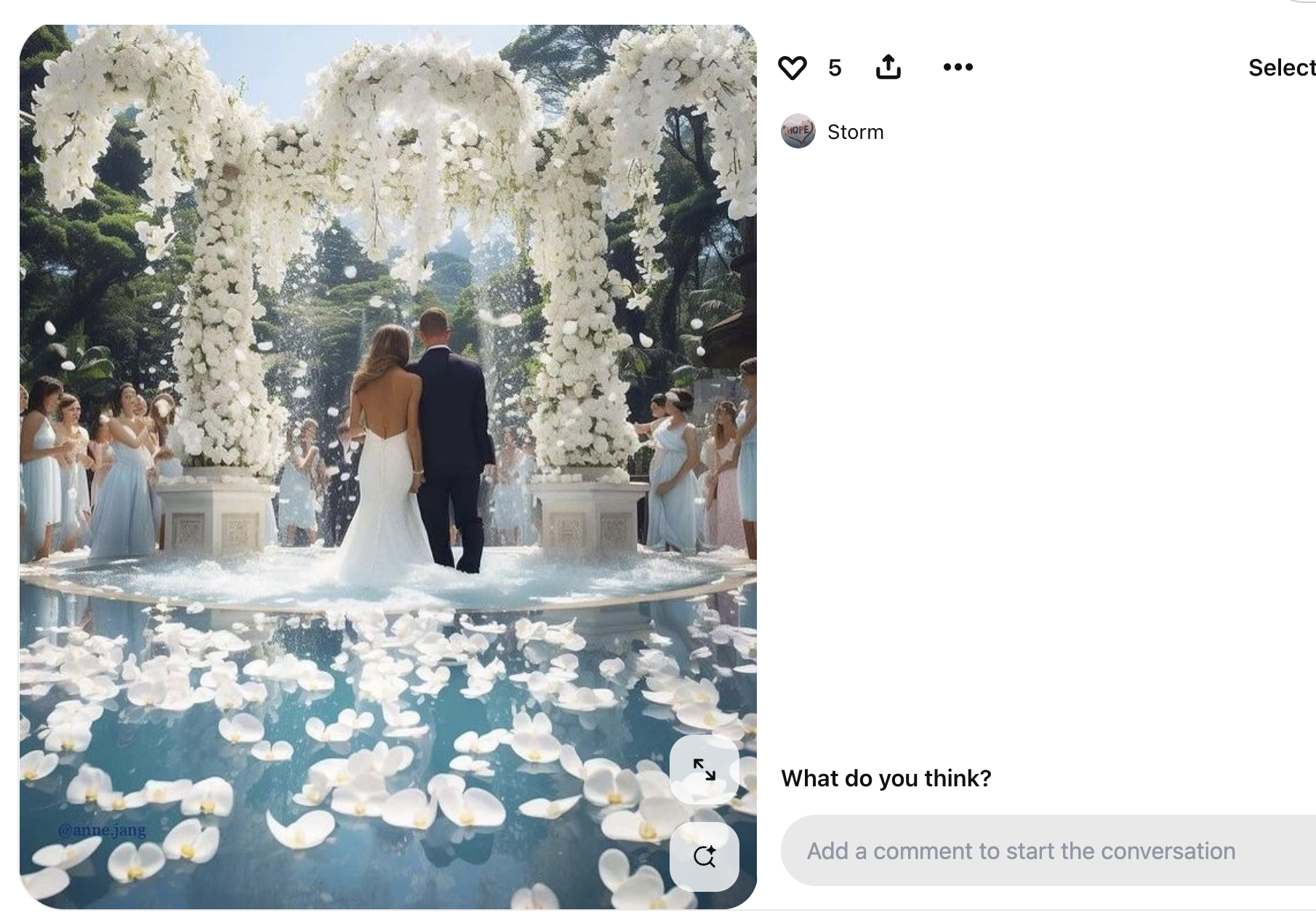
Every month, Pinterest reports the four fastest-growing trends on the platform. It also compiles relative data on key words for tags and search terms, showing how their popularity shifts over time. Together, the analytics show a clear picture of what’s popular on the platform. And whatever metric you use, every trend that Pinterest has specifically reported as growing since January 2025 has been saturated with pictures created by AI models. Some have been completely overrun: 12 out of 16 trends in Pinterest’s April report, published in March, consistently displayed multiple AI-generated images in the top five search results, and all 16 regularly had them in the top 20.
Similarly, every example of top 10 key words, in every category Pinterest reports, featured AI images in the top 20 results — though none of the images we found included a label from the platform. This is true regardless of the trend’s actual topic or what kind of image is popular for it.
Fashion styles like “spring wedding outfits” show clearly artificial people against blurry backgrounds; “calming painting ideas” showcases an obviously fake painting; and cooking searches like “easy vegan recipes” offer food too shiny and gooey to be real, linking to recipes that may never have been made by a human hand. Speaking of human hands, here’s an AI winner for the trending “spring nails”:
Interestingly, there seems to be a delay between a trend taking off and AI images overtaking real pictures within that trend. All four of Pinterest’s top trends for January had multiple AI images in the top five results. In February, that was true only for three out of four trends. In March and April, it was true for two out of four. All these trends had AI images somewhere in the top 20 results, but this suggests the biggest trends attract more AI additions over time as uploaders pile into anything getting attention on the platform.
Because Pinterest trends tend to move slowly, its reports are written a month in advance. Garbage Day looked at three different reports published from December to March, which studied trends for January through April. They suggest that nearly everything considered popular on Pinterest has at least some AI art prominently mixed in.
This makes sense if you consider how much Pinterest has invested into supporting generative AI for marketers. Last year, the site released Pinterest Canvas, a text-to-image model “trained exclusively in-house at Pinterest.” This implies the model was trained on user-generated content from the site, even though the majority of images on Pinterest are linked from other websites and may be subject to copyright law and other rights that would prevent the company from using it to train AI models.
That would explain the change to the site’s terms of service, which prompted all this public scrutiny. The site is retroactively asking for permission for what it’s been doing for years. Regardless of how well it manages things going forward, the flood of AI-generated images on the platform may have already sabotaged whatever plans it has for building its own model — you can’t use an AI’s output as another AI’s input.
It’s a deeply ironic fate for Pinterest. Years ago, it successfully overran Google Image Search results, effectively eating Google from the inside. Now, AI images are doing the same in return, and there’s no clear way to stop it — or worse, profit off it.
Garbage Day is an award-winning newsletter that focuses on web culture and technology, covering a mix of memes, trends, and internet drama. We also run a program called Garbage Intelligence, a monthly report tracking the rise and fall of creators and accounts across every major platform on the web. We’ll be sharing some of our findings here on Sherwood News. You can subscribe to Garbage Day here.




