
Tech
Jon Keegan

Carmakers are selling out their customers for as low as 26 cents

Following reports revealing car manufacturers’ sales of driver data to insurance companies and data brokers, Oregon Sen. Ron Wyden and Massachusetts Sen. Edward Markey sent a letter today (the third such letter from lawmakers) to FTC Chair Lina Khan urging the agency to investigate the practice.

In the newest letter, Wyden says his staff’s investigation revealed some hard numbers for how much the driver data — which includes events like braking and acceleration — was actually worth to companies such as General Motors, Honda, and Hyundai.

Verisk, a data broker described as “a credit agency for drivers,” purchased driving behavior data from connected vehicle manufacturers, scored them for risk, then sold them to insurance companies. Versik shuttered this particular program after the New York Times reporting. 

Hyundai told Wyden’s office that between 2018 and 2024 they shared data from 1.7 million cars with Verisk and were paid 61 cents per car. Hyundai also confirmed they had enrolled customers in its “Driver Score” program without their permission. 

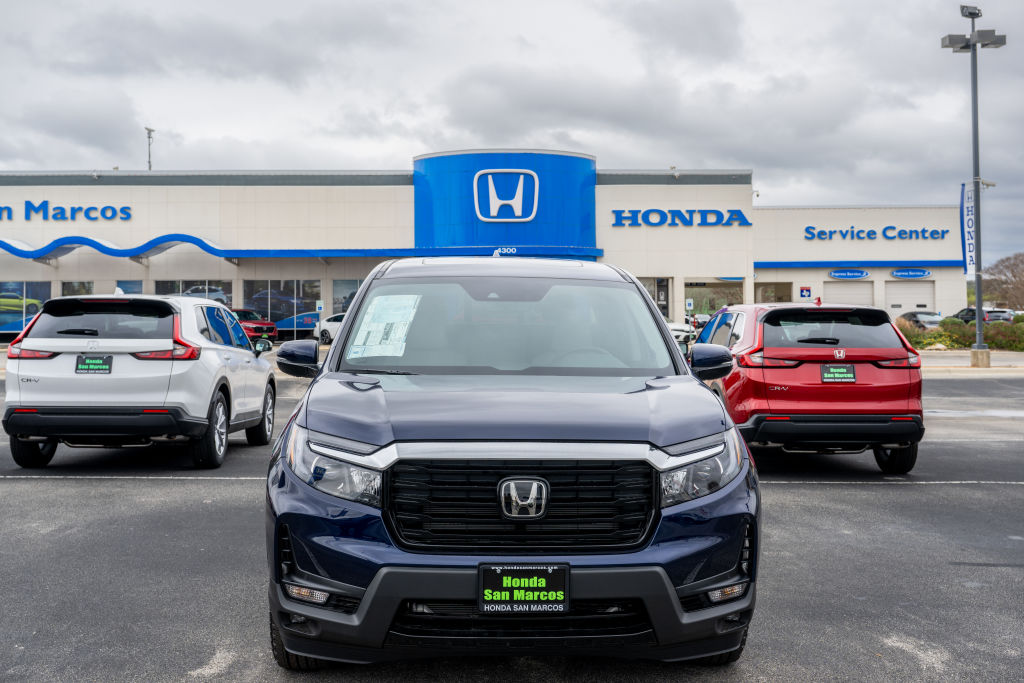
Honda said that from 2020 to 2024 it sold data from 97,000 cars to Verisk for 26 cents per car, and also admitted it did so without driver permission. General Motors refused to disclose the numbers behind their data sales. 

The connected vehicle data industry monetizes driver behavior data, but also collects driver location data, though the industry has struggled to deliver on its estimated potential.
AMOUNT HONDA WAS PAID PER CAR FOR DRIVER DATA
$0.26
Amount Hyundai was paid per car for driver data
$0.61

More Tech

See all Tech
tech

Bloomberg: Relationship between OpenAI and Apple has deteriorated and legal action may be imminent

The two-year-old alliance between Apple and OpenAI has deteriorated, Bloomberg reports, with the AI giant now consulting legal counsel about issuing a potential breach of contract notice.

OpenAI executives allege that Apple failed to adequately integrate and promote ChatGPT on the iPhone, causing the AI firm to lose out on billions a year in subscriptions and hurt its brand, according to the report.

Meanwhile, Apple has expressed concerns over OpenAI’s privacy protection, and has been miffed that OpenAI has been working on its own hardware with former Apple design lead Jony Ive.

More recently, Apple, which has trailed its peers in developing AI, has decided to offer users their choice of AI models, rather than aligning exclusively with OpenAI’s.

Meanwhile, Apple has expressed concerns over OpenAI’s privacy protection, and has been miffed that OpenAI has been working on its own hardware with former Apple design lead Jony Ive.

More recently, Apple, which has trailed its peers in developing AI, has decided to offer users their choice of AI models, rather than aligning exclusively with OpenAI’s.

tech

Report: Mythos is used to crack MacOS

Apple MacOS has long been considered to have some of the strongest cybersecurity protections in the industry.

But researchers using a preview release of Anthropic’s Mythos AI model were able to take control of a Mac, in a significant example of the unreleased AI model’s cyber capabilities, according to a report from The Wall Street Journal.

It took two security researchers five days to pull off the feat, which chained together bugs to corrupt the Mac’s memory, according to the report. The researchers told the Journal that human expertise was required to use Mythos, and it would not be able to execute the attack on its own. The researches reportedly said some of the Mythos hype was “overblown.”

Apple said it was taking the bug report “very seriously” and has not yet issued a fix.

It took two security researchers five days to pull off the feat, which chained together bugs to corrupt the Mac’s memory, according to the report. The researchers told the Journal that human expertise was required to use Mythos, and it would not be able to execute the attack on its own. The researches reportedly said some of the Mythos hype was “overblown.”

Apple said it was taking the bug report “very seriously” and has not yet issued a fix.

tech

Survey: 70% of Americans don’t want data centers in their community

America loves a good boogeyman, and data centers have become one.

It was once easy for the hyperscalers to sidle up to state legislators, utility executives, and local officials with the promise of jobs and the high-tech glow of AI for their economically challenged areas without much local opposition.

But now the script has been flipped, and public opposition to data centers is starting to solidify. A new Gallup survey asked 1,000 Americans for their thoughts on data centers, the first such survey for the polling company. Among the findings:

  • 70% of survey respondents opposed local construction of AI data centers.

  • Opposition to local data centers was much stronger than opposition to local nuclear power plants.

  • Dislike for data centers is bipartisan — majorities of both Democrats and Republicans were opposed to data centers, but more so for Democrats.

  • Among those opposed to data centers, the impact on the environment and energy usage were top concerns.

Local communities and state governments around the US have introduced bans or moratoriums on data center construction. Senators have also introduced similar legislation in Congress.

Last month, Maine Governor Janet Mills vetoed legislation that would have enacted the first statewide bill to pause data center construction.

But now the script has been flipped, and public opposition to data centers is starting to solidify. A new Gallup survey asked 1,000 Americans for their thoughts on data centers, the first such survey for the polling company. Among the findings:

  • 70% of survey respondents opposed local construction of AI data centers.

  • Opposition to local data centers was much stronger than opposition to local nuclear power plants.

  • Dislike for data centers is bipartisan — majorities of both Democrats and Republicans were opposed to data centers, but more so for Democrats.

  • Among those opposed to data centers, the impact on the environment and energy usage were top concerns.

Local communities and state governments around the US have introduced bans or moratoriums on data center construction. Senators have also introduced similar legislation in Congress.

Last month, Maine Governor Janet Mills vetoed legislation that would have enacted the first statewide bill to pause data center construction.

$100B

Each day of the Musk v. Altman trial in Oakland, California, more details of Microsoft’s complicated $13 billion partnership emerge from the courtroom.

Yesterday, Microsoft executive Michael Wetter said that the company has spent over $100 billion on the OpenAI partnership. A big chunk of that came from the fact that Microsoft needed to build the costly infrastructure before OpenAI could use it, according to Wetter.

Microsoft’s investment looks like it was worth it, as OpenAI is currently valued at $852 billion, making Microsoft’s stake worth about $135 billion. OpenAI is planning for an IPO later this year.

Latest Stories

Sherwood Media, LLC and Chartr Limited produce fresh and unique perspectives on topical financial news and are fully owned subsidiaries of Robinhood Markets, Inc., and any views expressed here do not necessarily reflect the views of any other Robinhood affiliate, including Robinhood Markets, Inc., Robinhood Financial LLC, Robinhood Securities, LLC, Robinhood Crypto, LLC, Robinhood Money, LLC, Robinhood U.K. Ltd, Robinhood Derivatives, LLC, Robinhood Gold, LLC, Robinhood Asset Management, LLC, Robinhood Credit, Inc., Robinhood Ventures DE, LLC and, where applicable, its managed investment vehicles.

