

HolyMoly
Facebook's top poster is a Catholic fundamentalist page. Is Meta OK?
An algorithm change to compete with TikTok ended up favoring blandly religious content.
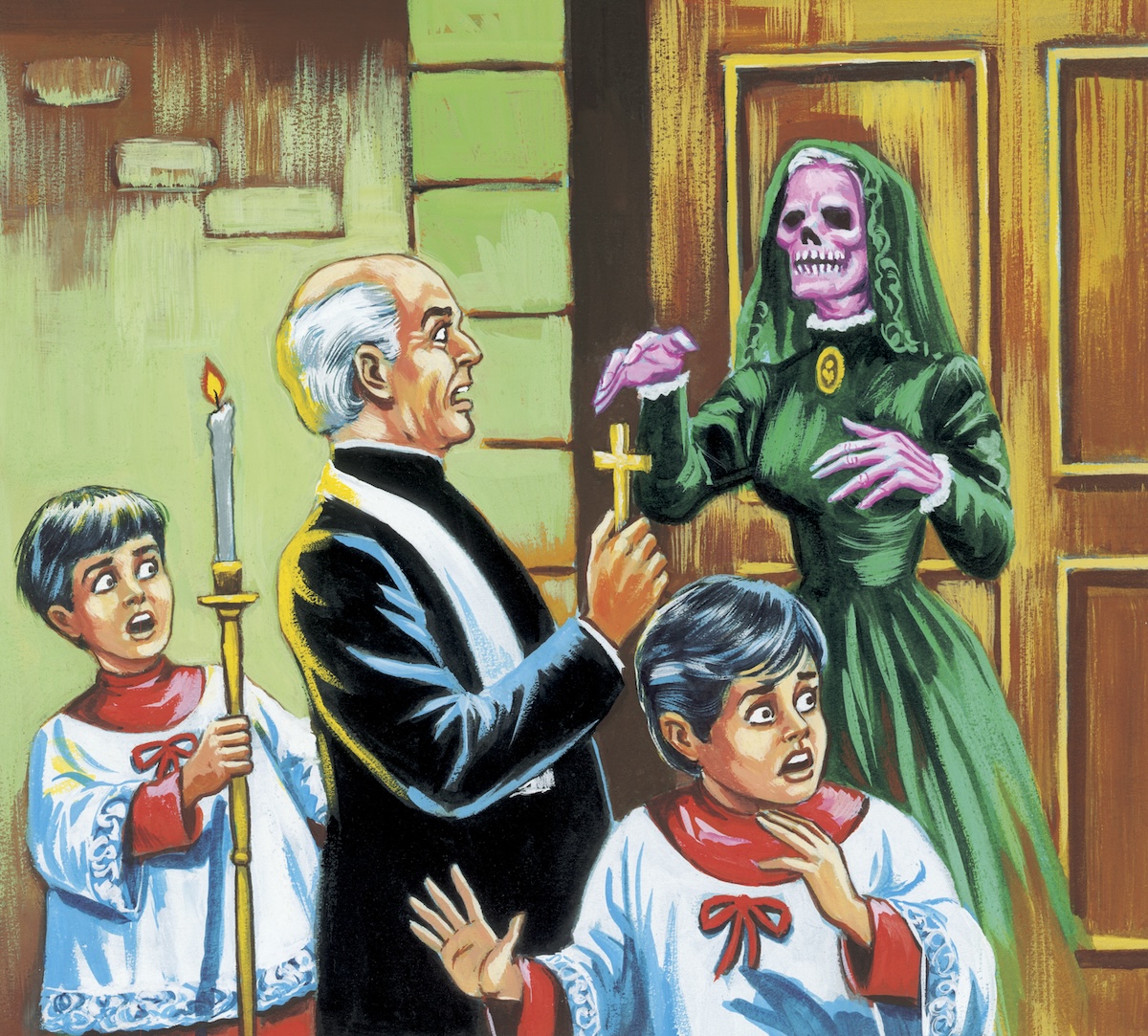
If you’ve opened Facebook recently, chances are you noticed how bizarrely religious the most popular posts have become. There are viral and often disturbing AI-generated images of Jesus, comment sections full of users replying to posts with “Amen,” and widely shared videos of psalms.
The story of how Facebook became engulfed in Christian content can be told through the rise of one site, catholicfundamentalism.com. According to our data, Catholic Fundamentalism has been the single largest publisher on the platform since December. In total aggregate engagement, it’s outperforming large publishers like The Daily Mail and the BBC as well as celebrities such as Taylor Swift. It represents something of a full circle moment for Facebook: for years its scale and influence have been compared to that of the Catholic Church. Well, here’s how that finally came true.
The catholicfundamentalism.com URL was registered in 2002. It hosts a blog that’s had a new entry about applying the word of the Bible almost every single day for more than 18 years. The Catholic Fundamentalism Facebook page was launched in 2012 and has 2.4 million followers. With a few exceptions, all the page does is link to the website’s daily blog post. As far as we can tell, it’s run entirely by Bill Adams, a retired manufacturer from the Pittsburgh area. His personal Facebook account is listed as the owner of Catholic Fundamentalism’s Facebook page and he’s appeared in videos on the page. Adams is a prolific poster, seemingly single-handedly responsible for every one of the 6,000 posts on the site. Adams did not respond to our request for comment.
As for why Adams suddenly shot to the top of the site’s largest publishers last year, the most likely explanation is that it’s a bizarre side effect of Meta’s quest to compete with TikTok. An algorithm change that began rolling out in early 2023 crushed traffic to news publishers. By last fall, publishers said they’d lost as much as 40% of their traffic because of the lack of Facebook referrals. This exodus of traditional news content was a prologue for Meta sunsetting Facebook’s News tab earlier this year. The expectation, it seemed, was that news content would be deprioritized across the app, and short-form-video content would take its place. But that isn’t what happened. (We asked Facebook for comment.)
Much has been said about the intricacies of Facebook’s algorithm, but the simplest way to think about it is as a series of levers that adjust the weight of different signals. Some of the company’s algorithm changes have made comments more important, while others have focused on likes, reactions, or shares. Sometimes the algorithm also prioritizes different file types, boosting pages that go live, post images, share third-party links, or create certain kinds of videos. These tweaks have profound effects on the power users who rely on Facebook for distributing their content.
This current wave of religious spam isn’t the first time people have found strange things that will get major promotion from the algorithm. During the pandemic, a network of Vegas magicians figured out how to game Facebook’s new short-form-video pivot and flooded the platform in gross food videos. And in 2021 a relatively small page called Thinkarete Lifestyle stumbled across an engagement hack the platform’s algorithm happened to favor at the time and became one of the most widely viewed pages in the US.
According to our data, provided by Newswhip’s real-time Facebook analytics, the vacuum of news content Meta created last year was quickly filled by religious content, or even just content that provoked vaguely religious reactions from users. Last June, one of the top posts on the platform was a meme about a potato that hundreds of thousands of users commented “Amen” underneath. (Commenting “Amen” has become a common social practice on Facebook, similar to commenting “happy birthday” on an automatic birthday announcement.)
Catholic Fundamentalism’s posts have had thousands of comments saying “Amen” for years, and, a few months after the potato meme, it shot to the top of the site’s biggest publishers. It first appeared on our list of most popular links last September 2023, interspersed with items you’d expect to be popular on Facebook, like Jimmy Buffett’s obituary and the announcement of new features for Facebook Messenger.
But by November, the top five links were all going to the Catholic Fundamentalism website. By December, the site had more outgoing clicks from Facebook than any other site on the entire internet. The only break in its domination came in the middle of February this year, when the blog took a few days off for the start of Lent. Once it came back, engagement needed around a week to recover, showing how crucial Adams’ constant daily updates have been.
As for why Catholic Fundamentalism is now Facebook’s top “news” site, it posts the exact kind of content that the platform’s news feed has been tailored to promote: blandly positive, removed from any news or current events, and arriving on a frequent and regular schedule.
Not everyone can be Bill Adams, who apparently has the dedication and stamina to post his unprompted thoughts almost every day for 18 years, aside from the breaks for Lent. His blog posts have been consistent since the George W. Bush administration, with one record showing they’ve been popular on Facebook since at least 2020.
Yet other creators, and Facebook itself, can’t keep up with the system they created. Now that the algorithm will provide priority to a constant stream of anything vaguely religious, creators have every incentive to generate hundreds of bizarre AI-generated images that drown out anything authentic. Pictures of “Shrimp Jesus” went viral on Facebook last month; the platform is awash in AI images of flight attendants praying to Jesus. And it’s getting even weirder as Facebook creators compete to feed the algorithm. Earlier this month, an article in 404 Media tracked how bad the problem has gotten, pointing to an image of “Uncle Sam Amputee Jesus and a soldier with machine gun,” that recently went viral, a Frankenstein example of Facebook’s worst content incentives.
On Meta’s Q1 earnings call last month, the company announced Q2 revenue expectations were down, which led to a 16% drop in its stock price. It also stopped releasing reports of its apps’ average monthly users, which Variety called “a signal that Facebook users may finally be plateauing.” This is supported by our data as well. Overall engagement on the most popular Facebook posts have trended downward since early 2023, with the biggest drop coming in the months following its algorithm changes.
Which means even Christian content will eventually become yet another meme on the site, destined to vanish from users’ news feeds after the next algorithm tweak. For now, though, God reigns supreme.
Garbage Day is an award-winning newsletter that focuses on web culture and technology, covering a mix of memes, trends, and internet drama. We also run a program called Garbage Intelligence, a monthly report tracking the rise and fall of creators and accounts across every major platform on the web. And we'll be sharing some of our findings here in Sherwood. You can subscribe to Garbage Day here.




