

Look who’s talking
Shazam for babies
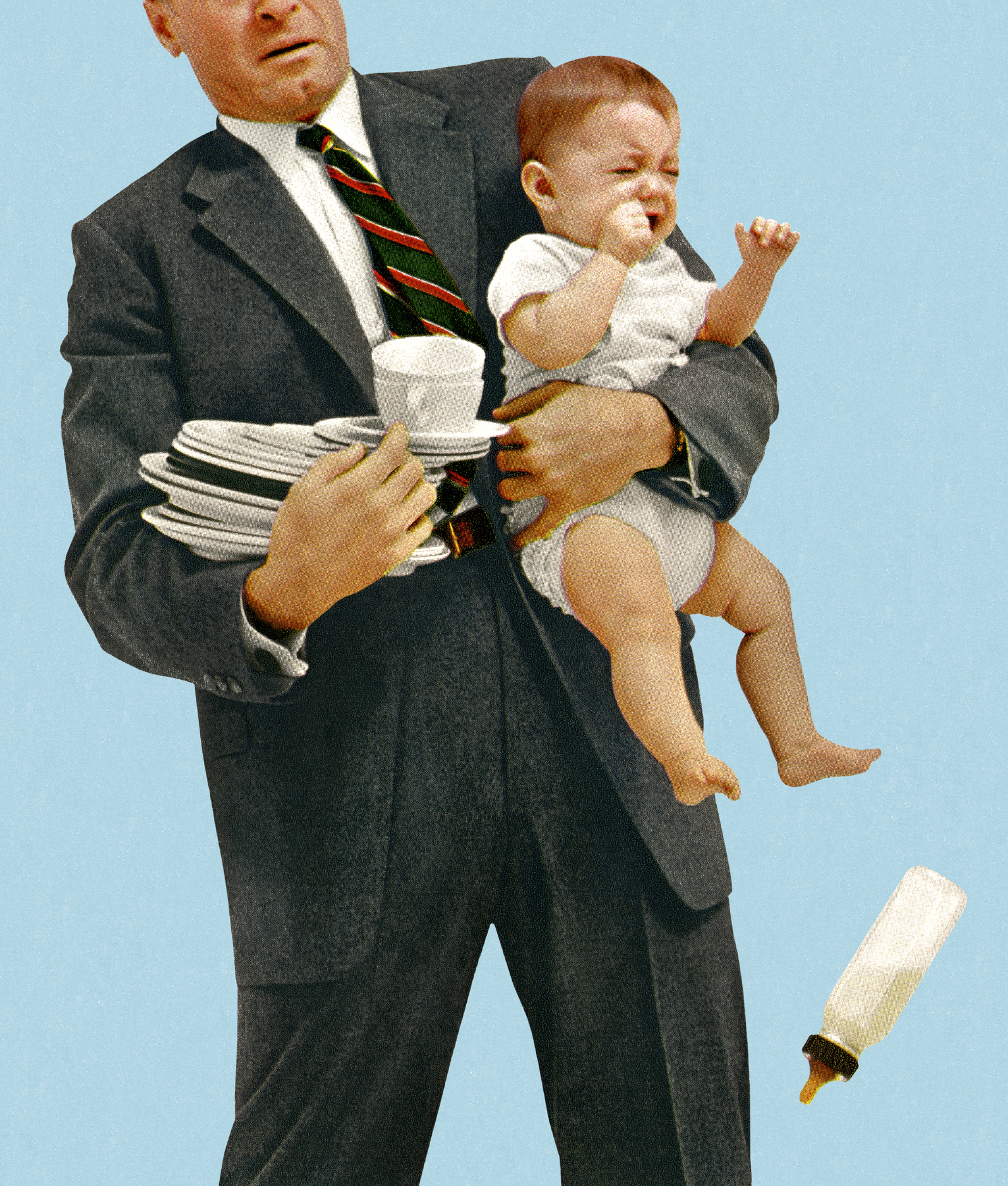
Do baby cry translators work?
Apps aim to help overwhelmed new parents decode the meaning of their baby’s wails.
What if babies could talk?
It’s one of the great unanswered questions of our time — a muse to some of humankind’s foremost thinkers (the creators of “The Boss Baby,” etc.) — and we may be closer to an answer than ever before.
AI baby translation, specifically of babies’ cries (one of the main sounds babies make), is on the rise. An app store search for “baby translator” nets dozens of products aimed at helping frazzled new parents decode the meaning behind their baby’s wails.
The tech works like Shazam, the app that identifies music. You record your baby crying, the AI cross-references its dataset of labeled cries, and voila — you’re presented with a translation.
Some apps, like Nanni AI and Cappella, have a translation feature within a larger “parent assistant” program which features monitors, sleep trackers, and feeding logs. ChatterBaby is a translator built out of research by UCLA’s institute for neuroscience. Others range from glorified white-noise apps to a parody tool that translates baby noises into quirky phrases you’d see on a onesie, like “don’t talk to me until I’ve had my bottle.”
These translators, often free to download, make money in a variety of ways, from premium-tier subscriptions (Cappella’s translator is free, but users who want to use milestone-tracking features pay $10/month) to research grants and more traditional funding (Nanni AI’s parent company, Ubenwa Health, received $2.5 million in funding in 2022).
For new parents, translating their baby’s cries has a natural draw as they look for any way to confirm what their nonverbal offspring needs or wants. Baby cries are evolutionarily designed to make humans stress out, and parents trying to learn their newborn’s “language” aren’t helped by sleep deprivation.
The teams behind AI baby translators seek to make the process of understanding what babies want simpler. Unlike larger AI models trained on — essentially — everything, AI baby translators are trained only on labeled audio recordings of infants crying. The quality of that foundational “Monsters, Inc.”-ian cry data is key to any given app’s reliability.
Quality cries are hard to come by
“We actually had to create fake cry detectors to weed out all of the adults pretending to be babies crying,” said Ariana Anderson, founder of ChatterBaby at UCLA. Anderson had a team of researchers analyze one available database of baby cries used by some translation apps (which claimed to analyze cries with 99% accuracy) and found that all the cries labeled as “gassy” were actually just some guy talking.
“As they always say in AI, ‘bad data, bad model,’” Apolline Deroche, founder of Cappella, said. She said the Cappella team made early mistakes, like collecting cries recorded by parents in homes and purchasing datasets from other baby-translation companies. “This one dataset that we bought, we realized that only 7% of it was actually baby cries. The other 93% was TV, background noise, and people talking.”
Deroche said Cappella’s current cry-collection process is much more rigorous. Doctors and nurses at two partnering Bucharest hospitals record a cry, look for seven identifiers before labeling it, and then have a second nurse or doctor listen to confirm or reject the label before adding it to Cappella’s database.
There’s another core issue with the baby-translation business: babies learn fast. Deroche said Cappella’s baby-translation tech is reliable only until babies are six months old. Soon, users will be automatically downgraded and lose the translation tool after six months, but retain other features like monitoring and tracking milestones.
Charles Onu, founder of Ubenwa Health and creator of Nanni AI (which says it has analyzed 1.5 million cries from 140,000 users since the app launched this year), said the goal was to eventually go into hospitals commercially as a tool to aid in diagnosis.
No consensus on the legitimacy of baby translation
How legit are baby translators? Good question.
Research dating to the 1960s seems to generally agree that, one, adults with lots of experience with babies (doctors, nurses, parents) are better at deciphering the meaning behind newborn cries than others, and, two, there’s a limit to how much meaning babies are passing along when they wail.
The most reputable cry translators keep their interpretations relatively simple, separating cries into categories like pain, hunger, tiredness, or discomfort. Some apps get more specific, providing translations like “earache” or “diaper change.” But Barry Lester, a professor at Brown University, colic expert, and author of “Why Is My Baby Crying?,” said that in his decades of research, there are only two kinds of baby cries that’ve been identified reliably: pain cries and cries for everything else.
“This idea that a baby cries differently when they're hungry, or bored, or sleepy, or any of that stuff, is just crap,” Lester said.
Lester has been studying infant cries for more than half a century and has developed an acoustic cry-analysis system. In his office, Lester has a collection of decades’ worth of bogus-baby-cry tech — he calls it his “cry museum.” From a tool covered in baby faces that lights up an appropriate face correlated to the cry type (Lester said it’s stupid and doesn’t work) to a product the FDA asked him to evaluate that plugs up a baby’s mouth to “absorb” loud cries (he did not give it his stamp of approval), Lester is deeply skeptical of any infant tech making bold claims.
ChatterBaby’s Anderson echoed that idea. ChatterBaby offers a limited batch of cry translations, and its 90% translation accuracy claim is specific to pain. Parents, Anderson said, should be wary of apps that promise too much.
“There's a big problem in this field where there's a lot of snake oil and bad science going on,” Anderson said. “It can do a lot more harm than good if we’re relying on an AI tool to tell us whether to feed our baby.”
Research has shown that, broadly, AI isn’t reliable at reading human emotions. A good test of a cry translator’s legitimacy is to see if it's claiming to interpret emotions newborn babies can’t have yet.
“We’ll see some AI baby translators which will claim with a straight face ‘this baby is bored,’” Anderson said. “Well, cognitively, a baby is not able to be bored when they are zero to 3 months old. So if you have tools predicting things which cannot exist in newborns, you automatically know that it’s not based in science.”
For new parents frustrated by the limitations of baby translation and searching for help, Lester encourages trusting your intuition.
“Our species is pretty damn good at carrying on and reproducing, and parenting is built into us,” he said. He thinks these devices impede the parent-newborn relationship. “My advice to new parents is to pay attention to the baby’s signals and cues and try and figure out what the kid is saying. They can figure it out. You will figure it out.”
As for other baby sounds like gurgling and babbling, sorry, nobody knows what the hell they’re trying to say.




