

Tech
tech
Rani Molla

Musk and Dimon’s self-serving AI predictions

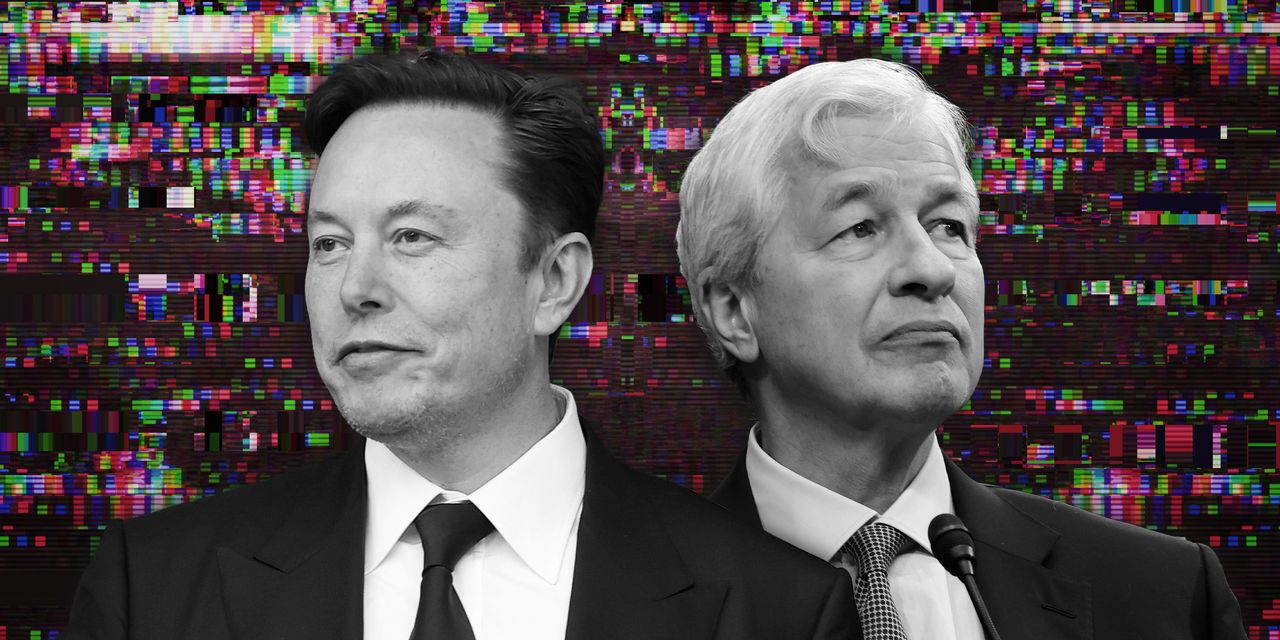
Billionaires Elon Musk and Jamie Dimon both made big prognostications this week about AI’s impact on society.

“My guess is that we’ll have AI that is smarter than any one human probably around the end of next year,” the Tesla and xAI founder said in an interview broadcast on Twitter/X.

In Dimon’s annual letter to shareholders, the JPMorgan Chase CEO wrote of AI, “Think the printing press, the steam engine, electricity, computing and the Internet, among others.”

It’s unclear how much of these predictions will turn out to be empty hype. What we do know is that Musk, who also founded xAI, and Dimon, whose bank employs more than 2,000 AI and machine-learning experts, have plenty of skin in the game.

In Dimon’s annual letter to shareholders, the JPMorgan Chase CEO wrote of AI, “Think the printing press, the steam engine, electricity, computing and the Internet, among others.”

It’s unclear how much of these predictions will turn out to be empty hype. What we do know is that Musk, who also founded xAI, and Dimon, whose bank employs more than 2,000 AI and machine-learning experts, have plenty of skin in the game.

More Tech

See all Tech
tech

OpenAI’s models are officially coming to Amazon

Amazon is finally getting in on the hottest ticket in tech.

After Microsoft announced yesterday that it has agreed to give up its exclusive rights to sell OpenAI’s models, Amazon, as expected, will start offering them to customers — something Amazon Web Services CEO Matt Garman says users have been asking for “for a really long time.” Some models are available now in preview, and the most powerful GPT versions will show up “in the coming weeks.”

This is a big shift in the AI cloud wars. Microsoft’s early bet on OpenAI gave Azure an edge by locking up the most in-demand models. Now that exclusivity is gone, Amazon and other competitors can finally offer them too, closing a key gap and competing more directly for AI customers.

This is a big shift in the AI cloud wars. Microsoft’s early bet on OpenAI gave Azure an edge by locking up the most in-demand models. Now that exclusivity is gone, Amazon and other competitors can finally offer them too, closing a key gap and competing more directly for AI customers.

tech

Ship-tracking app surges as Iran war continues

As Middle East peace talks stretch on, with Tehran reportedly offering to reopen the Strait of Hormuz if the US lifts its blockade and the war ends, the owner of shipping intelligence platform MarineTraffic revealed that the app has gained millions of new users since the conflict began.

MarineTraffic’s user count jumped to 8.5 million this April, up from 3.5 million a year ago, the cofounder of its parent company, Kpler, said in an interview with the Financial Times. Paid subscribers, often workers within companies and governments looking for more data on supply chains and commodities trading, rose 11,000 in the same period.

Kpler, which also owns shipping intelligence platform FleetMon, draws its data from a range of sources, including the Automatic Identification System, satellites, and more than 500 people on-site, like port terminal operators.

Per Appfigures data, MarineTraffic is estimated to have raked in almost $1 million across March and April in app revenue (through April 27), more than double the ~$346,500 from the same months last year. Across the full year, Kpler expects to earn between $300 million and $400 million in annual recurring revenues.

tech

Google will supply AI models to Pentagon in classified deal, per The Information

Google has become the latest tech company to ink an agreement to supply the Department of Defense (War) with AI, having reportedly closed a classified deal that allows the Pentagon to use its AI for “any lawful government purpose,” according to The Information.

The Information initially reported talks between the Alphabet-owned company and the US government around two weeks ago, following the messy breakdown of the relationship between Anthropic and the Trump administration — and the rushed OpenAI deal that took its place.

The move has reportedly sparked opposition among Google employees, with The Washington Post reporting that over 600 workers signed a letter to CEO Sundar Pichai to ask him to bar the Defense Department from using the company’s AI models for any classified work.

The Information initially reported talks between the Alphabet-owned company and the US government around two weeks ago, following the messy breakdown of the relationship between Anthropic and the Trump administration — and the rushed OpenAI deal that took its place.

The move has reportedly sparked opposition among Google employees, with The Washington Post reporting that over 600 workers signed a letter to CEO Sundar Pichai to ask him to bar the Defense Department from using the company’s AI models for any classified work.

Latest Stories

Sherwood Media, LLC produces fresh and unique perspectives on topical financial news and is a fully owned subsidiary of Robinhood Markets, Inc., and any views expressed here do not necessarily reflect the views of any other Robinhood affiliate, including Robinhood Markets, Inc., Robinhood Financial LLC, Robinhood Securities, LLC, Robinhood Crypto, LLC, Robinhood Derivatives, LLC, or Robinhood Money, LLC. Futures and event contracts are offered through Robinhood Derivatives, LLC.
