Tech
tech
Rani Molla

Federal workers will now get Grok’s AI chatbot, too

Earlier this month a number of AI companies, including OpenAI, Google, and Anthropic, announced partnerships with the US government wherein federal workers would get access to their respective chatbots for ludicrously small fees. Notably absent was xAI’s Grok, which missed out on the initiative after it began praising Hitler last month. That no longer seems to be a problem for the government.

Wired reports that the White House earlier this week ordered federal workers to roll out Grok “ASAP.” It’s unclear what caused the about-face. Perhaps xAI and Tesla CEO Elon Musk is back in President Trump’s good graces, after fallouts earlier this summer.

AI companies are hoping that by offering government agencies access to their services for incredibly low prices — $1 per year for ChatGPT and Claude, and $0.47 for Gemini — they’ll be able to hook workers into relying on their products and will eventually be able to eke out more lucrative contracts.

Wired reports that the White House earlier this week ordered federal workers to roll out Grok “ASAP.” It’s unclear what caused the about-face. Perhaps xAI and Tesla CEO Elon Musk is back in President Trump’s good graces, after fallouts earlier this summer.

AI companies are hoping that by offering government agencies access to their services for incredibly low prices — $1 per year for ChatGPT and Claude, and $0.47 for Gemini — they’ll be able to hook workers into relying on their products and will eventually be able to eke out more lucrative contracts.

More Tech

See all Tech
tech

Big Tech capital expenditure soared in 2025. It’s going up another 50% in 2026.

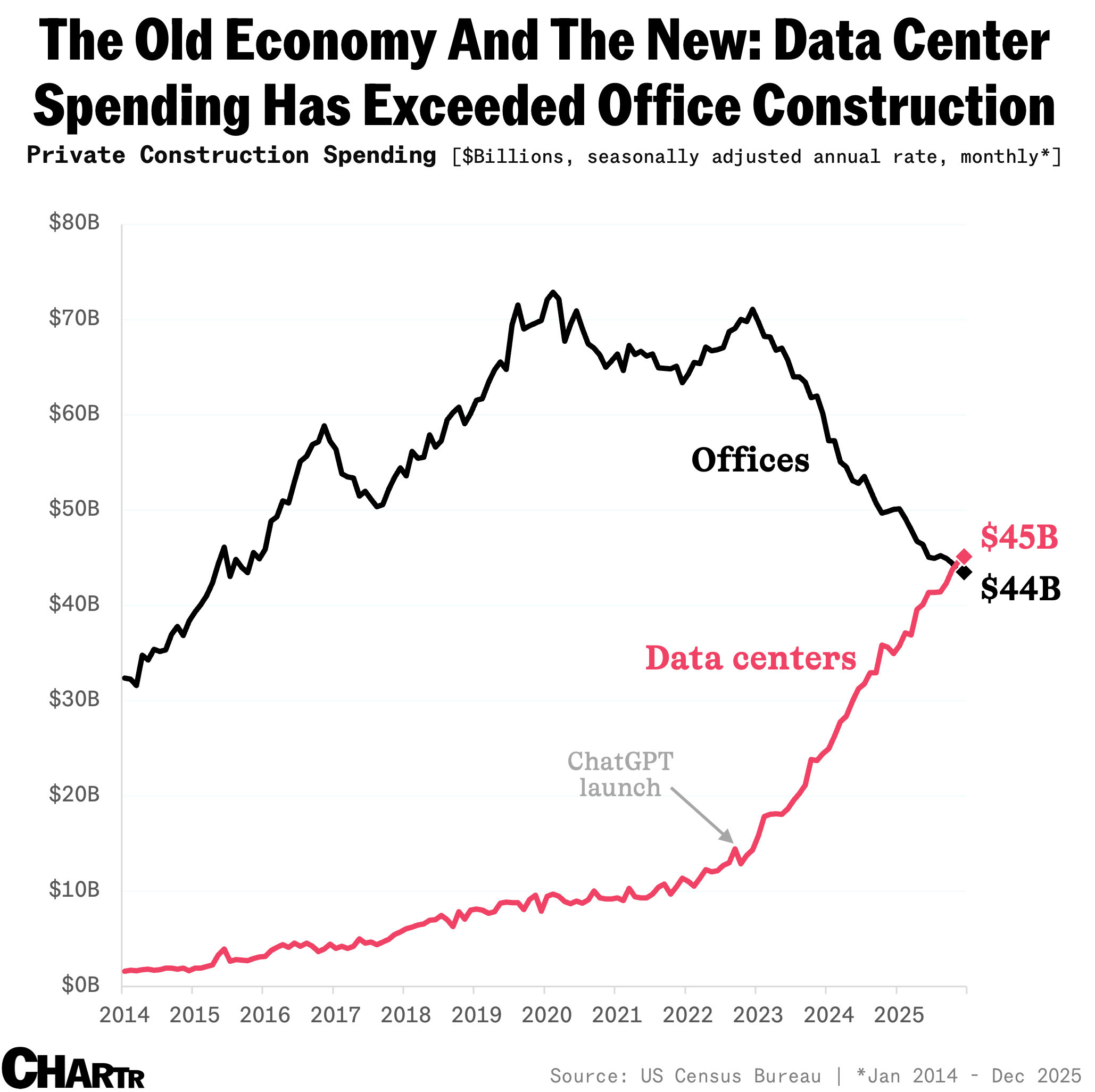
Last quarter was one for the record books when it came to Big Tech’s purchases of property and equipment. Combined, Amazon, Alphabet, Microsoft, and Meta spent nearly $400 billion on capex, sans leases, in total last year, mostly in service of building out the AI infrastructure that they hope will furnish their futures.

And 2026 is only getting more expensive.

The four are expected to spend 50% more in 2026 than in 2025: roughly $600 billion. Amazon said it’s on the hook for $200 billion in capex this year, while Google expects to spend between $175 billion and $185 billion. Not too far behind, Meta estimated its 2026 capex would be $115 billion to $135 billion. Microsoft didn’t give an estimate, but analysts have its 2026 calendar year capex at around $114 billion. However, it should be noted that analysts’ expectations for 2026 were way lower than the reality for the rest.

tech

Anthropic’s Claude Opus 4.6 gains financial research, improved coding features

It’s a model-for-model battle between OpenAI and Anthropic, as the startups vie for dominance in AI coding tools.

Not to be outdone by OpenAI’s release today of GPT-5.2-Codex, Anthropic has released a new model that also improves its coding skills: Claude Opus 4.6.

According to the release, the new model now has the ability to perform financial research, adding new utility to its Claude Cowork tool, which recently gained new legal work capabilities that made investors bet against established software companies. This time, the news is sinking financial research firms like FactSet and S&P Global.

Claude Opus 4.6 can help with longer, more complex coding projects and perform more detailed debugging and code review tasks. It also features improvements in its ability to work with documents, spreadsheets, and presentations.

Anthropic says the new model made strides in safety as well, showing extremely low rates of “misaligned behavior.”

According to the release, the new model now has the ability to perform financial research, adding new utility to its Claude Cowork tool, which recently gained new legal work capabilities that made investors bet against established software companies. This time, the news is sinking financial research firms like FactSet and S&P Global.

Claude Opus 4.6 can help with longer, more complex coding projects and perform more detailed debugging and code review tasks. It also features improvements in its ability to work with documents, spreadsheets, and presentations.

Anthropic says the new model made strides in safety as well, showing extremely low rates of “misaligned behavior.”

tech

OpenAI releases its answer to Claude Code, first AI model with “high capability” risk for cybersecurity

AI agents that can write code have quickly become one of the most profitable, and competitive, applications coming from the current crop of AI startups.

Anthropic’s Claude Code is enjoying a moment of popularity among software engineers, and it’s shoring up the startup’s revenue projections as it aims for an IPO this year. Claude Code’s launch, along with Anthropic’s release of Claude Cowork, which is aimed at nontechnical users, has been a key force behind software stocks’ massive recent underperformance.

Today OpenAI released its latest salvo in the AI code war: GPT-5.3-Codex, an “agentic coding” model that takes its name from OpenAI’s Codex coding app.

OpenAI says that GPT-5.3-Codex is the first model that was “instrumental in creating itself.”

According to the announcement, the new model can be used to build complex websites, interactive games, and achieved a new industry-wide high score on the widely used SWE-Bench Pro software development benchmark test.

But the model is also the first that OpenAI has released that comes with a “high capability” risk for cybersecurity, meaning the company’s evaluations showed that the tool had the potential to be used for sophisticated cyberattacks, though OpenAI says it has added mitigations to prevent such misuse.

Today OpenAI released its latest salvo in the AI code war: GPT-5.3-Codex, an “agentic coding” model that takes its name from OpenAI’s Codex coding app.

OpenAI says that GPT-5.3-Codex is the first model that was “instrumental in creating itself.”

According to the announcement, the new model can be used to build complex websites, interactive games, and achieved a new industry-wide high score on the widely used SWE-Bench Pro software development benchmark test.

But the model is also the first that OpenAI has released that comes with a “high capability” risk for cybersecurity, meaning the company’s evaluations showed that the tool had the potential to be used for sophisticated cyberattacks, though OpenAI says it has added mitigations to prevent such misuse.

Latest Stories

Sherwood Media, LLC produces fresh and unique perspectives on topical financial news and is a fully owned subsidiary of Robinhood Markets, Inc., and any views expressed here do not necessarily reflect the views of any other Robinhood affiliate, including Robinhood Markets, Inc., Robinhood Financial LLC, Robinhood Securities, LLC, Robinhood Crypto, LLC, or Robinhood Money, LLC.