

Final Boss
How to SOLV a problem
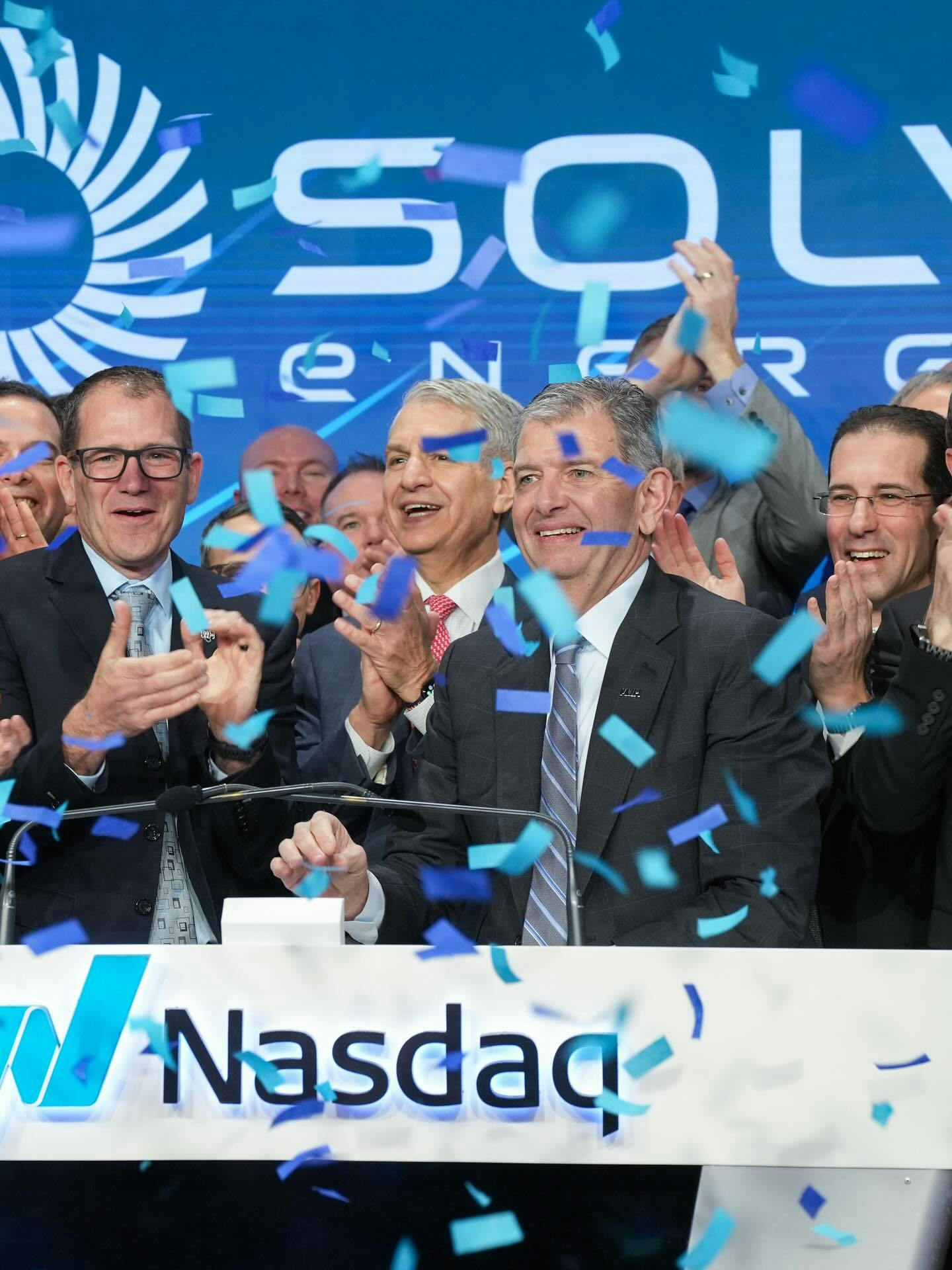
Fresh off an IPO, SOLV Energy’s CEO sees a bright future with burgeoning demand, despite Trump’s distaste for solar
We spoke with George Hershman minutes after his company went public, surging in its first day on the Nasdaq.
Driven by hundreds of billions of spending by Big Tech on AI infrastructure, demand for electricity has never been higher.
One of the few constraints on companies racing to build ever-larger data centers is the availability of reliable power. Natural gas-powered turbine manufacturers are facing a yearslong backlog, and permitting for nuclear power operates at a glacial speed compared to the breakneck pace that tech companies want to move at.
Solar power installations with energy storage are well suited to take advantage of this moment of unprecedented demand. Solar is cheaper and much faster to deploy than other modes of power generation, and has the benefit of giving tech companies some much-needed cover as policymakers demand that they “pay their own way” for the incredible amount of power that they plan on using.
One company that seeks to capitalize on this dynamic is San Diego-based SOLV Energy, which went public yesterday, with its shares rising more than 20% on their first day of trading on the Nasdaq. The company builds, operates, and manages utility-scale solar installations for independent power producers. Sherwood News spoke with SOLV Energy CEO George Hershman yesterday, literally minutes after the shares hit the market for the first time.
This conversation has been edited for clarity and length.
Sherwood News: Congratulations on the IPO. I like your ticker, MWH.
George Hershman: Yeah, megawatt-hours — it’s a product we deliver, so we thought it was appropriate.
Sherwood: How are you feeling?
Hershman: Really good. Honestly excited for the 2,500 employees that go to work every day and build the energy future. I’m really excited for them. This is because of their hard work; it’s why we are where we are.
Sherwood: It looks like utility [photovoltaic] installations were growing at a pretty brisk pace through 2024, but now face a forecast slowdown due to the regulatory landscape, as I understand it. And tariffs also seem to be placing pressure on solar. How do you respond to this moment?
Hershman: We are not seeing that. Yes, I think there’s some market research that is showing a slowing in 2026, 2027. There was a belief in the market that there’s some pull forward because of regulatory issues, or tax credit policy. But the reality is the demand is so high for energy in this country that we’re seeing historical demand. I’ve been running this company since 2008, and I’ve never seen this kind of demand from customers, because of the need for energy in every area. Solar and storage is the lowest-cost energy and the fastest to deploy. So if you need energy, you know this is the right market, and we’re the right company.
Sherwood: You seem to have all the advantages, especially now with the demand coming from data centers and everyone talking about how we need to just completely rethink how much energy our country is going to need.
Still, it is a strange moment where the Trump administration seems to really not favor solar. How does it feel to be basically poised for success with every other metric, but then to have the regulatory landscape, or at least the signals coming from the administration, not be pushing solar as a solution?
Hershman: I think it’s signals over action, right? What we’re seeing in the market is that projects are getting approved, federal permits are being issued, and projects are are moving forward. So there’s definitely a balance between what you hear and what you see — and what we’re seeing is that projects are moving forward and faster than ever before.
Everybody recognizes that the speed to market and the lowest cost is what ultimately drives people’s decisions, and that’s why we’re seeing projects that are just getting larger, and demand getting higher.
By the time you pair solar plus storage, you have a great generation source that allows you to generate during the day and deploy whenever it’s needed. So the balance of the two is just driving market demand.

Sherwood: What does your supply chain look like today?
Hershman: I’ve been in the industry a long time and supported it from a lot of different industry groups, and I think one of the things that I’m most proud of is the fact that the supply chain today is as robust as it’s ever been.
There’s a large amount of product that’s made in the US that we install every day, and a lot of manufacturing is distributed all over the world. So there’s a great supply chain. Again, you know from the moment we put a shovel in the ground to the time we deliver megawatt-hours is like 12 to 18 months, and no other energy source can can deliver at that kind of speed, and that’s because the supply chain has has been built and been made so robust over the last few years.
Sherwood: Does your supply chain face any pressure from tariffs right now?
Hershman: Sure. I mean the unfortunate thing is that almost every product has got some level of tariff on it. So a lot of our product, as I said, is domestically sourced. But tariffs have impacted price, and unfortunately that price just flows through to our customers, and their customer’s customer, and then sometimes even a retail payer.
That’s the unfortunate story that is tariffs. Our product costs more and that has to be passed on to the customers, and as much upstream as possible, our customers’ customers.
Sherwood: I saw in your S-1 that you have a $6.7 billion backlog, which sounds like a lot. Is that at all constrained by the supply chain, or just all of the demand?
Hershman: The demand. The backlog continues to grow. I think that’s a number that we had in place in end of September, but we’ve seen the the backlog even continue to grow through the end of the year.
Our customers, their customers, are demanding the product. Most of those are data centers, hyperscalers, utilities, that are supporting data center demand in their regions. So that’s continuing to to grow, and something we’re really excited about.
Sherwood: Last week, we were all surprised to hear how Elon Musk said he was pivoting away from Mars to the moon, and was talking a lot about building data centers in space, to take advantage of all the solar energy that’s hitting the Earth. Do you think about space as a frontier potentially?
Hershman: Well listen — I’ll never say no to anything, but if I try to convince some people they want to build on the moon, it might be a little bit of a challenge.
But I’m actually happy that Elon Musk has come out and said he wants to start building solar panels again, and really put a lot of manufacturing might around building hundreds hundreds of megawatts of solar panels in the US that we can deploy. I think that’s the message that I appreciate from him recently.



.gif)