

Tech
tech
Rani Molla

Google drops after partially losing antitrust case

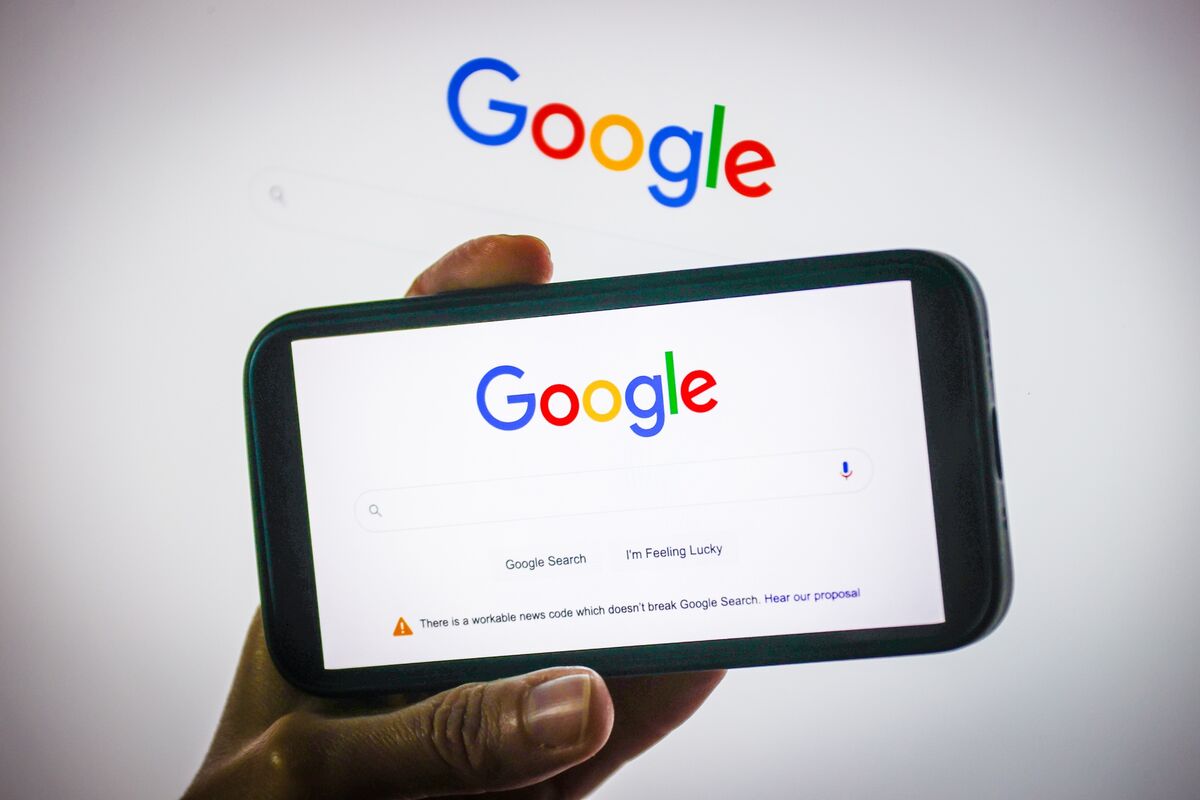
A federal judge found today that Alphabet illegally monopolized some online advertising technology markets. US District Judge Leonie Brinkema said Google violated antitrust law in the markets for advertising exchanges and ad servers. Google was previously found to have a monopoly in search.

In the memorandum opinion, the judge wrote:

In sum, Plaintiffs have shown that Google engaged in “willful acquisition or maintenance of [its monopoly] power as distinguished from growth or development as a consequence of a superior product, business acumen, or historic accident” by tying DFP to AdX and committing a series of exclusionary and anticompetitive acts to entrench its monopoly power in two adjacent product markets.

The court will set a date to discuss remedies, which could include monetary damages and the divesture of Google’s publisher ad server and ad exchange products.
In the memorandum opinion, the judge wrote:

In sum, Plaintiffs have shown that Google engaged in “willful acquisition or maintenance of [its monopoly] power as distinguished from growth or development as a consequence of a superior product, business acumen, or historic accident” by tying DFP to AdX and committing a series of exclusionary and anticompetitive acts to entrench its monopoly power in two adjacent product markets.

The court will set a date to discuss remedies, which could include monetary damages and the divesture of Google’s publisher ad server and ad exchange products.

More Tech

See all Tech
tech

Elon Musk tells Google executive that “Waymo never really had a chance against Tesla”

Not one for modesty, Tesla CEO Elon Musk responded to a post on X by Jeff Dean, chief scientist at Google DeepMind, by saying, “Waymo never really had a chance against Tesla.” He added, “This will be obvious in hindsight.”

Dean had noted that Waymo vehicles have driven riders 96 million miles autonomously without a driver, alluding to the fact that Tesla’s Robotaxi service still requires safety operators in the front seat in both its locations.

Tesla currently operates about 30 Robotaxi vehicles in Austin and 120 in the Bay Area, while Waymo had more than 2,500 across the country (at least 200 in Austin and 1,000 in the Bay Area) as of late November. Musk has said Tesla would remove safety monitors in Austin and that it would scale to 500 vehicles there and 1,000 in the Bay Area by year-end, but the clock is ticking on reaching those goals.

Tesla, of course, is more focused on the 6.7 billion miles its vehicles have driven with Full Self-Driving tech, driver assistance software that requires a driver be present and paying attention. The idea is that, with a software update, millions of Teslas could be turned into potential robotaxis.

Read more on Tesla and Waymo’s battle for driverless supremacy here.

tech

Amazon announces major AI investment in India a day after Microsoft

Amazon said today that it plans to invest more than $35 billion in India by 2030, adding to the nearly $40 billion it has invested in the country so far. The latest investment is focused on AI-driven digitization, boosting exports, and expanding employment, the company said.

The news comes just after Microsoft revealed it would spend $17.5 billion on the subcontinent from 2026 to 2029 to accelerate the nation’s AI infrastructure.

India has become a strategic battleground for global tech firms thanks to its rapidly growing digital economy, vast developer base, and government support for AI infrastructure. Together, the back-to-back announcements underscore how aggressively both cloud giants are ramping up their global AI spending as they race to build — and profit from — the next generation of computing.

India has become a strategic battleground for global tech firms thanks to its rapidly growing digital economy, vast developer base, and government support for AI infrastructure. Together, the back-to-back announcements underscore how aggressively both cloud giants are ramping up their global AI spending as they race to build — and profit from — the next generation of computing.

tech

OpenAI races to release updated ChatGPT in response to Gemini, the WSJ reports

OpenAI could release an updated GPT-5.2 as soon as this week as it races to respond to Google’s Gemini 3 chatbot. Last week, OpenAI CEO Sam Altman declared a “code red” in response to the threat, as Google appeared to leap to the front of the pack with its high-scoring AI model.

Altman has directed OpenAI teams to pause work on its quest for AGI and the Sora 2 video generation app, and double down on its core flagship product, ChatGPT, as it faces new pressure from competitors, The Wall Street Journal reports.

Altman seems to be panicking that if the company’s core product falls out of favor, it may not be able to generate the cash needed to pay for the $1.4 trillion worth of deals it has signed, according to the report.

Altman has directed OpenAI teams to pause work on its quest for AGI and the Sora 2 video generation app, and double down on its core flagship product, ChatGPT, as it faces new pressure from competitors, The Wall Street Journal reports.

Altman seems to be panicking that if the company’s core product falls out of favor, it may not be able to generate the cash needed to pay for the $1.4 trillion worth of deals it has signed, according to the report.

900M

OpenAI’s ChatGPT is nearing 900 million weekly active users, according to a new report from The Information, up from 800 million in October. The Microsoft-backed chatbot has notably higher usership than Google’s Gemini, which as of its last earnings call had 650 million monthly active users. (ChatGPT’s monthly number is likely much higher than its weekly stats.)

Still, The Information notes that thanks to the success of Google’s latest AI model, app downloads have jumped and visits to its website are growing much more swiftly than those to ChatGPT’s — stats that have contributed to a “code red” situation at OpenAI.

Latest Stories

Sherwood Media, LLC produces fresh and unique perspectives on topical financial news and is a fully owned subsidiary of Robinhood Markets, Inc., and any views expressed here do not necessarily reflect the views of any other Robinhood affiliate, including Robinhood Markets, Inc., Robinhood Financial LLC, Robinhood Securities, LLC, Robinhood Crypto, LLC, or Robinhood Money, LLC.