
Tech
TAIWAN-TECH-BUSINESS-AI-COMPUTEX
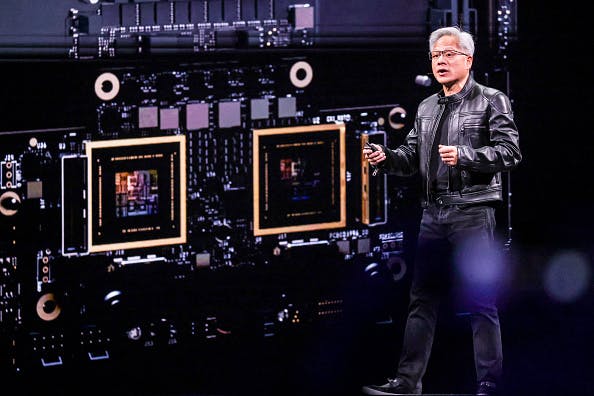
(I-Hwa Cheng/Getty Images)
top of the flops

Hoppers, Blackwells, and Rubins: A field guide to the complicated world of Nvidia’s AI hardware

It’s common knowledge that Nvidia is at the core of the AI boom, but understanding what makes a “superchip” or why a NVL72 rack costs millions takes a bit of work.

Jon Keegan

No company has played a more central role to the current AI boom than Nvidia. It designed the chips, networking gear, and software that helped train today’s large language models and scale generative-AI products like ChatGPT to billions of users.

Understanding Nvidia’s AI hardware offerings, even for the tech savvy, can be challenging. While many of the biggest tech companies are hard at work building their own custom silicon to give them an edge in the ultracompetitive AI market, you will find Nvidia’s AI hardware powering pretty much every big AI data center out there today.

Some estimates have Nvidia owning as much as 98% of the data center GPU market. This has fueled the company’s meteoric rise to become one of the world’s largest companies. 

A chip by any other name...

To start understanding the landscape of Nvidia’s chips, it’s helpful to understand what each generation is called and which semis came out in that time. Going all the way back to 1999, Nvidia has named its various chip architectures after famous figures from science and mathematics. 

Earlier generations of Nvidia’s chip architecture powered the rise of advanced video graphics cards (in case you didn’t know, GPU stands for graphics processing unit) that helped propel the video game industry to new heights, but GPUs’ ability to run massively parallel vector math turned out to make them perfectly suited for AI.

The hot H100

The breakout star of Nvidia’s hardware offerings was undoubtedly the most powerful Hopper series chip, the H100 Tensor Core GPU. Announced in April 2022, this GPU was a breakthrough that featured the new “Transformer Engine,” a dedicated accelerator for the kinds of processing that large language models relied on for both training and “inference” (running a model) — which saw a 30x improvement from the previous generation’s fastest chip, the A100.

After OpenAI’s ChatGPT exploded onto the scene, demand for the H100 led tech companies to stockpile hoards of hundreds of thousands of the GPUs to help build bigger and faster large language models.

The H100s are estimated to cost between $20,000 and $40,000 each.
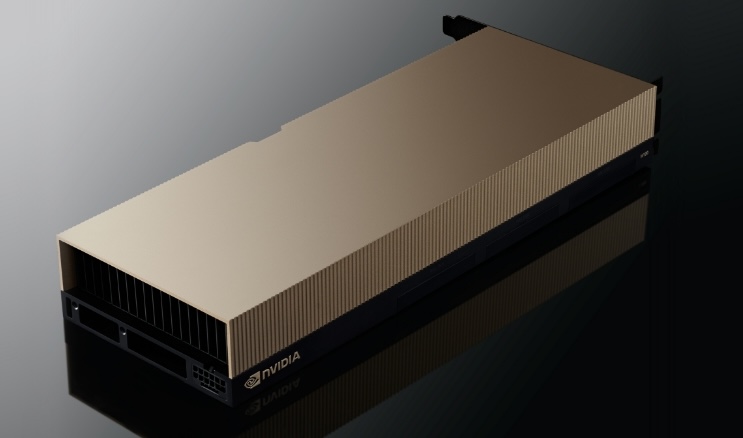
Nvidia H100
A Nvidia H100 GPU (Nvidia)

Blackwell “superchip”

In the fast-moving AI industry, while the H100 is still a hot item, the latest chip everyone is turning to is the GB200 — what Nvidia calls the “Grace Blackwell superchip.” This chip combines two Blackwell series B200 GPUs and a “Grace” CPU in one package.
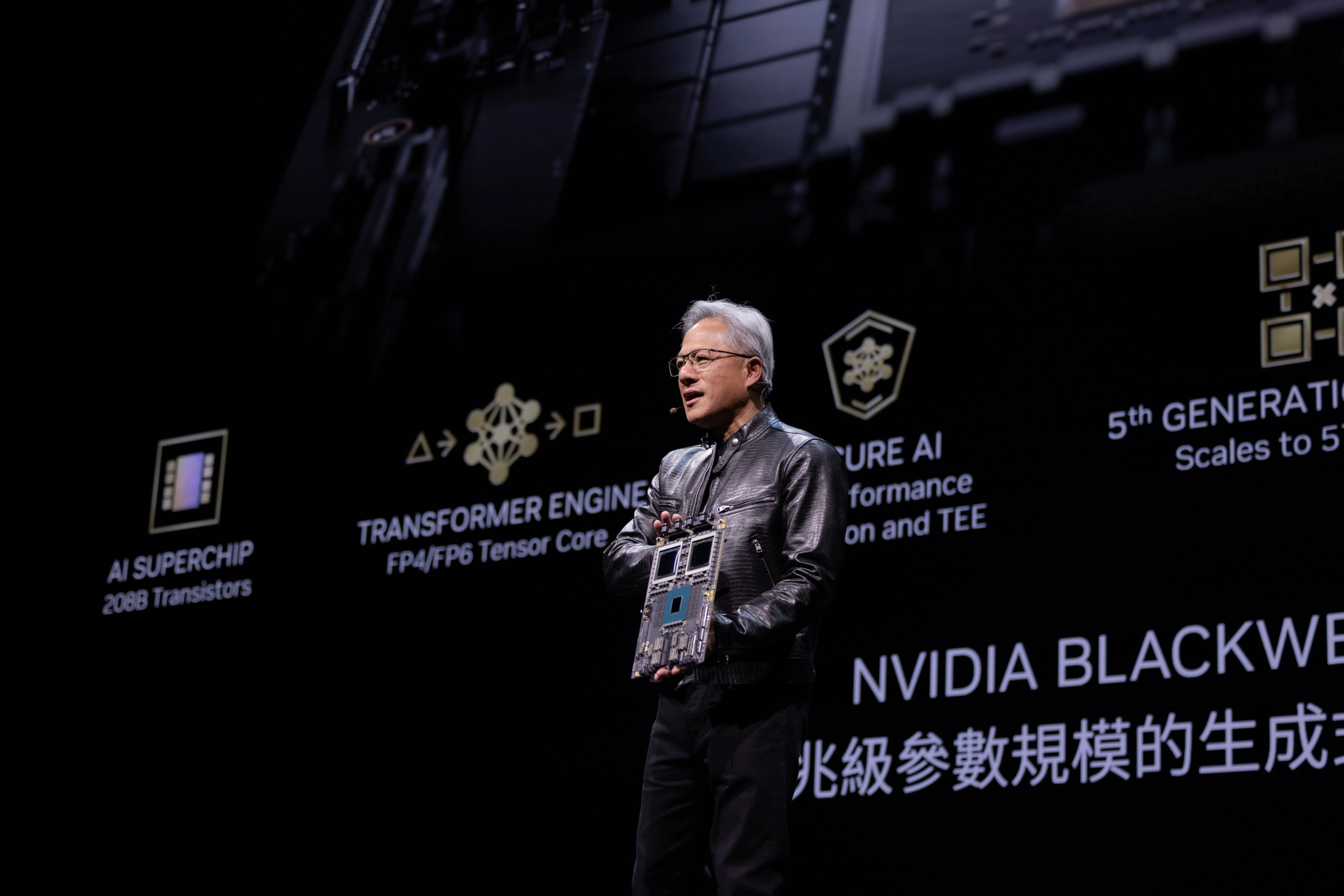
Nvidia GB200 superchip
Nvidia CEO Jensen Huang holding a GB200 superchip at the Computex expo (Nvidia)

But if youre in the market for such powerful AI hardware, it’s likely you want dozens, hundreds, or even thousands of these chips wired up with the fastest interconnections you can get. That’s where the “GB200 NVL72” comes in. The NVL72 comes packed with 36 of the GB200 superchips — so 36 Grace CPUs and 72 of the B200 GPUs. Confused yet?

And if youre going on a GPU shopping spree, you better have lined up some VCs with deep pockets. Each GB200 superchip is estimated to cost between $60,000 and $70,000, while a fully equipped NVL72 rack is estimated to cost roughly $3 million, as it requires not only the pricey superchips but also expensive networking and liquid cooling.

If that’s too rich for you, you can always turn to AI investor darling CoreWeave, which advertises access to its batch of GB200 NVL72s starting at $42 per hour. CoreWeave says it has over 250,000 Nvidia GPUs in its data centers.
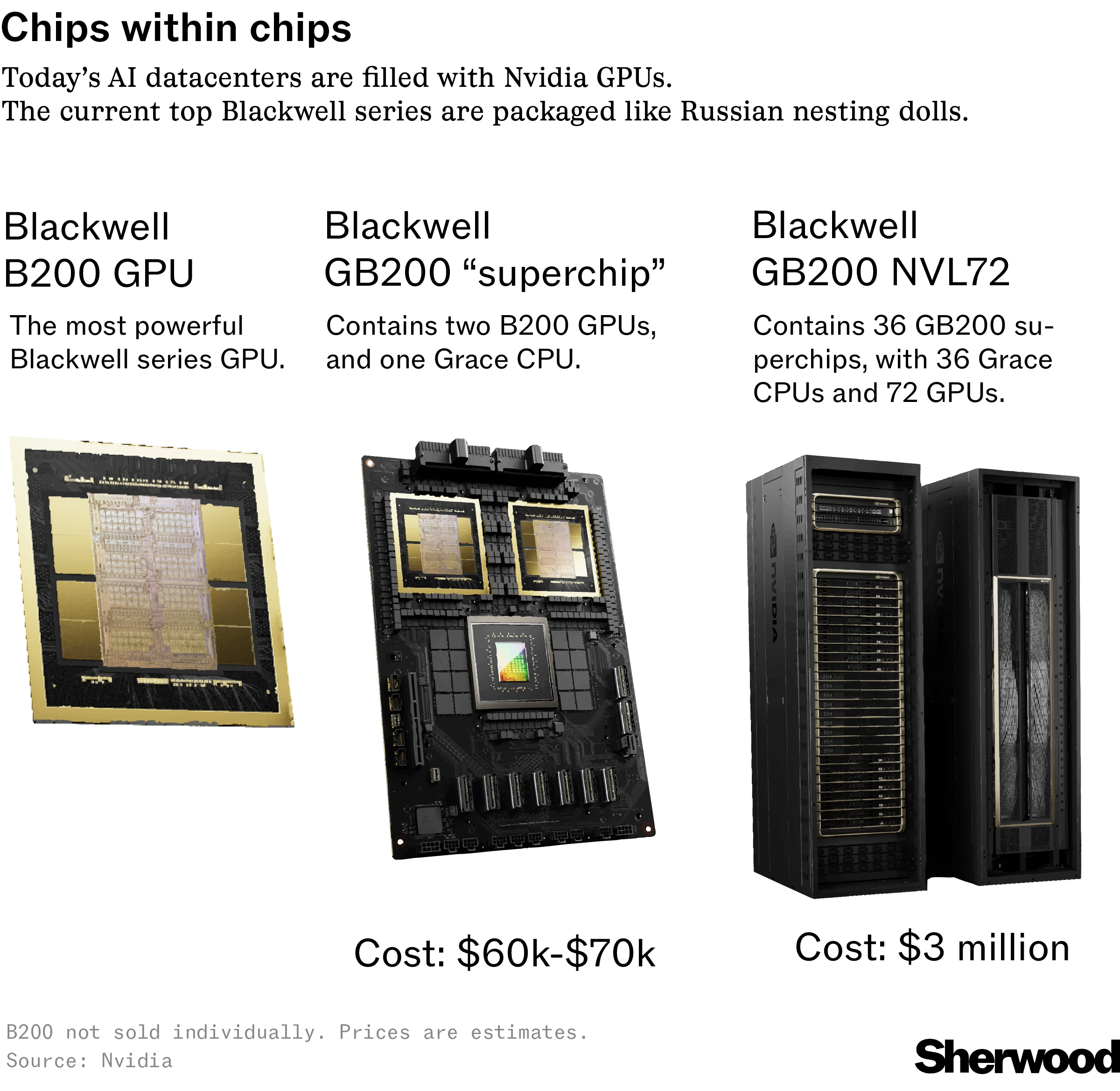
Chips within chips

According to Bloomberg, the “Stargate” mega data center project backed by OpenAI, SoftBank, and Oracle is planning on installing 400,000 of the GB200 superchips.

And Meta CEO Mark Zuckerberg has stated that he expects the company to have over 1.3 million GPUs by the end of 2025.

Leaps in performance

When youre talking about leaps forward in AI, its important to remember than rather than slow incremental bumps, each generation of chips is making exponential gains in a metric known as FLOPS, which measures performance.

Rubin matters

All this Nvidia jargon aside, there’s one model name you should pay attention to: Rubin, which will be the next leap forward in compute power.

Next year we’ll see the first of the Rubin architecture chips, the “Vera Rubin” superchip named after the American astronomer known for discovering dark matter.

Following the Vera Rubin chip release will be the Vera Rubin NVL144 (144 GPUs) and then Vera Rubin Ultra NVL576 (576 GPUs) in the second half of 2027.

Phew. Got all that?

More Tech

See all Tech
42

Forty-two is the answer to life, the universe, and everything in Douglas Adams’ classic “The Hitchhiker’s Guide to the Galaxy.” It’s also the number of unsupervised Robotaxis Tesla has on the road in Texas, the only state where it’s operating autonomous service, according to records from a newly required government database in the state.

That’s much lower than CEO Elon Musk had hoped, as the company struggles to ready its camera-only autonomous vehicles for commercial scale. In 2025, Musk said that the service would be available to “half the population of the US by the end of the year.”

Even smaller competition has more: Avride has 317 and Nuro has 47. Meanwhile, Tesla’s chief rival, Alphabet subsidiary Waymo, has 577 in operation in the state. Nationwide, Waymo’s fleet currently numbers more than 3,000.

Unfortunately for Tesla, figuring out how to actually scale its robotaxi fleet remains the ultimate question.

INDIA-TECHNOLOGY-AI-DIPLOMACY

Anthropic raises $65 billion at a $965 billion valuation, releases a more “honest” Claude Opus 4.8

Anthropic’s monster $965 billion valuation puts it firmly ahead of OpenAI’s $850 billion valuation as the rivals head toward expected IPOs later this year.

tech
Jon Keegan

Report: Microsoft tries to get back in the AI coding game with new model

Microsoft wants to fight its way back into the AI coding field by releasing a new model next week at its annual Microsoft Build developer conference, The Information reports.

The company is expected to announce a new family of models as Microsoft AI CEO Mustafa Suleyman seeks to shore up the company’s own AI offerings and gradually wean it off OpenAI’s technology over the remainder of their $13 billion partnership.

Microsoft was initially well positioned to meet software developers with AI-enhanced tools. It owns GitHub, the most popular platform for hosting and sharing code, and GitHub’s Copilot AI-powered coding tool was released months before OpenAI’s ChatGPT debuted in 2022.

But it fumbled one of the biggest first-mover advantages in history as Anthropic’s Claude Code, OpenAI’s Codex, and Cursor rolled out coding tools that developers loved.

Microsoft was initially well positioned to meet software developers with AI-enhanced tools. It owns GitHub, the most popular platform for hosting and sharing code, and GitHub’s Copilot AI-powered coding tool was released months before OpenAI’s ChatGPT debuted in 2022.

But it fumbled one of the biggest first-mover advantages in history as Anthropic’s Claude Code, OpenAI’s Codex, and Cursor rolled out coding tools that developers loved.

Ojai outside

Waymo to launch free robotaxi rides in its new Ojai vans

The new vehicles are less expensive — which is important for the service to really scale.

Rani Molla5/28/26
tech
Rani Molla

Report: Tesla’s Robotaxi trainers don’t think it’s ready for prime time

If you listen to Tesla CEO Elon Musk, you might think rapid expansion of the company’s Robotaxi service is right around the corner. If you listen to the people tasked with reviewing the footage and training its AI, that future is a long way off.

An in-depth report from Reuters that interviewed nine former “data labelers” and a former Tesla self-driving engineer paints a picture of highly massaged safety stats, vehicles failing to execute basic driving functions, and a behind-the-scenes reality where the supposedly “autonomous” tech relies heavily on the exact kind of localized, labor-intensive mapping and training Musk has publicly mocked. The skepticism runs so deep that one former insider told reporters they wouldn’t ride in a Robotaxi “if you f---ing paid me.”

Currently, the service is operating about 30 unsupervised vehicles across three Texas cities — a much more circumscribed execution than Musk had initially planned. The problem, for Tesla, is that the success of its Robotaxi business is now integral to the company’s value proposition.

An in-depth report from Reuters that interviewed nine former “data labelers” and a former Tesla self-driving engineer paints a picture of highly massaged safety stats, vehicles failing to execute basic driving functions, and a behind-the-scenes reality where the supposedly “autonomous” tech relies heavily on the exact kind of localized, labor-intensive mapping and training Musk has publicly mocked. The skepticism runs so deep that one former insider told reporters they wouldn’t ride in a Robotaxi “if you f---ing paid me.”

Currently, the service is operating about 30 unsupervised vehicles across three Texas cities — a much more circumscribed execution than Musk had initially planned. The problem, for Tesla, is that the success of its Robotaxi business is now integral to the company’s value proposition.

Latest Stories

Sherwood Media, LLC and Chartr Limited produce fresh and unique perspectives on topical financial news and are fully owned subsidiaries of Robinhood Markets, Inc., and any views expressed here do not necessarily reflect the views of any other Robinhood affiliate, including Robinhood Markets, Inc., Robinhood Financial LLC, Robinhood Securities, LLC, Robinhood Crypto, LLC, Robinhood Money, LLC, Robinhood U.K. Ltd, Robinhood Derivatives, LLC, Robinhood Gold, LLC, Robinhood Asset Management, LLC, Robinhood Credit, Inc., Robinhood Ventures DE, LLC and, where applicable, its managed investment vehicles.

