Tech
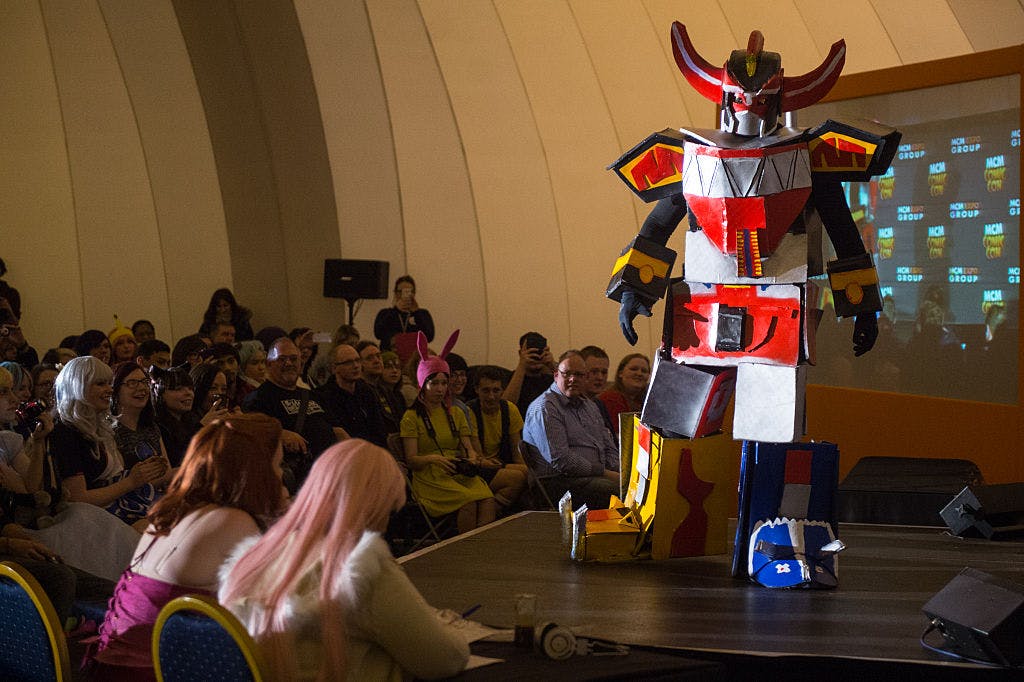
Megazord
Will Oracle’s multiple high-powered execs come together like Megazord? Or will it just be an elaborate cosplay? (Ollie Millington/Getty Images)

If having multiple CEOs is better for stock market returns, Oracle is quadrupling down

But buyer beware: the last time Oracle had co-CEOs, shares underperformed.

Some studies have shown that having more top leaders means better stock market returns. If you’re a believer in that theory, wait until you get a load of what Oracle is doing. 

The behemoth hyperscaler just announced that its CEO for the past 11 years, Safra Catz, is stepping down and being replaced by two new co-CEOs. 

If that seems like a drastic change, let me stop you right there. For all intents and purposes, Oracle is run by its gazillionaire founder Larry Ellison, the second-richest person on the planet. Ellison, naturally, is not actually Oracle’s CEO — he is officially the chairman of the board and chief technology officer. But as a former Oracle exec said to me this morning: “Larry is the real boss. Nobody should think otherwise.”

Next up in the pecking order is likely Catz, who was Oracle’s CEO until today. She is now the executive vice chair of the board, but in the press release announcing the changes, Ellison said, “Safra and I will be able to continue our 26-year partnership — helping to guide Oracle’s direction, growth, and success.”

And then there are the guys who now have the actual title: Clay Magouyrk and Mike Sicilia, two heads of units within the company, have been announced as Oracle’s new co-CEOs. It’s not a stretch of the imagination to think that Oracle now has not one, not two, not even three, but four CEOs.

Some would say that’s a good thing. A Harvard Business Review analysis shows that public companies with co-CEOs have tended to outperform those with single CEOs. From the study:

“We recently took a careful look at the performance of 87 public companies whose leaders were identified as co-CEOs. We found that those firms tended to produce more value for shareholders than their peers did. While co-CEOs were in charge, they generated an average annual shareholder return of 9.5% — significantly better than the average of 6.9% for each company’s relevant index. This impressive result didn’t hinge on a few highfliers: Nearly 60% of the companies led by co-CEOs outperformed.”

Then again, there are also downsides. This “Freakonomics” podcast debated the pluses and minuses of having co-CEOs, including viewpoints from people who have actually been a co-CEO. And it’s not hard to imagine one downside: the bureaucracy in an organization with four people who hold the reins, especially when the top two — Ellison and Catz — seem to be highly engaged in corporate dealmaking and have well-known relationships with the president of the United States. 

For what it’s worth, this isn’t even the first time Oracle has had co-CEOs. In 2014, Ellison technically stepped down as CEO after more than three decades and named Catz and HP veteran Mark Hurd as co-CEOs. It stayed that way until Hurd passed away in 2019. 

If you’re wondering how Oracle did during that time, the stock appreciated 33% over a span of about five years, lagging the 49% return in the S&P 500.


More Tech

See all Tech
tech

Intel pops on reported Apple chip deal

Intel soared more than 14% on a Wall Street Journal report saying the company has reached a preliminary agreement with Apple to manufacture chips for the iPhone maker. Intel, already on a tear as of late, jumped earlier this week when Bloomberg first reported the two companies were in talks. It’s still unclear which chips Intel would manufacture for Apple, which has been facing supply constraints for its iPhone as well other products.

In any case, the deal could help Apple ease supply constraints that have hit some of its products and reduce its reliance on longtime partner TSMC, as it aims to bring more chip manufacturing stateside.

In any case, the deal could help Apple ease supply constraints that have hit some of its products and reduce its reliance on longtime partner TSMC, as it aims to bring more chip manufacturing stateside.

Microsoft CEO Satya Nadella (R) greets OpenAI CEO Sam Altman during the OpenAI DevDay event

Emails show Microsoft wasn’t impressed by OpenAI’s early work, but wanted to keep it from Amazon

OpenAI wanted further Azure computing discounts, but Microsoft didn’t think it was on the verge of a breakthrough.

tech

Wedbush’s Dan Ives raises Apple price target to $400 on $15 billion AI services opportunity

Apple may not have a frontier AI model or a fully functional AI assistant, but that won’t stop the company from throwing its weight around in the “AI revolution,” according to Wedbush Securities analyst Dan Ives. That’s enough for Ives to raise his price target for Apple shares to $400 from $350.

Underpinning that jump is what Ives sees as a $15 billion annual revenue opportunity for Apple in AI services from monetizing other companies’ models by distributing them to its 2.5 billion iOS users. Ives estimates that in the coming years, roughly 20% of the world’s population will access AI through an Apple device, calling it the “consumer hub of AI.”

That new era, Ives expects, will officially kick off at Apple’s developer conference in June, where he expects Apple to “finally unveil its AI strategy.”

tech

Tesla’s Model Y just cleared a new federal safety bar

The National Highway Traffic Safety Administration announced today that Tesla Model Ys manufactured after November 12 were the first to pass the agency’s new advanced driver assistance system tests, which are now part of the New Car Assessment Program. According to NHTSA, Tesla tested the 2026 Model Y and submitted the test results to the organization for review.

“By successfully passing these new tests, the 2026 Tesla Model Y demonstrates the lifesaving potential of driver assistance technologies and sets a high bar for the industry,” NHTSA Administrator Jonathan Morrison wrote in the press release. “We hope to see many more manufacturers develop vehicles that can meet these requirements.”

The new tests include:

  • Pedestrian automatic emergency braking

  • Lane-keeping assistance

  • Blind spot warning

  • Blind spot intervention

The milestone offers Tesla highly coveted regulatory validation, as it seeks to spur usage of its Full Self-Driving (Supervised) tech.

Latest Stories

Sherwood Media, LLC produces fresh and unique perspectives on topical financial news and is a fully owned subsidiary of Robinhood Markets, Inc., and any views expressed here do not necessarily reflect the views of any other Robinhood affiliate, including Robinhood Markets, Inc., Robinhood Financial LLC, Robinhood Securities, LLC, Robinhood Crypto, LLC, Robinhood Derivatives, LLC, or Robinhood Money, LLC. Futures and event contracts are offered through Robinhood Derivatives, LLC.