

Tech
tech
Jon Keegan

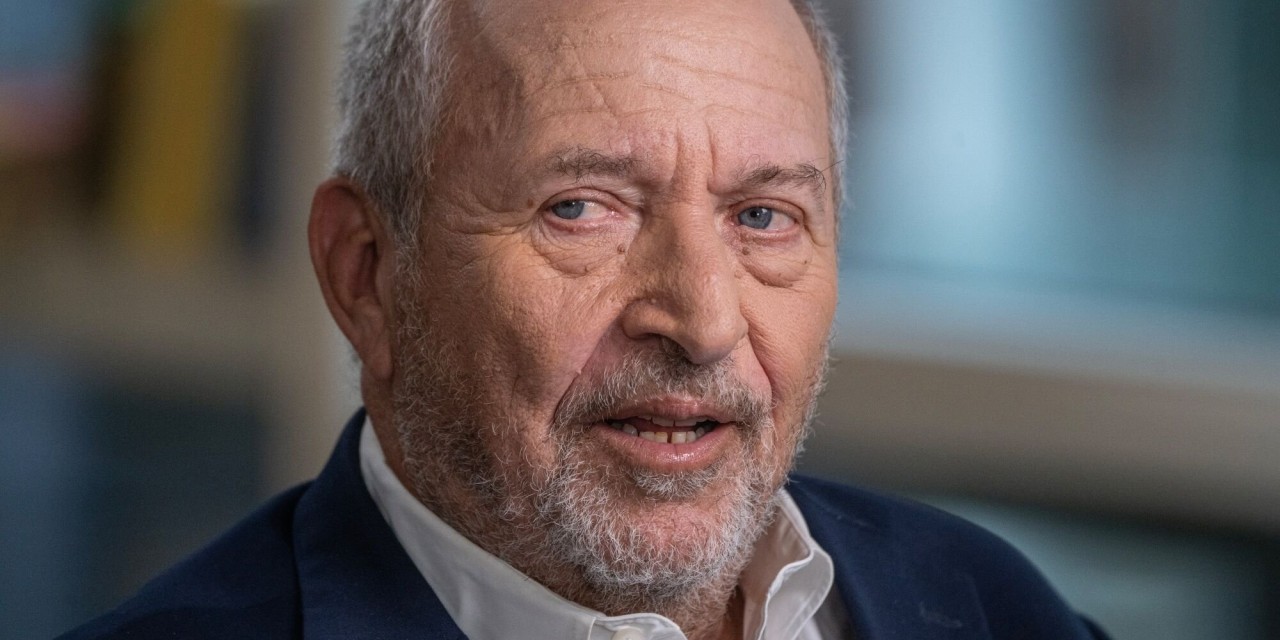
Larry Summers resigns from OpenAI board

Former Harvard President Larry Summers has resigned from OpenAI’s board, according to The Wall Street Journal.

Summers’ email exchanges with Jeffrey Epstein surfaced last week when a House committee released a cache of 20,000 documents from the Epstein estate.

The OpenAI board told the WSJ: “Larry has decided to resign from the OpenAI Board of Directors, and we respect his decision.”

This week Congress passed a bill to release the full Epstein files, and other prominent tech figures are likely to make appearances in the documents.
This week Congress passed a bill to release the full Epstein files, and other prominent tech figures are likely to make appearances in the documents.

More Tech

See all Tech
tech

AI leaderboard maker LMArena hits $1.7 billion valuation

If you want to know who’s up and who’s down in the AI model world, look no further than LMArena’s leaderboard. The startup has just raised a $150 million series A fundraising round, with a valuation of $1.7 billion.

In seven months, LMArena has raised $250 million, according to TechCrunch.

The leaderboard started as a research project by cofounders Anastasios Angelopoulos and Wei-Lin Chiang when they were graduate students at UC Berkeley.

The public leaderboard — formerly known as “Chatbot Arena” — shows the results of human evaluations of AI models for various tasks. Users can rate which model did a better job on one task in a sort of blind taste test.

The leaderboard is a hotly contested proving grounds for new models, and the company occupies a powerful position in an industry that lacks independent, industry-standard evaluations.

The leaderboard started as a research project by cofounders Anastasios Angelopoulos and Wei-Lin Chiang when they were graduate students at UC Berkeley.

The public leaderboard — formerly known as “Chatbot Arena” — shows the results of human evaluations of AI models for various tasks. Users can rate which model did a better job on one task in a sort of blind taste test.

The leaderboard is a hotly contested proving grounds for new models, and the company occupies a powerful position in an industry that lacks independent, industry-standard evaluations.

tech

Uber jumps after unveiling Lucid robotaxi at CES

Uber shares jumped more than 5% after the company unveiled a production-intent robotaxi developed in partnership with Lucid and Nuro at the Consumer Electronics Show on Monday. The autonomous vehicle runs on Nvidia’s Drive AGX Thor computer. Nvidia itself announced a slate of autonomous hardware and software announcements at CES.

The companies said this fall that the San Francisco Bay Area will be the first market for the joint effort. The robotaxi is already being tested on public roads, with a commercial launch planned for later this year.

Uber + Lucid + Nvidia is just another example of the tangled web of partnerships in the autonomous driving space, where Nvidia is now becoming more and more prominent.

The companies said this fall that the San Francisco Bay Area will be the first market for the joint effort. The robotaxi is already being tested on public roads, with a commercial launch planned for later this year.

Uber + Lucid + Nvidia is just another example of the tangled web of partnerships in the autonomous driving space, where Nvidia is now becoming more and more prominent.

tech

Meta delays international Ray-Ban Display expansion thanks to “unprecedented demand” and “extremely limited inventory”

Meta said today that it’s delaying the early 2026 international expansion of its Ray-Ban Display glasses because of “extremely limited inventory” and “unprecedented demand.” The company didn’t specify whether the issue was more supply or demand, but has previously insisted its smart glasses are a hit.

Waitlists for the smart glasses, which are controlled with a band you wear on your wrist, extend “well into 2026.”

“We’ll continue to focus on fulfilling orders in the US while we re-evaluate our approach to international availability,” the company wrote. Expansion had been planned for the UK, France, Italy, and Canada.

In order to buy the smart glasses, consumers must do an in-person product demo to ensure the tech is “properly fitted to you,” according to Meta. Demos in New York City are unavailable for the next few weeks, the company’s scheduling website shows. It also notes that “that due to high demand, the product may be sold out and unavailable for purchase after your demo.”

US-AI-TECH-COMPUTERS-TELECOM

Nvidia’s autonomous tech gives other automakers a chance to take on Tesla

Nvidia made a number of autonomous vehicle announcements at CES yesterday that should have Tesla worried.

tech

Report: Returns on Nvidia’s Omniverse business are underwhelming

Today in Las Vegas, Nvidia’s Jensen Huang will be taking the stage at the CES conference to show off his company’s latest innovations. If youve watched any of Huang’s impressive jargon-filled keynote speeches, you’ll notice that he gets extra animated when talking about “digital twins.”

Nvidia’s “Omniverse” platform allows companies to use Nvidia software and hardware to run large-scale simulations of factories and assembly lines.

The idea is that you can train your robots in Nvidia’s simulated environment, saving huge amounts of time and money. Huang is making a huge bet on this nascent product, and according to a new report, it isn’t exactly taking off.

The Information reports that much to Huang’s anger and frustration, the Omniverse offerings have yet to generate significant revenue.

According to the report, despite a long list of customers who Nvidia says are using Omniverse, some say the software is hard to use and fails to allow for simulating robot interactions with complex objects. The report also says Nvidia shuttered its Omniverse Cloud service in August of last year due to a lack of demand.

Nvidia has certainly successfully blazed trails into new categories before, but considering Huang’s enthusiasm for the Omniverse offerings, it is a rare stumble for the chip juggernaut.

The idea is that you can train your robots in Nvidia’s simulated environment, saving huge amounts of time and money. Huang is making a huge bet on this nascent product, and according to a new report, it isn’t exactly taking off.

The Information reports that much to Huang’s anger and frustration, the Omniverse offerings have yet to generate significant revenue.

According to the report, despite a long list of customers who Nvidia says are using Omniverse, some say the software is hard to use and fails to allow for simulating robot interactions with complex objects. The report also says Nvidia shuttered its Omniverse Cloud service in August of last year due to a lack of demand.

Nvidia has certainly successfully blazed trails into new categories before, but considering Huang’s enthusiasm for the Omniverse offerings, it is a rare stumble for the chip juggernaut.

Latest Stories

Sherwood Media, LLC produces fresh and unique perspectives on topical financial news and is a fully owned subsidiary of Robinhood Markets, Inc., and any views expressed here do not necessarily reflect the views of any other Robinhood affiliate, including Robinhood Markets, Inc., Robinhood Financial LLC, Robinhood Securities, LLC, Robinhood Crypto, LLC, or Robinhood Money, LLC.