


Move fast and buy things
Every now and again I end up on Facebook by mistake, having become sidetracked by friends from high school hawking multilevel marketing schemes or my aunt posting bad political opinions.
Whenever I find myself waylaid in the feed, I’ve usually been making my way to somewhere much more fun: Facebook Marketplace, the company’s buy-and-sell platform, which you can access through the site. In the past year I’ve used Marketplace to buy a trampoline, sell a bed, and give away tons of baby stuff to people nearby.
I go to Marketplace way more than I go to Facebook. I might be part of a trend.
Marketplace saw US desktop visits jump 15% this February compared to a year earlier, according to data from digital intelligence company Similarweb. At the same time traffic to the social network itself declined nearly 4%.
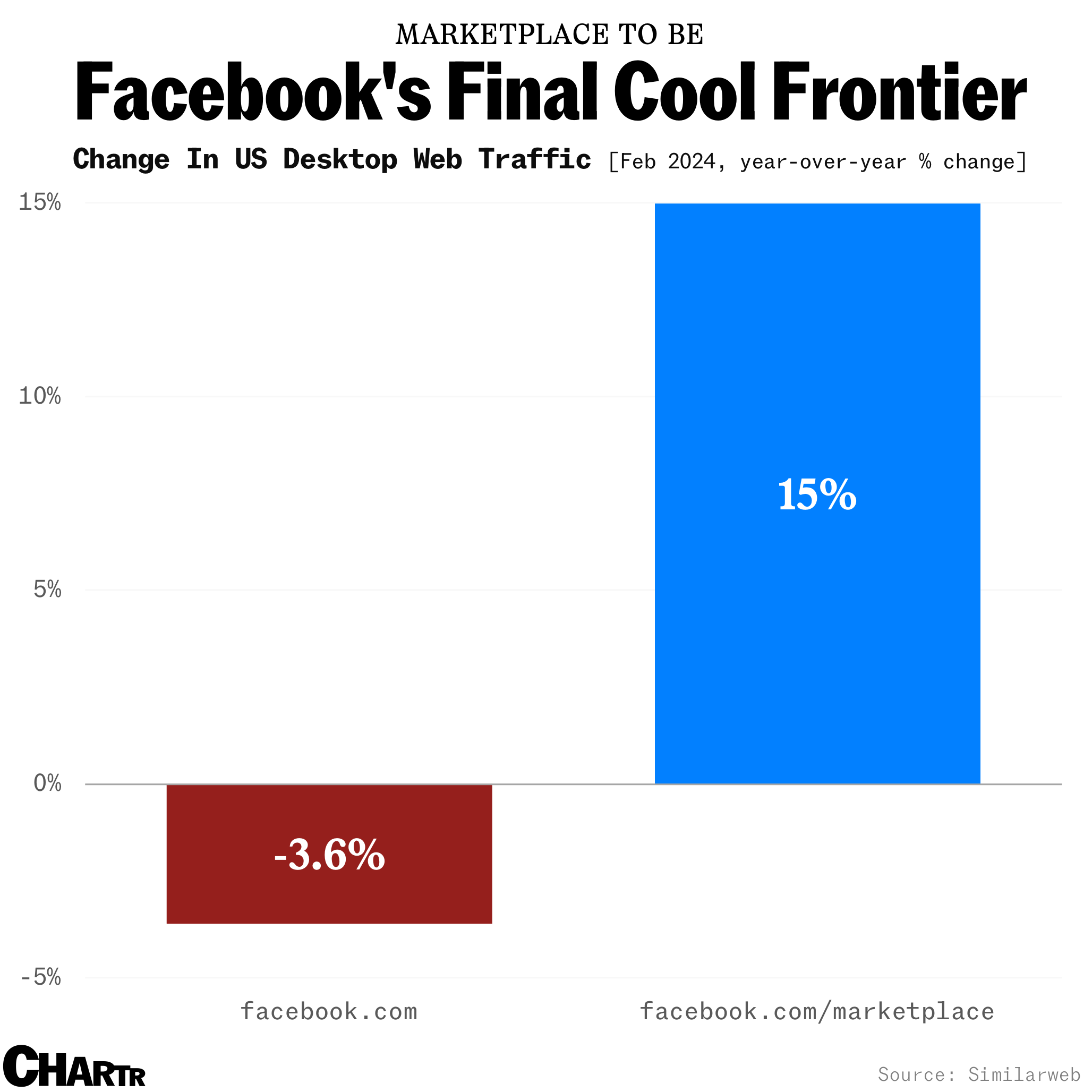
That makes Marketplace a bright spot for the social-media giant, which, after officially turning 20 earlier this year, has been struggling to stay relevant — especially among young people in the US.
As of last year, Facebook had just over 3B monthly active users. Tellingly, the company said during its annual earnings call that it’s “transitioning away from reporting Facebook-specific metrics.” In 2021, the company reported that more than a billion people visited Marketplace each month. More recent figures haven’t been released by the company, and Facebook did not respond to requests for updated usership numbers or requests for comment.
Tag — you’re it
Younger generations might not be tagging their friends on Facebook, but they’re increasingly turning to Marketplace to catch deals. Last month, Tom Alison, the head of Facebook, told Morgan Stanley analyst Brian Nowak: “We're seeing really good kind of strong year-on-year growth for US young adults using Marketplace. They love that product, and it's really been helping us kind of fuel engagement across the ecosystem.”
Nowak responded, “We do surveys on what people do on Facebook, and [Marketplace] always comes up as something I think that the market under-appreciates.” Morgan Stanley declined to share the research.
Marketplace is capitalizing on the growing popularity of buying used stuff, especially among young people, who are concerned with sustainability and — likely — short on cash. Indeed, nearly three-quarters of people now shop resale globally, and in the US that market was worth about $175B last year, according to the Harvard Business Review. It’s become such a popular trend that brands themselves, from Apple to Zara, have moved into the resale market.
Hi, is this still available?
The resale of goods has been made much more accessible thanks to online platforms, where people can search farther afield and more efficiently than at their local thrift shop. Some specialize in clothing (ThredUp, Poshmark), electronics (Swappa, Decluttr), and furniture (AptDeco, Kaiyo), while general mainstays — like eBay, Craigslist, and Marketplace — allow you to buy and sell pretty much anything.
Marketplace launched in 2016 as a sort of Craigslist with accountability (you can view buyers’ and sellers’ profile pages and rate them). But if it was late to the game, it is quickly making up ground.
Marketplace has waxed as those competitors have waned: Google Trends shows that searches for the term “Marketplace” have inched up close to the level of searches for Craigslist and eBay lately.
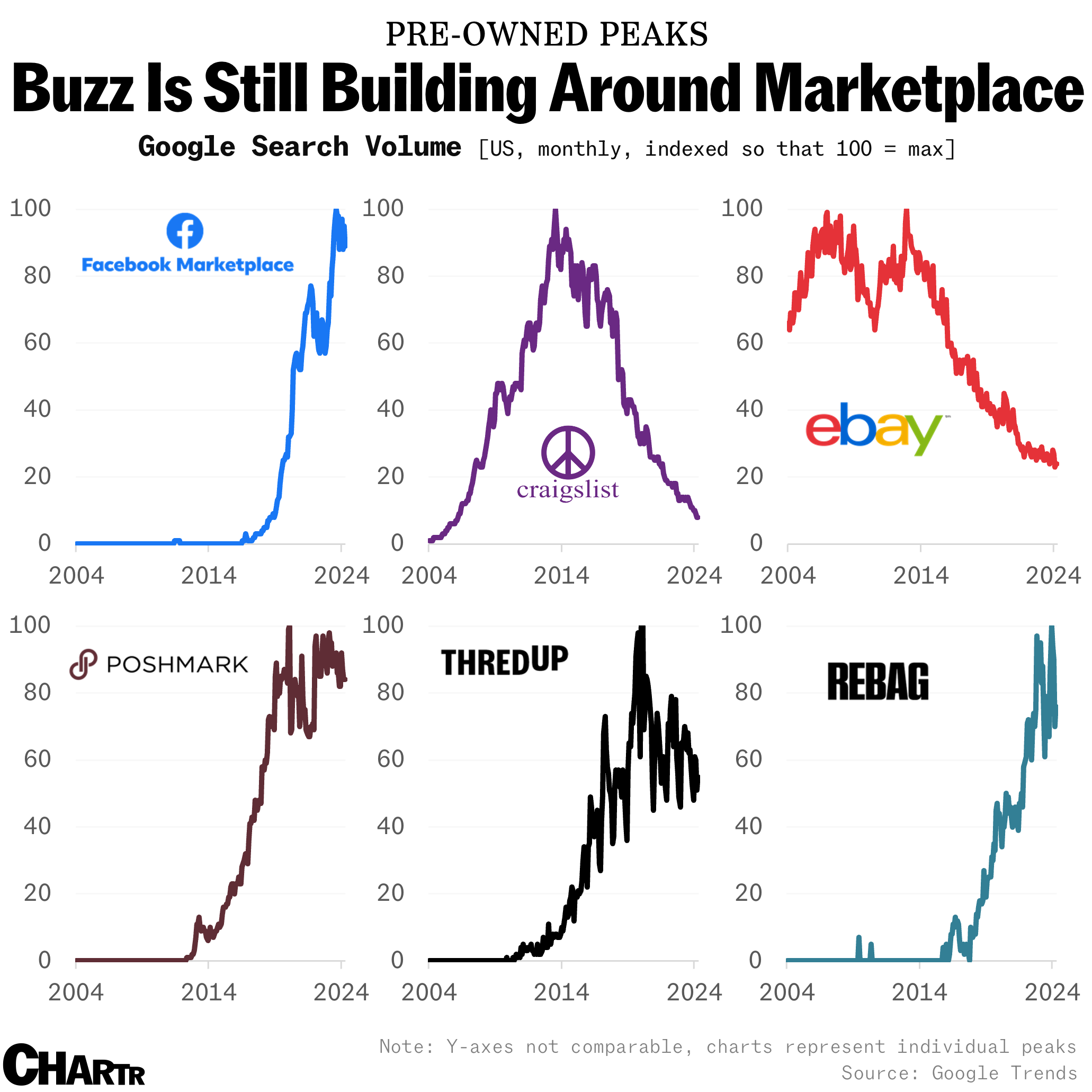
In terms of online interest, Marketplace looks a lot more like buzzy secondhand clothing platforms such as Poshmark and Thredup, rather than the two aforementioned stalwarts of the scene. Indeed, judging from Google search data, building and maintaining hype is a difficult task in the online recommerce scene, unless you’re able to carve out a niche in the space, like Rebag has with designer bags… or your platform lives on the biggest social-media site on Earth.
The marketverse
Although it’s clearly becoming an increasingly popular member of Meta’s expansive family of products, where Marketplace fits into the company’s grand metaverse plan is less clear. While the company does monetize Marketplace through advertising, promoted listings, and shipment fees, it’s unlikely to be a huge money-spinner in its own right… yet. For now, it’s a helpful tool to bring people back to the platform, and once they are there, then Facebook is more than adept at making money.
Despite the rising usage figures and online interest, the quality of the Marketplace, much like the rest of Facebook, seems to have deteriorated in recent years. Scottish bank TSB reported that 60% of all purchase fraud cases originated on Marketplace last year. They also found that a third of ads on the site appear to be scams. Vehicle parts, phones, shoes and clothing, and game consoles appear to be the most scammed items.
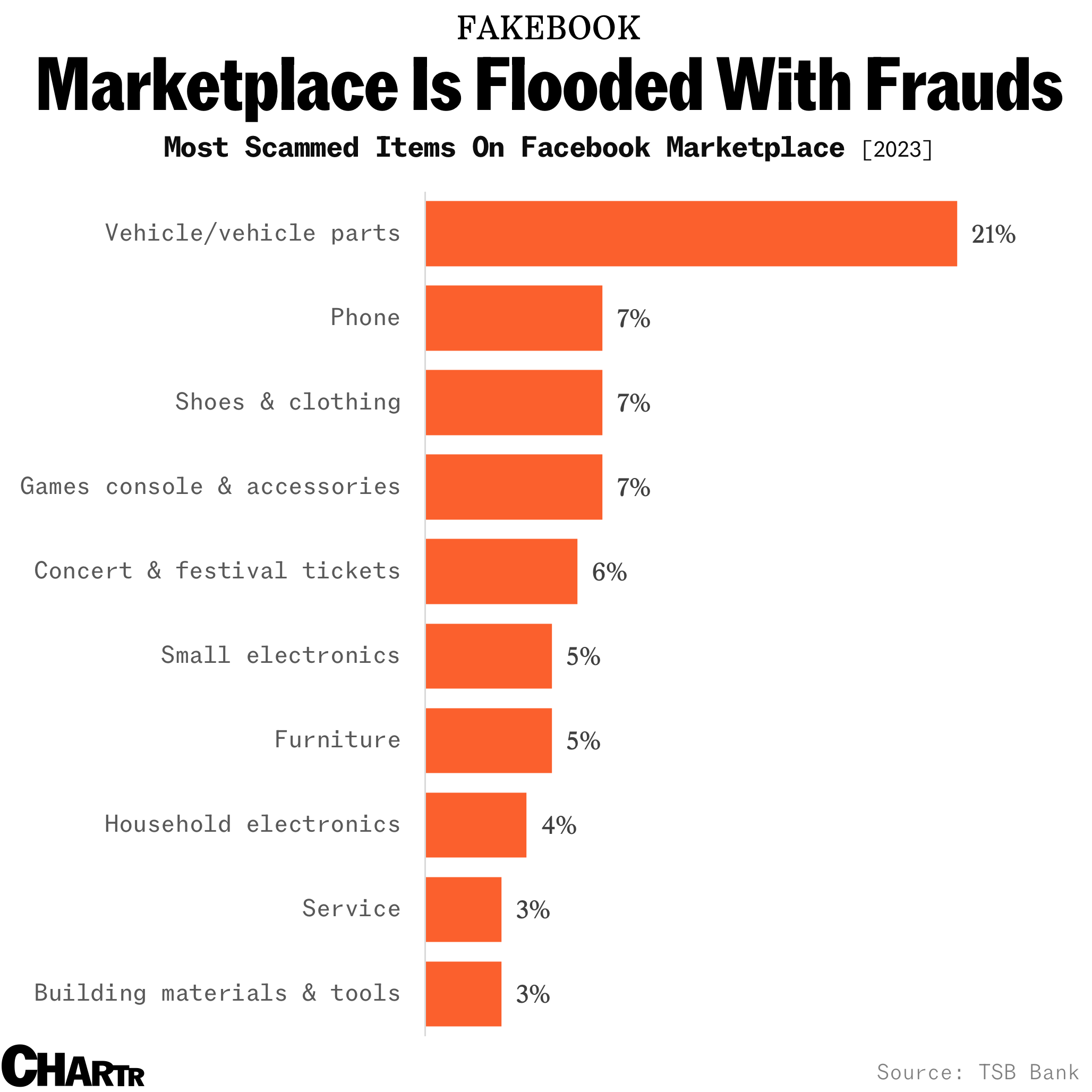
To avoid getting scammed on Marketplace, Wall Street Journal columnist Dalvin Brown suggests a number of tips, including using secure payment methods like credit cards, checking buyers’ and sellers’ profiles to see that they’re real people who’ve existed online for a while, and being wary of too-good prices or high-pressure sales tactics.
I’ve run into a couple of would-be scammers, but it became clear when a deal is too good to be true or when they want online payment ahead of time. For now it still feels worth it.




