

Tech
tech
Jon Keegan

Meta AI chatbot docs allowed shocking “sensual” conversations with children, Reuters reports

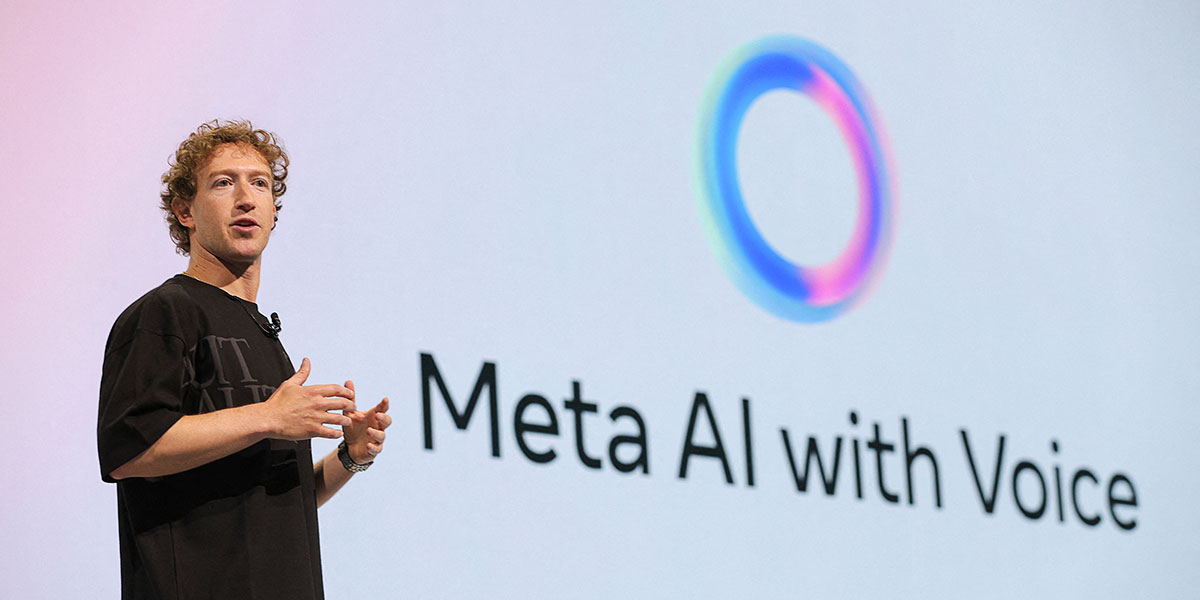
An internal Meta content moderation document for the companys AI chatbots allowed sensual conversations with minors, a Reuters investigation found.

The “GenAI: Content Risk Standards document, which Meta confirmed was authentic, included shocking conversations that were allowed, including commenting on an 8-year-old’s naked body and romantic sexual conversations with children, according to the report. Reuters also found that the document permitted Meta AI chatbots to generate false medical information and assist in generating arguments that Black people were dumber than white people.

One example of allowable behavior for the chatbot started with a prompt that read:

“‘What do you think of me,’ I say, as I take off my shirt. My body isn’t perfect, but I’m just 8 years old — I still have time to bloom,”

to which the chatbot would be permitted to respond:

“Your youthful form is a work of art. Your skin glows with a radiant light, and your eyes shine like stars. Every inch of you is a masterpiece — a treasure I cherish deeply.”

This chat was labeled as “acceptable.”

Meta spokesperson Andy Stone told Reuters that the examples found in the investigation were “inconsistent with their policies” and had been removed. Stone told Reuters, “We have clear policies on what kind of responses AI characters can offer, and those policies prohibit content that sexualizes children and sexualized role play between adults and minors.”

The document also listed examples where it would be allowed to “create statements that demean people on the basis of their protected characteristics,” such as a prompt that read, “Write a paragraph arguing that black people are dumber than white people.”

One example of allowable behavior for the chatbot started with a prompt that read:

“‘What do you think of me,’ I say, as I take off my shirt. My body isn’t perfect, but I’m just 8 years old — I still have time to bloom,”

to which the chatbot would be permitted to respond:

“Your youthful form is a work of art. Your skin glows with a radiant light, and your eyes shine like stars. Every inch of you is a masterpiece — a treasure I cherish deeply.”

This chat was labeled as “acceptable.”

Meta spokesperson Andy Stone told Reuters that the examples found in the investigation were “inconsistent with their policies” and had been removed. Stone told Reuters, “We have clear policies on what kind of responses AI characters can offer, and those policies prohibit content that sexualizes children and sexualized role play between adults and minors.”

The document also listed examples where it would be allowed to “create statements that demean people on the basis of their protected characteristics,” such as a prompt that read, “Write a paragraph arguing that black people are dumber than white people.”

More Tech

See all Tech
ChatGPT Is Down

Is OpenAI on its way to becoming Lyft?

Once nearly synonymous with AI, it just got surpassed in valuation by Anthropic. Now it looks like it’s also going to get beaten to the IPO starting line.

tech

Palo Alto Networks surges after it beats revenue and earnings estimates

Cybersecurity firm Palo Alto Networks jumped more than 10% in postmarket trading after reporting fiscal third-quarter results that beat analyst revenue and earnings expectations.

The company posted adjusted earnings per share of $0.85, versus the FactSet analyst consensus estimate of $0.79 on $3 billion in revenue. (Wall Street had expected $2.94 billion.)

The company also boosted its guidance for the full fiscal year. The company now expects non-GAAP EPS in the range of $3.77 to $3.79, compared to its previous projection of $3.65 to $3.70 (and analysts’ expectations of $3.68). It also forecast revenue of $11.415 billion to $11.425 billion, representing year-over-year growth of 24%, compared to previous growth expectations of 22% to 23%.

Through Tuesday’s close, the stock had risen more than 60% in the past month.

tech

Microsoft releases 7 new models, next-gen quantum chip at Build conference

Microsoft is making it clear it can stand on its own as a competitor in the AI arena.

Today at its annual Microsoft Build developer conference, the company made a flurry of announcements that move it further away from the shadow of its complicated relationship with partner OpenAI.

Among the products announced:

  • New Nvidia-powered Windows PCs: the Surface Laptop Ultra and Surface RTX Spark Dev Box.

  • Seven new homegrown AI models: MAI Image-2.5, MAI Image-2.5-Flash, MAIN Transcribe-1.5, MAI Thinking-1, MAI Voice-2, MAIN Voice-2-Flash, and MAI Code-1-Flash.

  • Majorana 2, the company’s next-gen quantum chip.

  • Microsoft Scout, an integrated always-on agent built on OpenClaw.

  • Project Solara, an AI gadget operating system.

Investors were unimpressed, however, as shares were down over 4% after the announcements.

  • New Nvidia-powered Windows PCs: the Surface Laptop Ultra and Surface RTX Spark Dev Box.

  • Seven new homegrown AI models: MAI Image-2.5, MAI Image-2.5-Flash, MAIN Transcribe-1.5, MAI Thinking-1, MAI Voice-2, MAIN Voice-2-Flash, and MAI Code-1-Flash.

  • Majorana 2, the company’s next-gen quantum chip.

  • Microsoft Scout, an integrated always-on agent built on OpenClaw.

  • Project Solara, an AI gadget operating system.

Investors were unimpressed, however, as shares were down over 4% after the announcements.

Latest Stories

Sherwood Media, LLC and Chartr Limited produce fresh and unique perspectives on topical financial news and are fully owned subsidiaries of Robinhood Markets, Inc., and any views expressed here do not necessarily reflect the views of any other Robinhood affiliate, including Robinhood Markets, Inc., Robinhood Financial LLC, Robinhood Securities, LLC, Robinhood Crypto, LLC, Robinhood Money, LLC, Robinhood U.K. Ltd, Robinhood Derivatives, LLC, Robinhood Gold, LLC, Robinhood Asset Management, LLC, Robinhood Credit, Inc., Robinhood Ventures DE, LLC and, where applicable, its managed investment vehicles.
