

Microsoft madness
NO MORE RESPAWNS

It’s time for the Xbox to fade away
Why Microsoft should move on from its console business and just go third-party.
As Nintendo skyrocketed to juggernaut status in the 1980s and ’90s, its only real competition was Sega, a fellow Japanese publisher that developed countless memorable titles.
Sega was a pillar. It cranked out “Sonic the Hedgehog” games, went up against Game Boy with its own handheld device, and ran attack ads against “Super Mario.” Sega, like Nintendo, appeared to be a video game hardware stalwart that would be around forever.
But that’s not what happened. In 2001, Sega abruptly pulled the plug. It announced it was no longer in the hardware business, unable to compete with Sony’s PlayStation series. It pulled support for its Dreamcast console just two years after its release.
Instead, Sega became a mercenary — a third-party publisher that developed games for its former rivals. Suddenly, Sonic and Mario ceased to be enemies and instead became pals.
That same year, Microsoft stepped into the ring to challenge Nintendo and Sony for the gaming crown. But its attempts to disrupt the industry and make a name for itself with the Xbox resulted in it becoming a perpetual third-place company in video games.
Twenty years later, the Xbox experiment has had its time in the sun. Microsoft was unable to forge it into a true video game powerhouse.
Now, it’s time for the Xbox to become Sega 2.0.
The Deal
In early 2022, Microsoft struck a deal to buy Activision Blizzard, the prolific game publisher behind “Call of Duty” and “Elder Scrolls,” for nearly $70 billion. After more than a year of tangling with regulators, it finally closed the deal in October 2023.
After any big merger or acquisition, massive cuts to headcount inevitably follow. Lo and behold, Microsoft has taken an axe to the Xbox division’s knees, crippling some teams (343 Industries) or outright getting rid of others (Tango Gameworks, Arkane Austin, Alpha Dog Games, Roundhouse Studios). In fact, the layoffs happened so fast and furious after the deal closed that the FTC lodged a complaint.
There have been thousands of layoffs — IGN reported in September that 2,550 gaming workers had been let go since the acquisition. More cuts came earlier this month, with reports that Microsoft was laying off staff in security, sales, and gaming.
It’s worth noting that amid all that gloom and doom, capital M Microsoft — the tech giant with a huge presence in AI — is doing just fine. It’s just its video game division that has problems.
Xbox has never been able to get a foothold in Europe compared to PlayStation, and not even a footprint in Asia compared to mobile gaming or Nintendo. There was a brief panic that Xbox would quit the European market altogether. Heck, even used versions of the ancient Xbox 360, which was released in 2005, outsold the latest Microsoft console in Japan as of last year!
It’s only a matter of time before the brand gets folded, or, as may have been its destiny all along, becomes the new iteration of Activision — a third-party publisher that puts out games for PlayStation consoles and computers.
Why wouldn’t Microsoft just rename and rebrand Xbox as “Microsoft Gaming” around the world? Console sales are dwindling, they don’t need you to buy a system, and they don’t advertise or advocate for you to do so. Why bother with the charade?
Your digital library of Xbox games will live on in the cloud, you’ll be able to play them on a new launcher, Xbox gift cards will disappear from your grocery store checkout aisle, and not that much will change in the industry beyond employee headcount and the number of games released.
When a report like this gets out, you know the end is nigh. Kotaku wrote in October:
“In 2024, when a new game is announced, you can usually count on it to be released on PC, PlayStation, and possibly Switch. But it’s become a bit less of a guarantee that new games or ports will land on Xbox consoles, and it seems Microsoft is aware of this and is asking devs why.
Last month, ‘Enotria: The Last Song’ launched on PS5 and PC...but not Xbox. The devs explained that this was because Xbox had stopped communicating with them. Xbox boss Phil Spencer later reached out to the team and ‘Enotria’ is now planned to arrive on Xbox in the future, but it’s just the latest example of games skipping Microsoft’s console.”
It’s hard to sell Xboxes, so why not just turn everything into an Xbox?
Microsoft has never been consistently good enough at selling Xboxes, so now the move is to turn every device on the planet into an Xbox. Marketing is going full steam ahead on promoting other brands’ devices:
Phil Spencer, the CEO of Microsoft Gaming, has been open when it comes to how things have gone down during his 23 years on the Xbox team. Last summer, he spoke about why Microsoft struggled with console development: most consumers are already committed to one, and Nintendo and Sony have expansive digital catalogs that can’t be beaten.
“We’re not in the business of out-consoling Sony or out-consoling Nintendo,” he said. “There isn’t really a great solution or win for us. I know that will upset a ton of people, but it’s just the truth of the matter.” He added, “It’s just not true that if we go off and build great games, all of the sudden you’re going to see console shares shift in some dramatic way.”
On paper, this makes sense: you vastly increase the number of people who can enter your ecosystem, get hooked on “Call of Duty,” and sink their paychecks into gaming.
The downside to this strategy is that Microsoft is essentially admitting that if everything “is an Xbox,” nothing is an Xbox. In fact, Microsoft is eager to deliver its own exclusive games to anybody who wants them, just to sell more copies of its games — which is admirable, but it’s also akin to waving the white flag on making Xbox the home of its exclusive games.
Attracting a player base with excellent games available only on a specific console was the industry’s game plan for the past 40 years. Microsoft’s goal of everything being an Xbox signals that they aren’t interested in selling people Xboxes because they know it’s a losing proposition.
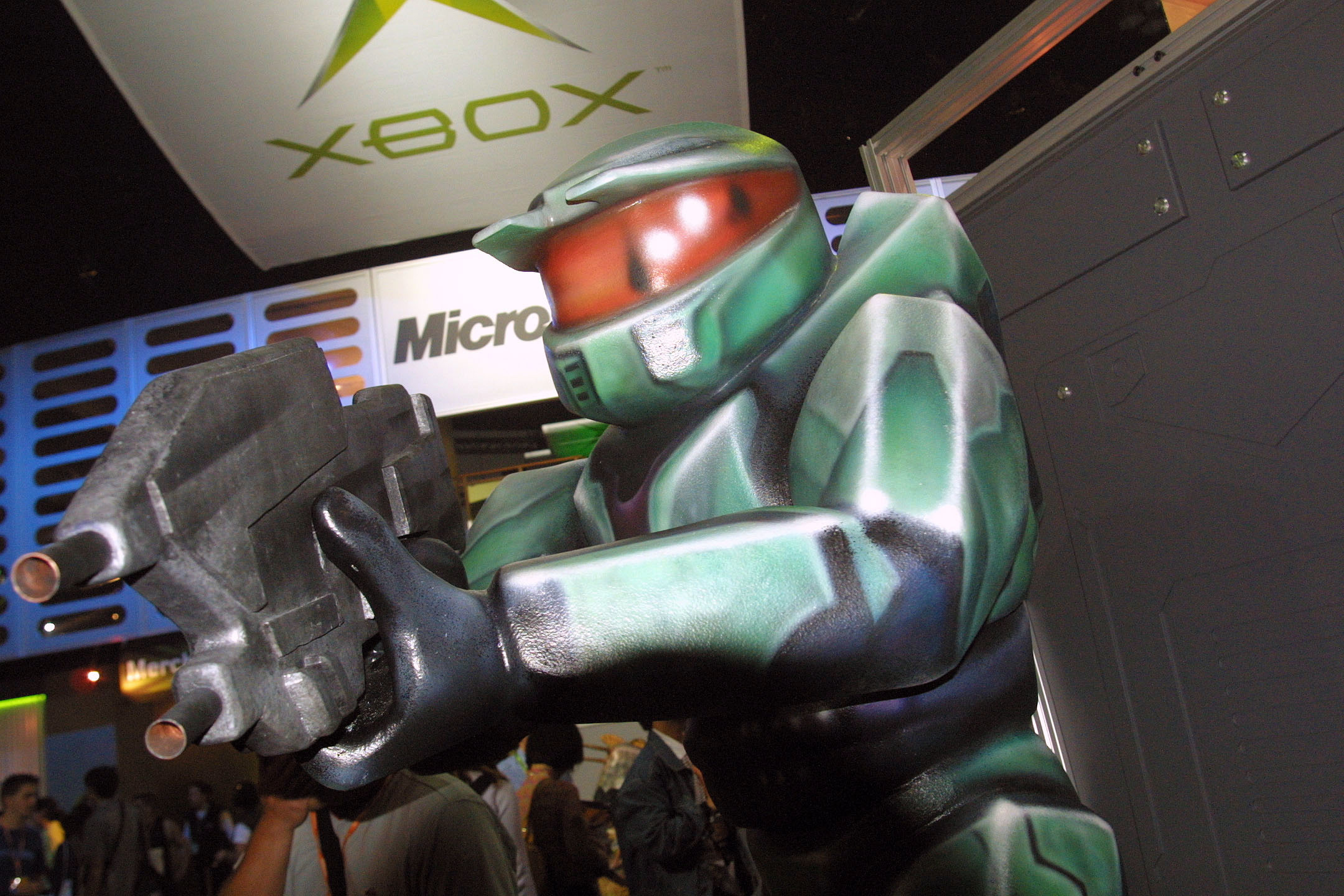
There are rumors that even bigger, more high-profile exclusives like “Gears of War” and “Halo” will also jump ship to more popular platforms, which could be the death knell for the Xbox brand for hardcore gamers. “Halo” was the reason millions bought their original Xbox, but if the next “Halo” ends up on a PlayStation 5 or Switch 2, what’s the point?
To be fair, Sony is making a similar pivot. It’s porting exclusive PlayStation games to PC faster than ever, with terrific results. The next potential marketplace for both consoles will be spinning off into dedicated handheld devices, as on-the-go gaming rises in popularity.
Seeking subscriptions
If its “everything is an Xbox” strategy doesn’t work, Microsoft is also trying new business models, spearheaded by its Game Pass. A sort of Netflix for video games, consumers pay a monthly subscription for access to hundreds of games. So far, it’s not a smash success. Game Pass was $9.99 a month a few years ago, but now the tier with the best value sits at $19.99 a month. Game Pass hasn’t led to boosted sales of consoles and its growth has remained stagnant, capping at about 35 million subscribers.
Most gamers were expecting way more high-quality releases to hit Game Pass on day 1, consistently releasing every few months. That hasn’t quite happened, either because games get delayed, come out to poor reviews, or just get outright canceled.
Even if Microsoft studios consistently put out excellent games, it seems like the majority of gamers are still hooked on older titles, increasingly spending their time on live-service multiplayer hits like “Fortnite” and “Grand Theft Auto Online.” Once somebody has entered an ecosystem like Steam or PSN and chosen a game to play with their friends, all the money they spend on microtransactions goes to Valve or Sony.
If most of the customer base isn’t on Xbox, Microsoft doesn’t see any of that money, because it only gets a cut from microtransactions that are purchased through the Xbox storefront. With console sales shrinking, it makes sense to see the strategy shift to supplying consumers where they actually play games — namely, not things called Xbox.
“It’s about being able to enjoy Xbox on all your devices,” CEO Satya Nadella said at Microsoft’s annual shareholder meeting.
When you take the box out of Xbox, then you have nothing left but a brand name without any meaning and without a significant audience. By eliminating console sales, Microsoft could simply publish and develop games under the Microsoft Gaming banner and reach audiences on all devices, rather than this complicated, confusing messaging.
There’s simply zero incentive to purchase a dedicated machine meant to play games that are also coming out on a PlayStation or PC. Serkan Toto of Kantan Games summed it up brilliantly in a recent interview with Games Industry.biz: “The $69 billion Activision Blizzard deal, rising costs, power of forever-titles, and Sony’s huge lead leave Xbox no choice but to bring all their big games to PS5 early.”
Year-over-year video game hardware spending was flat in November, Paul Tassi of Forbes reported, despite a 15% growth in PS5 and 29% Xbox decline. “What exactly does it mean when you spent $69 billion in part to acquire the world’s biggest (non-GTA) video game series, release it, and it does nothing to boost your hardware?” he wrote. That’s the ultimate question.
If “Call of Duty,” the bestselling game year in and year out, isn’t exclusive to your platform and it isn’t lifting Xbox sales or Game Pass subscriptions, why did you acquire Activision for all that money? It makes sense to profit off of ongoing titles at Blizzard and King, expanding your market on PC and mobile.
But the Xbox is not where it’s at, and the company seems to know it. At least Xbox was better than the Zune, Internet Explorer, Groove, Kin, the Windows Phone, Edge, Cortana, Vista, Lumia, Sidewinder, Easyball, Holo Lens, Kinect, Portrait, Bob, TerraServer, Band, Mixr, and Clippy.
Now, it’s time to move on. Game over.
Jared Russo is a writer from New York who spends his days online covering the tech industry, ranting about sports, and playing video games.




