
Tech
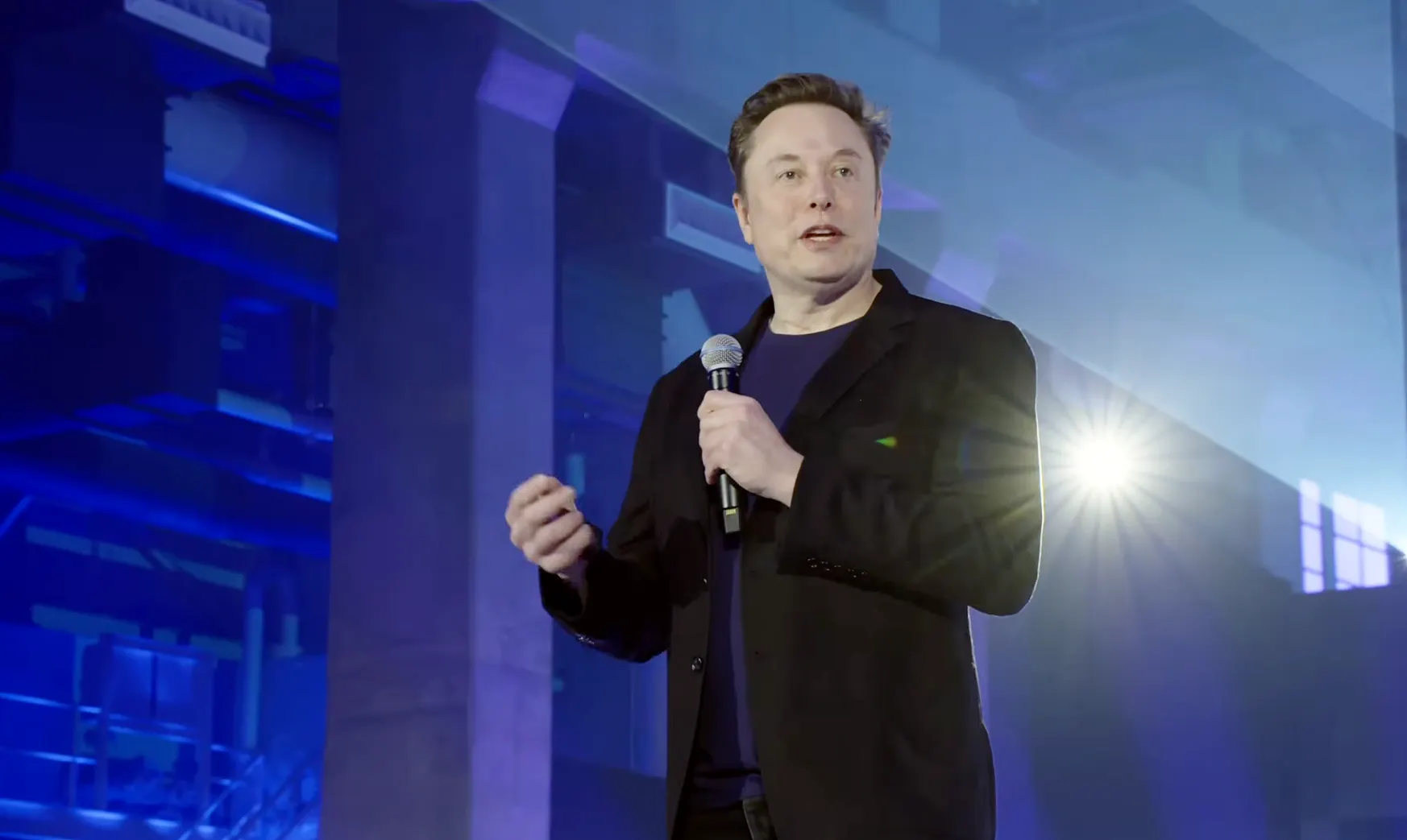
Elon Musk at Terafab keynote
(Tesla)

Musk’s Terafab might be his most technically difficult challenge yet

One does not simply start fabricating semiconductors.

Elon Musk likes to do hard things. Electric cars, reusable rockets, massive data centers, robots — all considered insanely difficult challenges that his businesses have (at least partially) pulled off. But Musks’s ambitious Terafab chip manufacturing project might end up being his most technically difficult challenge yet.

This weekend’s livestream announcing the joint venture between SpaceX, xAI, and Tesla was full of sizzle but light on details. Musk was mainly trying to make the case that his collection of companies are up to the challenge, having “done the impossible before,” listing off the many firsts that those companies had delivered.

Musk outlined a radical vision for rapid innovation for its chip designs, bringing all steps of the complex chip development pipeline under one giant roof:

"So, in the advanced technology fab, we we will have all of the equipment necessary to make a chip of any kind, logic or memory, and we will also have all of the equipment necessary to make the lithography masks. So in a single building we can create a lithography mask, make the chip, test the chip make another mask and have an an incredibly fast recursive loop for improving the chip design. To the best of my knowledge, his doesn't exist anywhere in the world."

But it’s important to note here: one does not simply start fabricating state-of-the-art semiconductors.

Musk had previously said the project is targeting 2 nanometer chips — considered the most densely-packed, advanced chips in the world — but did not mention that target in this event. How could Musk’s Terafab manufacture such advanced chips?

Today there is only one company on Earth that makes the machines that are a crucial step in the process to manufacture such advanced chips — the Netherlands-based ASML. ASML has mastered extreme ultra violet lithography, a technology that allows for etching the smallest and most detailed chip designs on silicon. Chip manufacturing giants like ASML’s biggest customer TSMC use ASML’s EUV machines to build advanced chips for customers like Nvidia and Apple.

ASML’s EXE:5000 EUV system.
ASML’s EXE:5000 EUV system. (Photo: ASML)

While there’s not been any announcement from Musk that his company would buy such advanced equipment from ASML, they’re really the only game in town. ASML’s top-of-the-line Twinscan EXE:5200B reportedly costs up to $380 million apiece and can crank out roughly 175 of the 30-millimeter wafers per hour.

And talk about bottlenecks – ASML sold a grand total of 48 room-sized EUV systems in 2025. The company is seeing huge demand powered by the generative AI boom. It could be a significant wait for Musk to get his hands on the expensive machines, and potentially years before he’s cranking out the billions of chips he wants for powering Tesla’s Optimus robots and self-driving taxis.

The EUV technology is considered crucial not just for the AI boom, but also for national security, which is why China is hard at work trying to replicate the technology. And even a nation state with the vast resources of China has only been able to create a working prototype of an EUV machine, which reportedly takes up an entire factory. And despite this project already being underway, China doesn’t expect to deliver working chips until 2028, at best.

In the Terafab keynote, Musk said that there’s only about 20 gigawatts worth of computing power made every year, and he is expecting that his plans for Tesla and SpaceX will require 1 terawatt of computing each year — 50 times what is made today — which is why he says they need to build the Terafab.

That’s a lot of speculative watts for a group of companies that have not fabricated any of their own chips to date.


More Tech

See all Tech
Dog Eating Dog Food

Big Tech's strategy for selling AI: Dogfooding

I’m not only the AI CEO, but I’m also a client.

tech

Alphabet’s drone delivery startup, Wing, expands service to the Bay Area

Move over Waymo — another one of Alphabet’s “Other Bets” is expanding. Drone delivery company Wing said Monday it’s bringing its “ultra-fast residential drone delivery service” to the Bay Area, where autonomous ride-hailing service Waymo also has a sizable presence.

tech
Rani Molla

Tesla and SpaceX to jointly run “most epic chip-building exercise in history by far”

In the latest instance that Elon Musk views Tesla and SpaceX as effectively one company, the CEO of both announced Saturday that the two firms will join forces on his Terafab project — what Musk says will be “the most epic chip-building exercise in history by far.”

Many of the details mirror what we reported last week, with one major addition: SpaceX will play a leading role.

Terafab, whose location is still under consideration as the facility would be too big to fit on the Giga Texas campus, aims to vertically integrate the entire chipmaking process, from design and fabrication to testing and packaging. The goal is to supply AI chips to Tesla, SpaceX, and its subsidiary xAI, Musk’s AI company, whose suppliers Musk said will be unable to handle their demand in “three or four years.” While Tesla has designed its own chips, it has never manufactured them.

Musk said the facility is intended to produce up to 1 terawatt of compute annually. The plant will manufacture two types of chips: inference chips for Tesla’s Robotaxis and Optimus robots, and custom AI chips intended for space-based applications like solar-powered AI satellites. According to Musk, roughly 80% of the compute will be allocated to space-related uses, with the remaining 20% supporting projects on Earth.

Morgan Stanley has estimated the project could cost Tesla an additional $35 billion to $45 billion in capital expenditure, though now perhaps some of that capex might be shared with SpaceX. Like many of Musk’s ambitions, the project is enormous in scale and will likely to take years to complete — potentially into the end of the decade or beyond.

tech
Jon Keegan

White House releases AI legislative framework

The White House has released its policy wish list for AI legislation — and what it wants excluded.

Still, the odds of any actual AI regulation getting passed in Congress right now are very slim.

The “National Policy Framework” for AI lays out seven issues that the Trump administration wants to see reflected in any congressional action around AI.

The items listed in the framework include:

  • Child safety protections, age verification, and parental controls for AI.

  • Data center projects voluntarily pay their own way when it comes to power, but incentives should still be encouraged.

  • Copyright laws should allow for training models on copyrighted works, while protecting individuals’ voice and likeness.

  • Free speech should be defended for AI systems, preventing the government from pressuring companies to ban or alter content based on partisan agendas.

  • A light touch to regulation to encourage innovation, and no federal agency to regulate AI.

  • American workers vulnerable to AI job replacement should be retrained and supported.

  • Federal AI rules should preempt any state AI legislation to prevent a patchwork of laws that companies would hate.

The policy list is the latest in a series of proposals from the AI-friendly Trump administration.

The items listed in the framework include:

  • Child safety protections, age verification, and parental controls for AI.

  • Data center projects voluntarily pay their own way when it comes to power, but incentives should still be encouraged.

  • Copyright laws should allow for training models on copyrighted works, while protecting individuals’ voice and likeness.

  • Free speech should be defended for AI systems, preventing the government from pressuring companies to ban or alter content based on partisan agendas.

  • A light touch to regulation to encourage innovation, and no federal agency to regulate AI.

  • American workers vulnerable to AI job replacement should be retrained and supported.

  • Federal AI rules should preempt any state AI legislation to prevent a patchwork of laws that companies would hate.

The policy list is the latest in a series of proposals from the AI-friendly Trump administration.

Latest Stories

Sherwood Media, LLC produces fresh and unique perspectives on topical financial news and is a fully owned subsidiary of Robinhood Markets, Inc., and any views expressed here do not necessarily reflect the views of any other Robinhood affiliate, including Robinhood Markets, Inc., Robinhood Financial LLC, Robinhood Securities, LLC, Robinhood Crypto, LLC, Robinhood Derivatives, LLC, or Robinhood Money, LLC. Futures and event contracts are offered through Robinhood Derivatives, LLC.