Tech
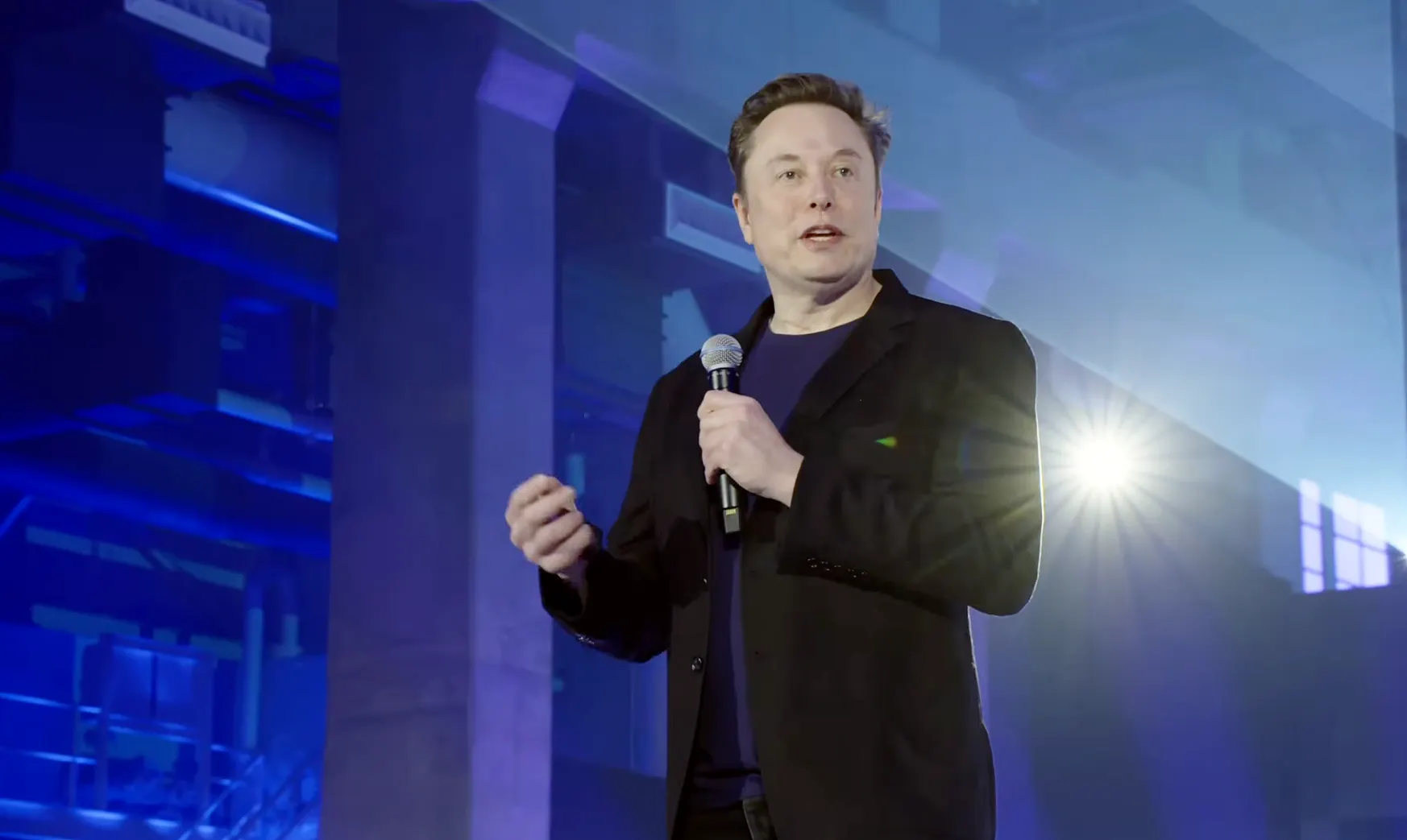
Elon Musk at Terafab keynote
(Tesla)

Musk’s Terafab might be his most technically difficult challenge yet

One does not simply start fabricating semiconductors.

Elon Musk likes to do hard things. Electric cars, reusable rockets, massive data centers, robots — all considered insanely difficult challenges that his businesses have (at least partially) pulled off. But Musk’s ambitious Terafab chip manufacturing project might end up being his most technically difficult challenge yet.

This weekend’s livestream announcing the joint venture between SpaceX, xAI, and Tesla was full of sizzle but light on details. Musk was mainly trying to make the case that his collection of companies are up to the challenge, having “done the impossible before,” listing off the many firsts that those companies have delivered.

Musk outlined a radical vision for rapid innovation of its chip designs, bringing all steps of the complex chip development pipeline under one giant roof:

“So, in the advanced technology fab, we will have all of the equipment necessary to make a chip of any kind, logic or memory, and we will also have all of the equipment necessary to make the lithography masks. So in a single building, we can create a lithography mask, make the chip, test the chip, make another mask, and have an incredibly fast recursive loop for improving the chip design. To the best of my knowledge, this doesn’t exist anywhere in the world.”

But it’s important to note here: one does not simply start fabricating state-of-the-art semiconductors.

Musk had previously said the project is targeting 2-nanometer chips — considered the most densely packed, advanced chips in the world — but did not mention that target in this event. How could Musk’s Terafab manufacture such advanced chips?

Today there is only one company on the planet that makes the machines that are a crucial step in the process to manufacture such advanced chips: the Netherlands-based ASML. ASML has mastered extreme ultraviolet (EUV) lithography, a technology that allows for etching the smallest and most detailed chip designs on silicon. Chip manufacturing giants like ASML’s biggest customer, TSMC, use ASML’s EUV machines to build advanced chips for customers like Nvidia and Apple.

ASML’s EXE:5000 EUV system.
ASML’s EXE:5000 EUV system. (Photo: ASML)

While there’s not been any announcement from Musk that his company would buy such advanced equipment from ASML, it’s really the only game in town. ASML’s top-of-the-line Twinscan EXE:5200B reportedly costs up to $380 million apiece and can crank out roughly 175 of the 30-millimeter wafers per hour.

And talk about bottlenecks — ASML sold a grand total of 48 room-sized EUV systems in 2025. The company is seeing huge demand powered by the generative-AI boom. It could be a significant wait for Musk to get his hands on the expensive machines, and potentially years before he’s cranking out the billions of chips he wants for powering Tesla’s Optimus robots and self-driving taxis.

The EUV technology is considered crucial not just for the AI boom, but also for national security, which is why China is hard at work trying to replicate the technology. And even a nation-state with the vast resources of China has only been able to create a working prototype of an EUV machine, which reportedly takes up an entire factory. And despite this project already being underway, China doesn’t expect to deliver working chips until 2028, at best.

In the Terafab keynote, Musk said that there’s only about 20 gigawatts’ worth of computing power made every year, and he is expecting that his plans for Tesla and SpaceX will require 1 terawatt of computing each year — 50x what is made today — which is why he says they need to build the Terafab.

That’s a lot of speculative watts for a group of companies that haven’t fabricated any of their own chips to date.


More Tech

See all Tech
tech

Tesla’s Model Y just cleared a new federal safety bar

The National Highway Traffic Safety Administration announced today that Tesla Model Ys manufactured after November 12 were the first to pass the agency’s new advanced driver assistance system tests, which are now part of the New Car Assessment Program.

“By successfully passing these new tests, the 2026 Tesla Model Y demonstrates the lifesaving potential of driver assistance technologies and sets a high bar for the industry,” NHTSA Administrator Jonathan Morrison wrote in the press release. “We hope to see many more manufacturers develop vehicles that can meet these requirements.”

The new tests include:

  • Pedestrian automatic emergency braking

  • Lane-keeping assistance

  • Blind spot warning

  • Blind spot intervention

The milestone offers Tesla highly coveted regulatory validation, as it seeks to spur usage of its Full Self-Driving (Supervised) tech. The NHTSA didn’t immediately respond to a request for comment.

80x

We knew Claude Code was driving crazy growth at Anthropic, but it may be much more than the company is expecting.

Speaking at the company’s developer conference yesterday, Anthropic CEO Dario Amodei said that while the company is planning for 10x growth this year, it could be as much as 80x, calling the overwhelming demand “crazy” and that he looked forward to more modest growth, saying such growth is “too hard to handle.”

The demand is so great that Anthropic partnered with Elon Musk’s xAI to buy up the bulk of computing from his Colossus data center in Tennessee.

tech

Tesla’s made-in-China vehicle sales jumped 36% in April

Tesla’s sales of made-in-China vehicles — sold across China, Europe, and other international markets — rose 36% year over year to 79,478 units in April. The increase marks the sixth straight month of annual growth in sales of vehicles made in the worlds largest manufacturing economy, suggesting the EV maker’s overseas business may be stabilizing after a difficult stretch.

That said, China wholesale deliveries fell from March, even as overall new energy vehicle sales rose 7% during the period.

Later this month, the China Passenger Car Association will report China-only sales, offering a clearer picture of performance in Tesla’s second-largest market.

Later this month, the China Passenger Car Association will report China-only sales, offering a clearer picture of performance in Tesla’s second-largest market.

tech

Anthropic’s scramble for compute now includes rival xAI

Another day, another major partnership with an AI rival. This time, Anthropic signed a deal with SpaceX’s xAI to access compute from its Colossus 1 data center to help it improve capacity for its Claude Pro and Claude Max subscribers. Just yesterday, The Information reported that Anthropic planned to spend $200 billion on Google Cloud services over the next five years. As Sherwood News’ Luke Kawa wrote:

“Anthropic has been a victim of its own success: the popularity of Claude Code and Cowork have revealed compute constraints and left users frustrated by caps. In response, the Claude developer has embarked upon a mad scramble for compute, striking or expanding deals with CoreWeave, Amazon, Google, and Broadcom.”

Now, it’s adding xAI to the list — even as the Elon Musk company builds a competing model.

In less terrestrial news, xAI said that as part of the agreement, Anthropic “expressed interest in partnering to develop multiple gigawatts of orbital AI compute capacity.”

“Anthropic has been a victim of its own success: the popularity of Claude Code and Cowork have revealed compute constraints and left users frustrated by caps. In response, the Claude developer has embarked upon a mad scramble for compute, striking or expanding deals with CoreWeave, Amazon, Google, and Broadcom.”

Now, it’s adding xAI to the list — even as the Elon Musk company builds a competing model.

In less terrestrial news, xAI said that as part of the agreement, Anthropic “expressed interest in partnering to develop multiple gigawatts of orbital AI compute capacity.”

Latest Stories

Sherwood Media, LLC produces fresh and unique perspectives on topical financial news and is a fully owned subsidiary of Robinhood Markets, Inc., and any views expressed here do not necessarily reflect the views of any other Robinhood affiliate, including Robinhood Markets, Inc., Robinhood Financial LLC, Robinhood Securities, LLC, Robinhood Crypto, LLC, Robinhood Derivatives, LLC, or Robinhood Money, LLC. Futures and event contracts are offered through Robinhood Derivatives, LLC.