


Report: OpenAI has started mocking up what ads in ChatGPT could look like
2025 saw OpenAI ink a flurry of massive deals. To pay for it all, the company has realized that it can’t get there on $20-per-month subscriptions alone; it also needs to monetize its hundreds of millions of free users.
To this end, despite repeatedly denying that ads are coming to ChatGPT, a new report says OpenAI is actually working through all those details.
Citing people familiar with the discussions, The Information reports employees have discussed different ways to prioritize sponsored information in ChatGPT in response to relevant queries.
Since ChatGPT burst onto the scene in late 2022, its offerings have been ad-free, relying instead on a freemium subscription model. But with Google recently telling advertisers it plans to bring ads to Gemini next year, and with OpenAI burning through truckloads of cash, the pressure to follow suit is growing.
OpenAI is looking at its AI model-developing competitors Meta and Google, which are pulling in hundreds of billions of dollars per year in advertising revenue, to arrive at this conclusion. It’s also seemingly inspired by Amazon’s (and Google’s) idea of sponsored product placement.
Per the report, in addition to trying to build new kinds of ad units, OpenAI is considering a few options:
Leaning into chats that are clearly about buying a product and giving priority placement to sponsored results — though this works out to only about 2.1% of queries, according to OpenAI.
Showing ads based on the treasure trove of information it has on users, by mining their chat histories.
A “sponsored” sidebar showing ads related to the conversation.
But the company realizes it has to be careful to not turn off users, who might not trust a chatbot that peppers sensitive conversations with ads.

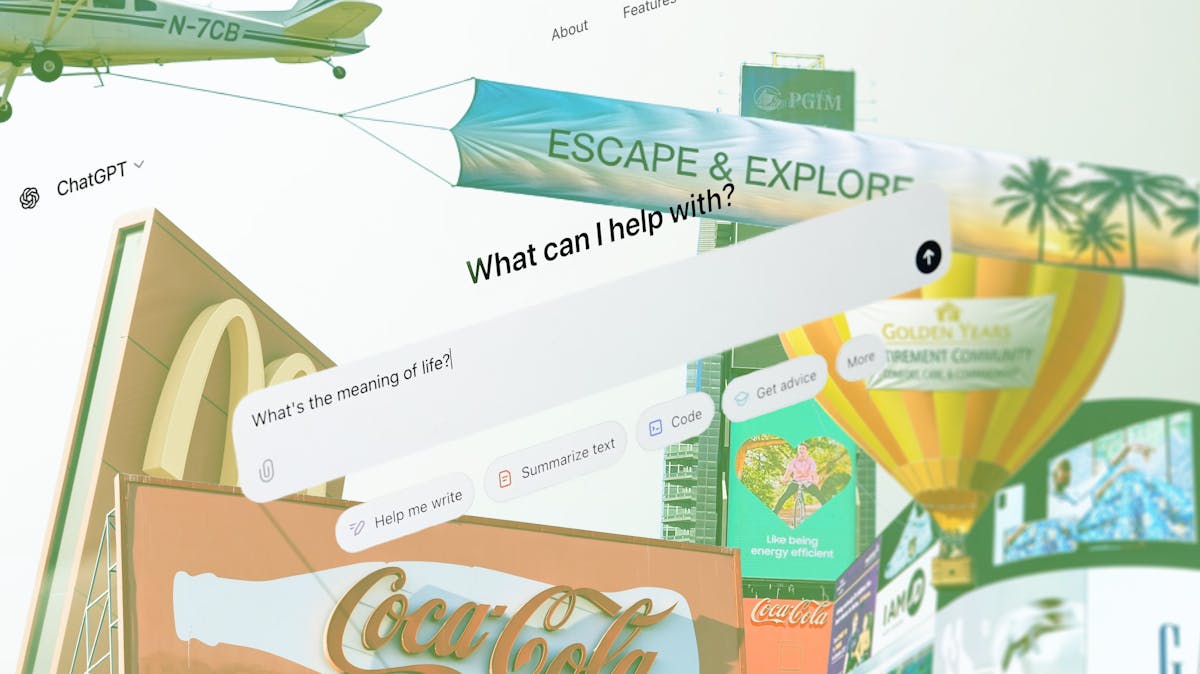
Citing people familiar with the discussions, The Information reports employees have discussed different ways to prioritize sponsored information in ChatGPT in response to relevant queries.
Since ChatGPT burst onto the scene in late 2022, its offerings have been ad-free, relying instead on a freemium subscription model. But with Google recently telling advertisers it plans to bring ads to Gemini next year, and with OpenAI burning through truckloads of cash, the pressure to follow suit is growing.
OpenAI is looking at its AI model-developing competitors Meta and Google, which are pulling in hundreds of billions of dollars per year in advertising revenue, to arrive at this conclusion. It’s also seemingly inspired by Amazon’s (and Google’s) idea of sponsored product placement.
Per the report, in addition to trying to build new kinds of ad units, OpenAI is considering a few options:
Leaning into chats that are clearly about buying a product and giving priority placement to sponsored results — though this works out to only about 2.1% of queries, according to OpenAI.
Showing ads based on the treasure trove of information it has on users, by mining their chat histories.
A “sponsored” sidebar showing ads related to the conversation.
But the company realizes it has to be careful to not turn off users, who might not trust a chatbot that peppers sensitive conversations with ads.


