

Tech
tech
Rani Molla

Report: Snap seeking $1 billion to finance its AR glasses division in “existential” fundraise

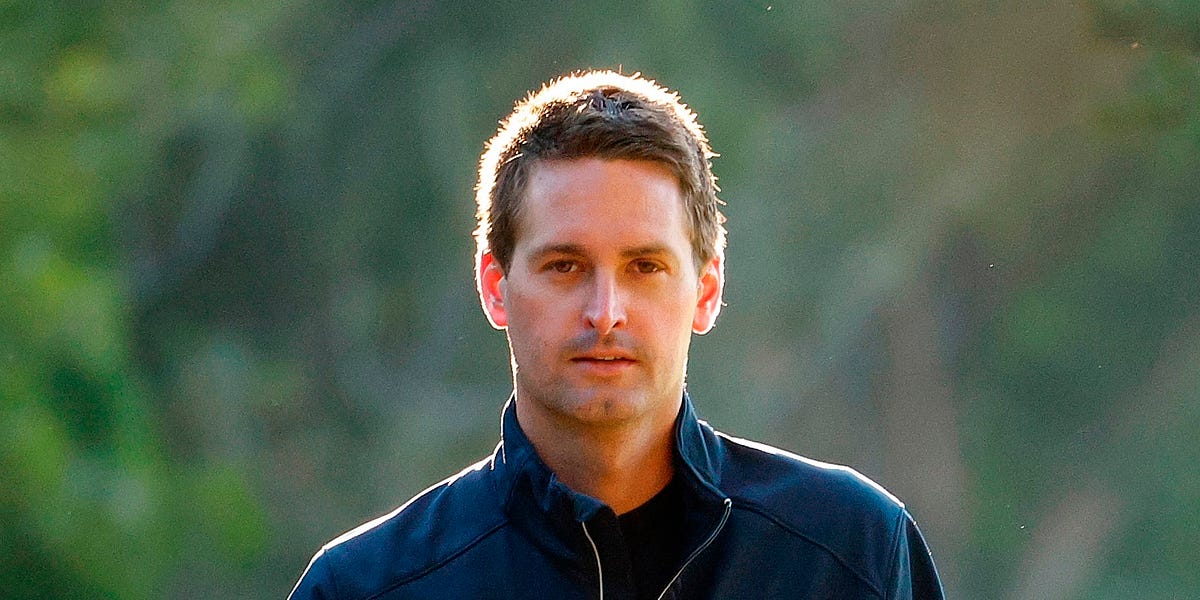
Snap is down more than 1% this morning following news that the company is attempting to raise $1 billion for its AR glasses unit in what someone told Sources.news was an “existential” fundraise.

A Snap spokesperson countered, “We do not need to raise money to execute against our plans to publicly launch Specs in 2026, but remain open to opportunities that could accelerate our growth.”

Multiple investors are involved in the talks, including Saudi Arabia’s Public Investment Fund, according to Sources.news. The report also noted that Snap plans to turn the unit that makes its Specs glasses into an independent subsidiary à la Google’s Waymo “that can continue raising capital from investors.”

Snap plans to produce about 100,000 units of next year’s Specs, pricing them around $2,500.

The beleaguered stock saw quite a bit of retail interest last month, amid r/WallStreetBets chatter that its low nominal price made it a potential acquisition target.
Multiple investors are involved in the talks, including Saudi Arabia’s Public Investment Fund, according to Sources.news. The report also noted that Snap plans to turn the unit that makes its Specs glasses into an independent subsidiary à la Google’s Waymo “that can continue raising capital from investors.”

Snap plans to produce about 100,000 units of next year’s Specs, pricing them around $2,500.

The beleaguered stock saw quite a bit of retail interest last month, amid r/WallStreetBets chatter that its low nominal price made it a potential acquisition target.

More Tech

See all Tech
tech

OpenAI snags Amazon AWS deal for classified government work with Anthropic pushed aside

Following Anthropic being deemed a “supply chain risk” to national security, the field is clear for OpenAI. The Information is reporting that OpenAI just landed a deal with Amazon AWS to sell its AI services to government employees for both classified and unclassified work.

Previously, OpenAI was contractually obliged to use Microsoft Azure cloud hosting for the government contracts it handled as part of its $13 billion deal with the software giant, but since it restructured as a for-profit public benefit corporation and renegotiated the terms of the deal, OpenAI is free to use AWS, which is more commonly used in government work.

According to the report, contracts that sell AI services through another company like Amazon can be much larger then direct contracts with the government, which is crucial for OpenAI as it chases the success that Anthropic has had with enterprise customers.

Previously, OpenAI was contractually obliged to use Microsoft Azure cloud hosting for the government contracts it handled as part of its $13 billion deal with the software giant, but since it restructured as a for-profit public benefit corporation and renegotiated the terms of the deal, OpenAI is free to use AWS, which is more commonly used in government work.

According to the report, contracts that sell AI services through another company like Amazon can be much larger then direct contracts with the government, which is crucial for OpenAI as it chases the success that Anthropic has had with enterprise customers.

tech

Morgan Stanley thinks Tesla’s Terafab could cost an additional $35 billion to $45 billion in capex

Tesla’s Terafab project, which CEO Elon Musk said could launch this week, is poised to be one of the company’s most expensive bets yet. The facility is intended to manufacture the chips needed for Tesla’s autonomous vehicles and humanoid robots, and to avoid supply bottlenecks.

If the company reaches its long-term goal of producing 100 million humanoid robots annually, it could require more than 200 million chips a year — over 50x its current demand, Morgan Stanley said.

The firm estimates total capital expenditure for the facility could reach $35 billion to $45 billion, including construction costs and roughly $20 billion to $25 billion for wafer fabrication equipment alone. That spending is not included in Tesla’s already sizable $20 billion capex budget for this year. Morgan Stanley’s semiconductor analysts described the effort as a “Herculean task,” noting the difficulty of building leading-edge chip capabilities from scratch.

While Tesla would likely spread the investment out over several years — even on an aggressive timeline, initial output would likely not arrive until the latter part of the decade — the effort would still weigh heavily on free cash flow and mark a shift toward a more capital-intensive business model.

Tesla’s most expensive factory to date, its Nevada battery plant that it began building in 2014, is estimated to have cost about $10 billion over time — a fraction of the expected Terafab cost.

tech

Lyft and Uber jump after announcing expanded robotaxi partnerships with Nvidia

Uber and Lyft both announced expanded AI and autonomous vehicle partnerships with Nvidia at the company’s GTC event, sending both ride-hailing stocks up after-hours on Monday and into Tuesday’s premarket session.

Uber is currently up more than 2%, while Lyft has risen around 1.3%.

Uber said Nvidia-powered Level 4 robotaxis will launch on its platform in Los Angeles and San Francisco in 2027, with plans to scale to 28 cities globally by 2028. Meanwhile, Lyft said it will use Nvidia’s AI infrastructure to improve ride-matching, mapping, and efficiency, while also using Nvidia’s DRIVE Hyperion platform as a foundation for future autonomous fleets.

Separately, Nvidia announced expanded autonomous driving partnerships with Kia and Hyundai.

The announcements highlight Nvidia’s growing push to provide the AI hardware and software powering next-generation robotaxi networks — packaging the technology needed for self-driving cars into a platform that other companies can use to compete with Tesla.

15
Rani Molla

Tesla’s Robotaxi program has disclosed its 15th accident, Electrek reports, citing the latest filing from the National Highway Traffic Safety Administration. According to Electrek’s estimation, extrapolated from the last time Tesla disclosed mileage figures, that amounts to a crash every 57,000 miles — about 9x the rate for humans.

The latest crash involved a Model Y hitting a fixed object at 9 mph in January while the autonomous system was engaged.

Humans are very much still involved with Tesla’s so-called autonomous driving service. Despite the service announcing in January that it had started removing safety monitors from the front seats, only two unsupervised vehicles have been spotted in the last month, per Robotaxi Tracker. The entire fleet has also dwindled from around 50 vehicles to just 35. Their mileage is unavailable.

Latest Stories

Sherwood Media, LLC produces fresh and unique perspectives on topical financial news and is a fully owned subsidiary of Robinhood Markets, Inc., and any views expressed here do not necessarily reflect the views of any other Robinhood affiliate, including Robinhood Markets, Inc., Robinhood Financial LLC, Robinhood Securities, LLC, Robinhood Crypto, LLC, Robinhood Derivatives, LLC, or Robinhood Money, LLC. Futures and event contracts are offered through Robinhood Derivatives, LLC.