
Tech
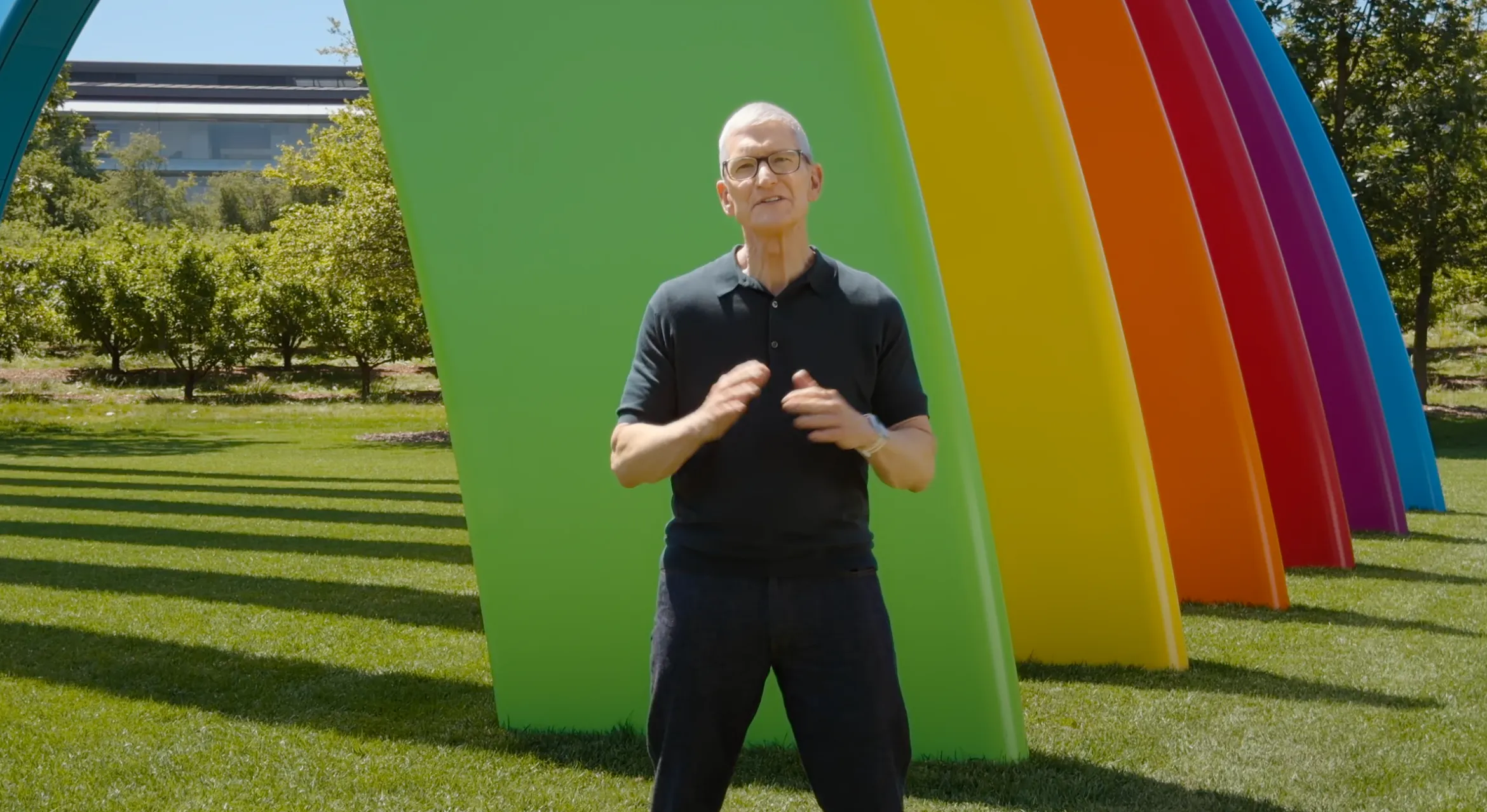
Tim Cook Apple WWDC 2026
Apple

Siri AI is going to be great for Apple — if it works. Sound familiar?

At Apple’s developer conference the company announced a better, faster, stronger Siri...again.

“Apple may have just explained how Siri is actually going to become useful,” is a headline Sherwood News wrote almost exactly two years ago when the company first announced AI Siri at its annual developer conference in 2024.

Two WWDCs later, and it’s very tempting to write that again.

Today Apple announced widely expected advancements to Siri — now called Siri AI and built on Google’s AI models — that enable at least some of Apple’s 2.5 billion-device user base to access AI across their device features and apps. (Apple said Apple Intelligence and Siri AI would be available on iPhone 15 Pro models and all models from iPhone 16 on, as well as iPads and Macs with M1 or later, and newer Apple Watch models.)

Those upgrades include things like getting writing help anywhere you put text or pulling your flight confirmation number from an email while you’re on the phone with customer service. The revamped Siri is also highly conversational and context-aware, drawing on personal data like your real-time location and adapting to individual apps. You make a photo album simply by describing it and edit the photo the same way. You can also make it create custom extensions for websites so that they’re more useful to you. It can access info on your screen and you can ask questions against it.

Apple’s gambit to get back in the AI game (or just to catch up) included the choice to rely upon “a deep collaboration with Google” to use the company's Gemini family of models, alongside Apple's own foundation models to power the new features they showed today. In a move that builds on its earlier privacy promises to users, Apple stressed that some of the new Apple Intelligence features run with data processed on-device, and others on servers using Apple’s complex “Private Cloud Compute” system.

Apple also showed off new child accounts and controls for parents, which use age-appropriate recommendations, based on experts’ guidance. New features include detecting and blocking nudity, gore, and violence in Messages and FaceTime calls for child account users.

In a smart but long overdue move, Apple also launched Siri AI as a standalone app, a move that’s mindful of how many people have been using genAI with OpenAI’s ChatGPT.

For some of the AI features Apple executives showed off — such as image generation — there are usage limits. But don’t worry: Apple will be happy to take more of your money. In the keynote video, Apple executive Craig Federighi said, “Increased access is available with most iCloud+ subscription plans.”

Ahead of the event, Wedbush's Dan Ives said he believed Apple could monetize its AI Services and storage features to the tune of $15 billion a year in additional services revenue (Apple’s services revenue was $109 billion last year).

The changes announced today seem like a huge and necessary leap in how to operate your iPhone and other devices. But we’ve been burned before. For it to matter, it will have to actually work.

Apple is widely rolling out the features when iOS 27 debuts in the fall. But Europeans will have to wait longer. In a press release, Apple blamed the delay on the EU’s Digital Markets Act: “Unfortunately, due to the Digital Markets Act (DMA), Apple will not be able to ship Siri AI in the European Union with the release of iOS 27 and iPadOS 27. Over the past several months, EU regulators did not accept any of Apple’s proposed solutions to bring Siri AI to the EU while safely supporting other virtual assistants.”

The stakes are also higher this time around. Apple’s competitors, like Google, have already been doing it. Apple is more popular, but the tech has to be operational for that to matter.

The stock was mostly static during the keynote, but investors ultimately appear underwhelmed: Toward the end of the presentation, the stock turned negative for the day. It was recently down about 1%.


More Tech

See all Tech
South by Southwest Conference and Festivals

The number of Tesla Robotaxis on the road has been going down

That’s the wrong direction for a business trying to scale its autonomous vehicles.

tech

Intel shares soar on report of Google chip deal, possible future Nvidia business

Shares of Intel soared in early trading on a report that Google and Nvidia are considering turning to the chipmaker as a backup supplier to TSMC, as surging demand continues to outpace supply.

The Information reports that Google has placed an order with Intel to manufacture more than 3 million of its increasingly popular tensor processing unit chips in 2028.

According to the report, Nvidia is currently testing to see if Intel could manufacture its next-gen Feynman chips.

Taiwan-based TSMC has enjoyed a huge lead in the market of manufacturing advanced chips for Apple, Nvidia, and others.

Intel has been struggling to fight its way back into the AI chip business, but has made headway with the help of the Trump administration, which sought to shore American chipmaking with a $8.9 billion investment of taxpayer money, and several high-profile deals.

The Information reports that Google has placed an order with Intel to manufacture more than 3 million of its increasingly popular tensor processing unit chips in 2028.

According to the report, Nvidia is currently testing to see if Intel could manufacture its next-gen Feynman chips.

Taiwan-based TSMC has enjoyed a huge lead in the market of manufacturing advanced chips for Apple, Nvidia, and others.

Intel has been struggling to fight its way back into the AI chip business, but has made headway with the help of the Trump administration, which sought to shore American chipmaking with a $8.9 billion investment of taxpayer money, and several high-profile deals.

tech

Corning surges after multibillion-dollar fiber-optic deal with Amazon

On Monday, Amazon announced a multiyear, multibillion-dollar deal to buy optical fiber from 175-year-old glassmaker Corning to power and connect its rapidly expanding US artificial intelligence data centers. Shares of Corning popped more than 9% on the news.

Corning said the investments would create 1,000 new, highly skilled jobs at Corning's manufacturing facilities in North Carolina.

This isn’t Corning’s first Big Tech rodeo. Last month the stock jumped when Nvidia invested $500 million in Corning warrants, and the stock ripped in January following a deal with Meta to provide fiber-optic cable connections for its AI data centers.

tech

London’s robotaxi war is “months” away as Uber opens waitlist to battle Alphabet’s Waymo

Starting today, Uber users in London can join an in-app waitlist to be matched with a self-driving vehicle, with a commercial launch planned for the coming months. Riders who opt in could be picked up by a Ford Mustang Mach-E powered by UK-based AI startup Wayve. The rides will initially operate with a human safety driver and will cost the same as an UberX, Uber Electric, or Uber Comfort ride.

The move turns London into the next ground zero for a robotaxi showdown, pitting Uber against its US partner, Alphabets Waymo. While the two companies cooperate stateside — allowing users to hail Waymo rides via the Uber app in Phoenix, Austin, and Atlanta — they are locked in a turf war abroad. Uber is hedging its bets to own the future of ride-hailing, with more than 30 AV partnerships around the world and plans to roll out Wayve-powered robotaxis across 10 global markets.

Waymo, which is available in 11 US markets, is also aggressively pushing its own international expansion and has already deployed about 100 autonomous Jaguars for testing on London streets ahead of a planned commercial launch this year. With the UK fast-tracking its autonomous vehicle regulations, London is set to be the ultimate proving ground to see if Uber’s strategy of funding Waymos rivals can beat Alphabets in-house tech.

Latest Stories

Sherwood Media, LLC and Chartr Limited produce fresh and unique perspectives on topical financial news and are fully owned subsidiaries of Robinhood Markets, Inc., and any views expressed here do not necessarily reflect the views of any other Robinhood affiliate, including Robinhood Markets, Inc., Robinhood Financial LLC, Robinhood Securities, LLC, Robinhood Crypto, LLC, Robinhood Money, LLC, Robinhood U.K. Ltd, Robinhood Derivatives, LLC, Robinhood Gold, LLC, Robinhood Asset Management, LLC, Robinhood Credit, Inc., Robinhood Ventures DE, LLC and, where applicable, its managed investment vehicles.
