

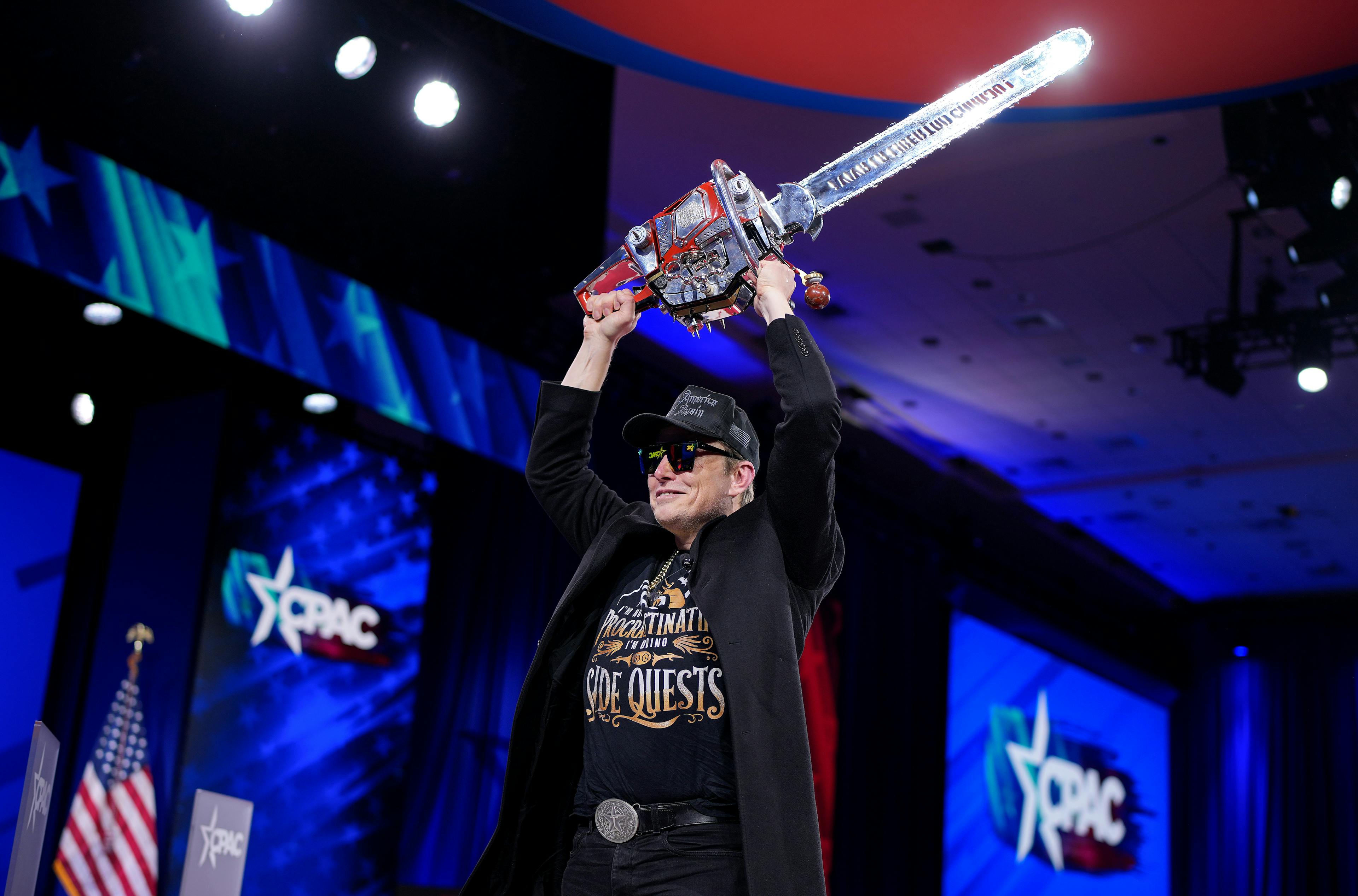
Tesla CEO Elon Musk’s massive self-own is slowly being washed away by his usual approach: Distraction
His foray into divisive politics created the perfect storm to destroy Tesla stock. Then he went quiet on his government work and started talking about shiny things like AI and humanoid robots again.
The signs were always there.
From wanting a list of cars whose model names spelled out SEXY to tweeting that he was thinking of taking Tesla private at $420 a share, there were obvious signals that Elon Musk was a 16-year-old boy operating in a CEO’s body, someone whose ideals probably ran perpendicular to most of his car company’s customers.
For a long time, those customers — people who were probably wealthy, environmentally conscious, and didn’t really care about fake machismo like tequila or flamethrowers or sledge hammers — ignored the antics because there wasn’t a better electric vehicle out there. Your choice was a Tesla, which looked cool and high-tech, or an EV from another automaker that looked like a roller skate from outer space.
For years, Tesla’s stock soared despite a glaring lack of profits or an exorbitance of sales. Its market cap ballooned to be multiples bigger than General Motors or any other American car company, mostly because of an “Elon premium” that kept the company divorced from the fundamentals that usually regulate the heartbeat of a stock chart.
Then last year, in one fell swoop, Musk created a perfect storm of political fury that hurt Tesla shareholders and, according to a report from The Wall Street Journal, even caused Tesla’s board to start looking for the company’s next CEO. The work of DOGE, Musk said himself, took him out of the driver’s seat at his own companies, where sales are plummeting and things are exploding. The fact that he was having “great difficulty” running his firms, in his own words, caused everyone to suddenly pay attention to Tesla’s fundamentals after essentially ignoring them for years. The stock cratered.
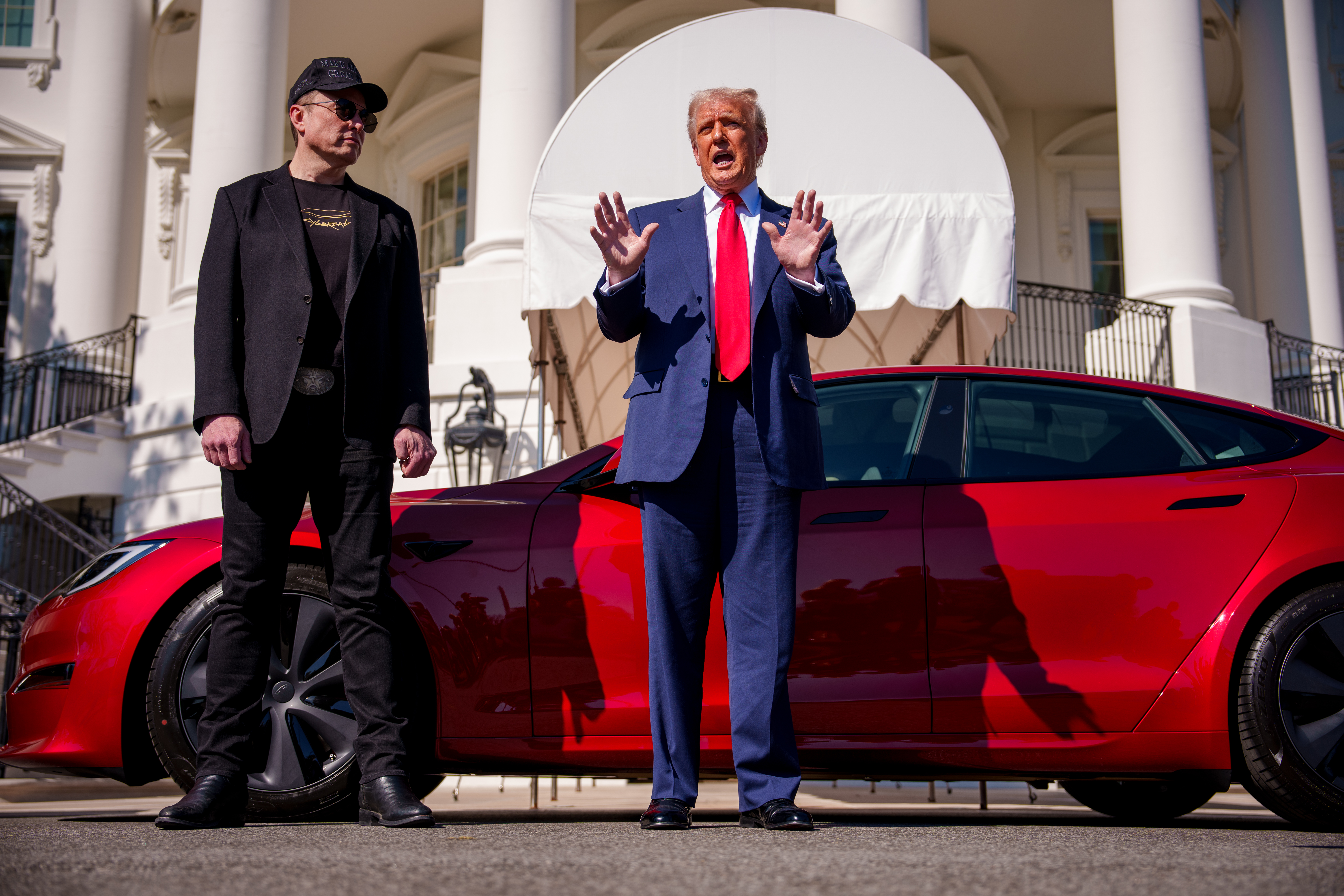
But as we’ve seen throughout Tesla’s history, shareholders will only pay attention to fundamentals for so long. After a real-life version of a Tesla infomercial on the White House lawn, Musk mostly stepped out of the public eye, likely having finally realized he was hurting his own companies. The DOGE headlines slowed.
Now Musk is reportedly “off boarding,” a White House official said, as his tenure as a Special Government Employee runs out. The source said Musk hadn’t been a regular presence in the West Wing in weeks. (Musk’s far-right tweets haven’t stopped, but they also predate DOGE and the world pays less attention to those than whether or not an unelected billionaire has access to their Social Security and banking info.)
After Tesla stock cratered, Musk started doing his successful Wizard of Oz impersonation again: pay no attention to the sinking sales behind the curtain — look at these autonomous robots!
Tesla shareholders and analysts are starting to sniff the catnip. The stock isn’t fully back, but it’s up more than 60% from its nadir in April. It’s now up more than 40% from where it stood before polls closed on Election Day. Dan Ives, the cheerlead-y analyst who in April had called Tesla’s first-quarter deliveries a “disaster on every metric,” released a note a few days ago declaring “the golden age of autonomous growth” and saying Tesla’s valuation will roughly double in the next 12 to 18 months.
The pertinent question for investors is: has Musk done enough damage to the brand to keep customers away for the long term? And more importantly — will it even matter to the stock price?
Tesla’s main customer base has been isolated…
Musk’s abrasive politics caused many of the customers who accounted for the company’s actual sales to clam up, leading to soaring Tesla trade-ins, cascading sales declines, and falling resale values. Tesla’s first-quarter deliveries fell the most ever year over year. Musk shifted to embrace a different group of consumers — ones who proudly yell on the internet about the superiority of the internal combustion engines Musk has tried to relegate to museums.
The fall was epic — from peak to trough, a trillion-plus-dollar company lost more than half of its value in the span of about three months.
It’s impossible to know just how many liberals vs. conservatives own, or would consider owning, a Tesla, but there are tea leaves you can read.
According to a Gallup poll from the middle of last year, 11% of liberal respondents said they currently owned an EV, compared with 4% of conservatives. Only 25% of liberals said they would not consider buying an EV. Meanwhile, 72% of conservatives — nearly three-fourths of Musk’s new target audience — said they wouldn’t consider it.
Recent YouGov data also shows that liberals’ opinions of Tesla have tanked, while conservatives’ view of the brand has risen only slightly.
Donald Trump, before he shifted to loving Musk and promoting Tesla on the White House lawn, said himself in late 2023, “Electric cars are good if you have a towing company.” Another time, he sarcastically said, “They don’t work in the cold and they don’t go far. Other than that, I think they’re wonderful.”
But it’s not just liberals who are feeling the ramifications of the billionaire CEO’s romp toward “Dark MAGA” — it’s anybody who drives a Tesla. Some Tesla owners have wound up with the word “Nazi” keyed into their vehicles. They’re worried about the residual values of their cars, which have fallen sharply.
Those headaches mean fewer people want to own Teslas. Some people who already own them are getting rid of them. Others who might have considered buying one aren’t anymore. That means sales — used, new, US, international — are sliding by basically any measure you can imagine.
But Musk’s deflection tactics have historically worked
In the past when the car-selling fundamentals at Tesla weren’t great, Musk would quickly divert investors’ attention to what he said the business was really going to be about. Sometimes it was an ultracheap mass-market model that didn’t exist yet; sometimes it was a new robotaxi; sometimes it was an autonomous humanoid robot. In January of last year, Musk told analysts on an earnings call, “People think of Tesla as a car company when they should be thinking of Tesla as an AI robotics company.”
In October of 2022, he said, “A lot of people think we’re like just a car company, or we make cool cars, whatever, but they don’t have — most people have no idea that Tesla is arguably the leader in real-world AI hardware and software and that we’re building what is arguably the first — the most radical computer architecture since the Cray-1 supercomputer.”
At last year’s annual shareholder meeting, a presentation had back-to-back slides titled: “Tesla is way more than a car company” and “We’re also the leader in real-world AI.”
Now, Musk is pinning the future of Tesla on autonomous driving and its humanoid robots, called Optimus, which he has said could generate $10 trillion (not a typo) in revenue. Last week on CNBC, he said, “I think humanoid robots will be the biggest product ever.” Back when he first announced the plan to design those robots, in 2021, he was a little less enthused: “The robot is not prompted by, specifically by, manufacturing needs. It’s just that we’re just obviously making the pieces that are needed for a useful humanoid robot. So I guess we probably should make it.”
Tesla bulls have historically eaten this type of talk up, and they seem to have a short memory. Musk routinely overpromises on timelines. When the long-awaited ultracheap Tesla car for consumers turns into a robotaxi with no pedals, no big deal!
As my esteemed colleagues Rani Molla and Luke Kawa just wrote, Tesla’s fundamentals have again been left by the wayside, and the stock’s trading more in step with the S&P 500 and retail traders’ interest in momentum stocks. Will that last? As one Tesla bear put it to them, “ I have seen companies where the stocks have become detached from reality, but I’ve never seen a company where the stocks stay detached from reality.”
And that’s typically true. Just like water usually finds its level, stocks typically wind up bound to their fundamentals. After all, a stock’s price is defined as a function of the present value of expected future cash flows. But the term doing the most work here is “expected” — investors’ expectations for company profits often don’t match up with reality. Excuse the dual Y-axis chart here, but take a look at the spreads between Tesla’s actual reported quarterly profits and where the stock was trading at the time.
That’s a lot of daylight, especially recently. And other stocks that have been favored by retail traders have done pretty darn well despite a lack of overall fundamental goodness. GameStop, a stock you may have heard of, is up about 3,000% in the past five years despite posting a cumulative net loss of hundreds of millions of dollars and a multibillion-dollar sales decline during that timeframe.
Sometimes the stock market, especially when you’re trading individual companies, can be a game of musical chairs. The “Tesla stock price isn’t really attached to fundamentals” music has been playing for most of the past 15 years. Eventually, there will probably be a big regression. When it happens, it’ll be painful — it could be a swift drop, or it could be something more drawn out, where bulls hold on thinking the rebound will come as usual, and instead they endure a grueling grind lower.
But the stock’s recent beating and rebound are illustrative. Musk’s antics over the past several months — which caused a huge portion of the carmaker’s customer base to turn on its CEO enough to literally sell their cars — didn’t cause the music to stop.
Now Musk is back in the driver’s seat, doing what he always does: making investors look at the next shiny thing on the horizon.
And investors, just like they always do, are buying it.




