Tech
tech
Rani Molla

Tesla faces door handle probe after Bloomberg report

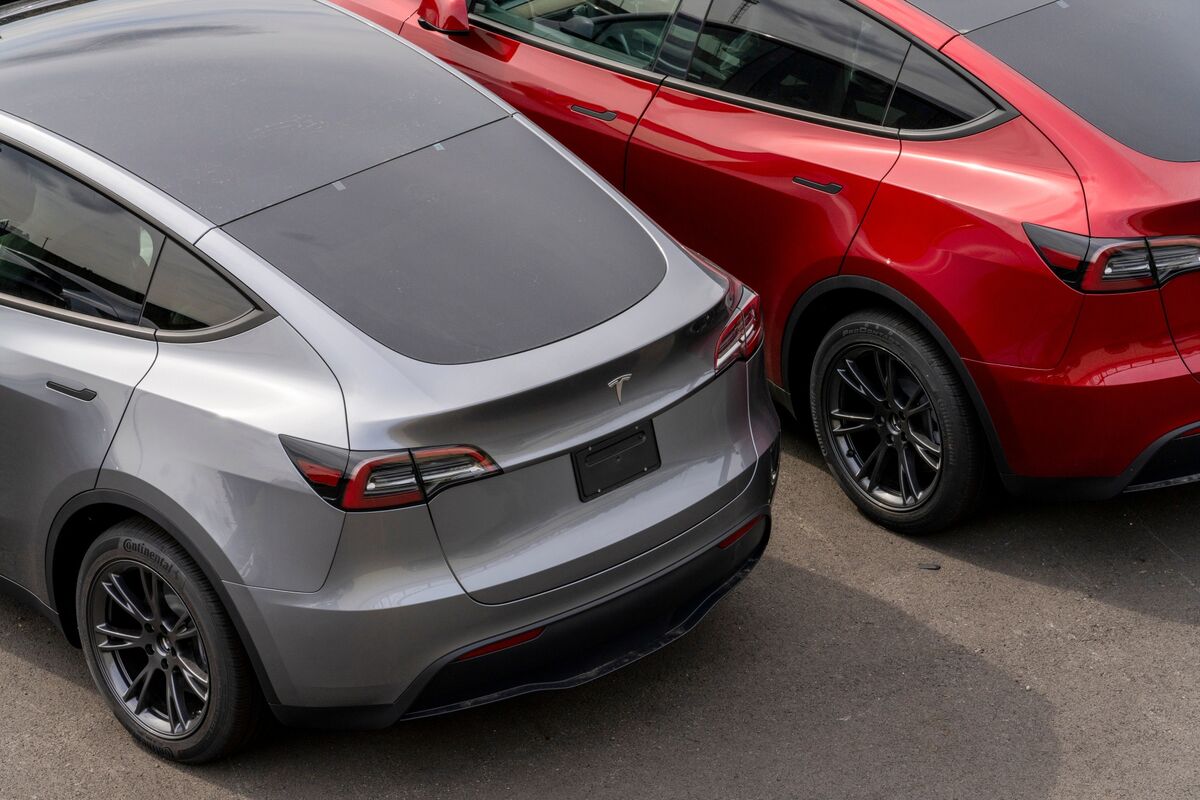
A week after Bloomberg published a report called “Tesla’s Dangerous Doors” that detailed instances where people were hurt or injured after accidents reportedly left the flush electronic door handles inoperable, the National Highway Traffic Safety Administration has launched a probe into the matter.

“NHTSA’s investigation is focused on the operability of the electronic door locks from outside of the vehicle as that circumstance is the only one in which there is no manual way to open the door,” the NHTSA wrote. It cited reports of parents being forced to break the windows of their Teslas to extract their children locked inside.

The probe adds to a list of headwinds Tesla is facing, including declining sales, the end of the federal EV tax credit, and increased competition. However, Tesla, riding high on news yesterday that CEO Elon Musk purchased $1 billion in shares, doesn’t seem to be dampened by the news. It’s up 1.5% premarket.
“NHTSA’s investigation is focused on the operability of the electronic door locks from outside of the vehicle as that circumstance is the only one in which there is no manual way to open the door,” the NHTSA wrote. It cited reports of parents being forced to break the windows of their Teslas to extract their children locked inside.

The probe adds to a list of headwinds Tesla is facing, including declining sales, the end of the federal EV tax credit, and increased competition. However, Tesla, riding high on news yesterday that CEO Elon Musk purchased $1 billion in shares, doesn’t seem to be dampened by the news. It’s up 1.5% premarket.
More Tech

See all Tech
tech

Google drops new Nano Banana

Google is hoping to recapture the viral boost it received when it released its Nano Banana image generation model. Nano Banana 2 arrives today, which Google has rolled into its Gemini app.

The new model promises more accurate text rendering and translation and “advanced world knowledge,” which “pulls from Gemini’s real-world knowledge base, and is powered by real-time information and images from web search to more accurately render specific subjects,” according to the company’s press release.

New creative controls let users keep groups of characters consistent across scenes, render images with higher resolution, and parse complex prompts.

The first version of Nano Banana became popular for making action figures out of users, and helped catapult the Gemini AI app to the top of the charts, bumping ChatGPT from its perch.

New creative controls let users keep groups of characters consistent across scenes, render images with higher resolution, and parse complex prompts.

The first version of Nano Banana became popular for making action figures out of users, and helped catapult the Gemini AI app to the top of the charts, bumping ChatGPT from its perch.

tech

Tesla’s ride-hailing service is looking a lot more like Uber’s than Waymo’s

Despite numerous promises about amassing a giant network of driverless cars, so far it seems like Tesla’s Robotaxis are a lot more similar to Uber’s plain old ride-hailing service than Waymo’s expanding autonomous fleet.

In California, where Tesla has its largest ride-hailing service, the company has taken no formal steps to gain approval for a truly driverless car service, according to Reuters. Throughout 2025, Tesla failed to log a single mile of autonomous test driving on state roads, and has not applied for the necessary permits to test or deploy vehicles without a human present. Currently, Tesla holds only a basic permit that requires a human safety monitor to remain in the driver’s seat at all times.

Currently, Tesla’s California Robotaxi service consists of roughly 300 Teslas operated by human drivers using the company’s supervised Full Self-Driving tech. In Austin, where the company has about 45 vehicles, Tesla made a big show earlier this year of announcing it was removing the safety monitors sitting in the front seats during rides. However, to date, only a handful of those vehicles have been reported to be actually operating without a safety monitor onboard.

In other words, it’s performing a service more akin to a tech-heavy Uber ride than the one operated by Alphabet subsidiary Waymo, which earlier this week announced it now has driverless rides available to the public in 10 markets. Even Uber is trying to put space between itself and the old driver-having Ubers of yore: this week its autonomous software partner said the company plans to launch a driverless service in London this year, with plans for 10 markets.

During its earnings report last month, Tesla said it planned to offer Robotaxi service in a half dozen new cities in the first half of this year, including Phoenix, Miami, and Las Vegas. Judging by Tesla’s progress so far, it’s likely those services will also feature a human in the front seat.

In California, where Tesla has its largest ride-hailing service, the company has taken no formal steps to gain approval for a truly driverless car service, according to Reuters. Throughout 2025, Tesla failed to log a single mile of autonomous test driving on state roads, and has not applied for the necessary permits to test or deploy vehicles without a human present. Currently, Tesla holds only a basic permit that requires a human safety monitor to remain in the driver’s seat at all times.

Currently, Tesla’s California Robotaxi service consists of roughly 300 Teslas operated by human drivers using the company’s supervised Full Self-Driving tech. In Austin, where the company has about 45 vehicles, Tesla made a big show earlier this year of announcing it was removing the safety monitors sitting in the front seats during rides. However, to date, only a handful of those vehicles have been reported to be actually operating without a safety monitor onboard.

In other words, it’s performing a service more akin to a tech-heavy Uber ride than the one operated by Alphabet subsidiary Waymo, which earlier this week announced it now has driverless rides available to the public in 10 markets. Even Uber is trying to put space between itself and the old driver-having Ubers of yore: this week its autonomous software partner said the company plans to launch a driverless service in London this year, with plans for 10 markets.

During its earnings report last month, Tesla said it planned to offer Robotaxi service in a half dozen new cities in the first half of this year, including Phoenix, Miami, and Las Vegas. Judging by Tesla’s progress so far, it’s likely those services will also feature a human in the front seat.

tech
Rani Molla

Amazon, Google, Meta, Microsoft, Oracle will agree to “build, bring, or buy” AI data center power

A month after President Trump called on Big Tech companies to “pay their own way” for data center energy — and a day after Trump pledged as much in his State of the Union address — a number of tech’s biggest companies are planning to make it official, according to a report from Fox News.

Alphabet, Amazon, Meta, Microsoft, and Oracle, in addition to OpenAI and xAI, plan to sign agreements at a March 4 White House event committing to supply their own electricity for new AI data centers.

Under this bold initiative, these massive companies will build, bring, or buy their own power supply for new AI data centers, ensuring that Americans’ electricity bills will not increase as demand grows, White House spokeswoman Taylor Rogers told Fox.

Already, Amazon, Microsoft, and Meta have committed to as much in recent data center announcements.

Alphabet, Amazon, Meta, Microsoft, and Oracle, in addition to OpenAI and xAI, plan to sign agreements at a March 4 White House event committing to supply their own electricity for new AI data centers.

Under this bold initiative, these massive companies will build, bring, or buy their own power supply for new AI data centers, ensuring that Americans’ electricity bills will not increase as demand grows, White House spokeswoman Taylor Rogers told Fox.

Already, Amazon, Microsoft, and Meta have committed to as much in recent data center announcements.

Latest Stories

Sherwood Media, LLC produces fresh and unique perspectives on topical financial news and is a fully owned subsidiary of Robinhood Markets, Inc., and any views expressed here do not necessarily reflect the views of any other Robinhood affiliate, including Robinhood Markets, Inc., Robinhood Financial LLC, Robinhood Securities, LLC, Robinhood Crypto, LLC, or Robinhood Money, LLC.