Tech
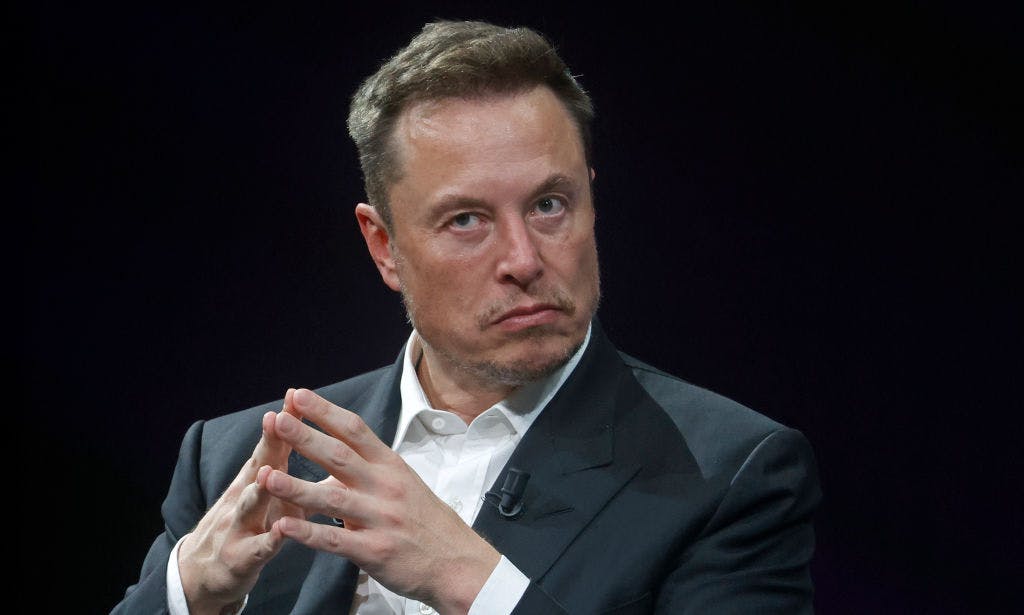
7th Viva Technology Conference In Paris - Day 3
(Chesnot/Getty Images)
X’d AI

Tesla shareholders support Musk much more than Musk’s xAI

Many abstained from voting on xAI investment.

Rani Molla

Tesla shareholders voted resoundingly in favor of CEO Elon Musk’s $1 trillion pay package last week, with nearly 70% voting in favor (75% of votes). Their enthusiasm for investment in Musk’s other company was much more muted: 38% voted in favor, 33% voted against, and a notable 17% of shareholders abstained from voting, according to recent filings.

Despite there being more votes cast in favor of the proposal, Tesla said its bylaws “generally consider abstention as votes against” so did not approve the measure, and “will examine next steps in light of these voting results (including the high number of abstentions).”

Tesla’s board itself abstained from making a recommendation on the xAI proposal to avoid “related party” conflicts, as Musk is the head of both companies. Tesla Board Chair Robyn Denholm recently told The Wall Street Journal that the board “hadn’t previously looked into xAI’s financials or done any of the due diligence required to make an investment.”

The shareholder proposal had argued that xAI’s AI expertise would complement Tesla’s autonomous driving and robotics endeavors, and would give Tesla investors a stake “in a major AI player, potentially yielding significant financial returns while fostering technological advancements that benefit Tesla’s customers and shareholders.”

In July, Musk posted, “It’s not up to me. If it was up to me, Tesla would have invested in xAI long ago.”

Morgan Stanley analyst Adam Jonas said in a note Monday that the vote was a missed opportunity.

“We don’t think investors understand just how important xAI is to Tesla and the broader Muskonomy,” Jonas wrote. “Tesla’s relationship with xAI (financially and strategically) is deterministic to the long-term success of Tesla due in part to the natural synergies of data, software, hardware and manufacturing in recursive loops.” He added, “The values (and value systems) of both Tesla and xAI are endowed by the values of their shared creator. We believe this co-determination becomes more obvious in the next phases of physical AI/autonomy for Tesla in the year ahead.”

More Tech

See all Tech
tech
Jon Keegan

Chinese AI chatbots reportedly must answer 2,000 questions, prove censorship compliance

For American companies building AI today, it is basically a free-for-all, a self-regulation zone with zero federal restrictions.

But for Chinese AI companies, the Chinese Communist Party exerts strict control over what models get released, and what questions they cannot answer.

A report in the Wall Street Journal details the rigorous tests that AI models are subjected to before being released on the global stage to compete with Western AI models.

AI models must answer 2,000 questions that are frequently updated, and achieve a 95% refusal rate for queries related to forbidden topics, such as the Tiananmen Square massacre or human rights violations, according to the report.

The strict regulatory framework does have some safety advantages, such as preventing chatbots from sharing violent or pornographic material as well as protections from self-harm, an issue which American AI companies are currently wrestling with.

A report in the Wall Street Journal details the rigorous tests that AI models are subjected to before being released on the global stage to compete with Western AI models.

AI models must answer 2,000 questions that are frequently updated, and achieve a 95% refusal rate for queries related to forbidden topics, such as the Tiananmen Square massacre or human rights violations, according to the report.

The strict regulatory framework does have some safety advantages, such as preventing chatbots from sharing violent or pornographic material as well as protections from self-harm, an issue which American AI companies are currently wrestling with.

tech

Report: OpenAI has started mocking up what ads in ChatGPT could look like

2025 saw OpenAI ink a flurry of massive deals. To pay for it all, the company has realized that it can’t get there on $20 per month subscriptions alone. It also needs to monetize its hundreds of millions of free users.

To this end, despite repeatedly denying that ads are coming to ChatGPT, a new report says OpenAI is actually working through all those details.

Citing people familiar with the discussions, The Information reports employees have discussed different ways to prioritize sponsored information in ChatGPT in response to relevant queries.

Since ChatGPT burst onto the scene in late 2022, its offerings have been ad-free, relying instead on a freemium subscription model. But with Google recently telling advertisers it plans to bring ads to Gemini next year, and with OpenAI burning through truckloads of cash, the pressure to follow suit is growing.

OpenAI is looking at its AI model-developing competitors Meta and Google, who are pulling in hundreds of billions of dollars per year in advertising revenue, to arrive at this conclusion. It’s also seemingly inspired by Amazon’s (and Google’s) idea of sponsored product placement.

According to the report, in addition to trying to build new kinds of ad units, OpenAI is considering a few options:

  • Leaning into chats that are clearly about buying a product, and giving priority placement to sponsored results — though this only works out to about 2.1% of queries, according to OpenAI.

  • Showing ads based on the treasure trove of information it has on users, by mining their chat histories

  • A “sponsored” sidebar showing ads related to the conversation

But the company realizes it has to be careful to not turn off users, who might not trust a chatbot that peppers sensitive conversations with ads.

Citing people familiar with the discussions, The Information reports employees have discussed different ways to prioritize sponsored information in ChatGPT in response to relevant queries.

Since ChatGPT burst onto the scene in late 2022, its offerings have been ad-free, relying instead on a freemium subscription model. But with Google recently telling advertisers it plans to bring ads to Gemini next year, and with OpenAI burning through truckloads of cash, the pressure to follow suit is growing.

OpenAI is looking at its AI model-developing competitors Meta and Google, who are pulling in hundreds of billions of dollars per year in advertising revenue, to arrive at this conclusion. It’s also seemingly inspired by Amazon’s (and Google’s) idea of sponsored product placement.

According to the report, in addition to trying to build new kinds of ad units, OpenAI is considering a few options:

  • Leaning into chats that are clearly about buying a product, and giving priority placement to sponsored results — though this only works out to about 2.1% of queries, according to OpenAI.

  • Showing ads based on the treasure trove of information it has on users, by mining their chat histories

  • A “sponsored” sidebar showing ads related to the conversation

But the company realizes it has to be careful to not turn off users, who might not trust a chatbot that peppers sensitive conversations with ads.

tech
Rani Molla

NHTSA investigates Tesla Model 3 over concerns mechanical door release is “not readily accessible or easily identifiable”

The National Highway Traffic Safety Administration said Wednesday it is investigating the emergency exit controls on 179,071 model year 2022 Tesla Model 3 vehicles after receiving a defect petition alleging the vehicles’ “mechanical door release is hidden, unlabeled, and not intuitive to locate during an emergency.”

The investigation is separate from a probe the agency announced this fall into instances of electronic door handles on 2021 Tesla Model Y vehicles becoming inoperable from the outside.

The action follows a series of reporting from Bloomberg examining the role of Tesla’s door designs in accident fatalities. Tesla has previously said it is working on redesigns to its door handles.

tech
Jon Keegan

FCC bans new Chinese drones and components from DJI and Autel Robotics

Yesterday, the Federal Communications Commission (FCC) banned new drones and critical components from the market-leading Chinese drone manufacturer DJI, and smaller firm Autel Robotics, calling the foreign made drones “an unacceptable national security risk.”

The ban covers all drones and related components from any foreign manufacturer. DJI dominates the worldwide (nonmilitary) drone market, with a market share greater than 90%, according to some estimates.

In addition to hobbyists, the quadcopter-style drones made by DJI are used heavily by a wide variety of businesses including agriculture, infrastructure inspection, real estate, and also by first responders. Blocking foreign drones leaves many critical industries without a viable US-made alternative, as the industry has struggled to develop new supply chains that don’t come from China and match the quality of DJI’s hardware and software.

Shares of Florida-based drone builder Unusual Machines are up over 8% in early trading. Donald Trump Jr. is an investor and advisor to the company.

DJI has said its drones do not present a security risk, and welcome a national security review, noting that their drones can be used without an internet connection, and all data is saved locally.

FCC Chair Brendan Carr said:

“I welcome this Executive Branch national security determination, and I am pleased that the FCC has now added foreign drones and related components, which pose an unacceptable national security risk, to the FCC’s Covered List. Following President Trump’s leadership, the FCC will work closely with U.S. drone makers to unleash American drone dominance.”

The ban covers all drones and related components from any foreign manufacturer. DJI dominates the worldwide (nonmilitary) drone market, with a market share greater than 90%, according to some estimates.

In addition to hobbyists, the quadcopter-style drones made by DJI are used heavily by a wide variety of businesses including agriculture, infrastructure inspection, real estate, and also by first responders. Blocking foreign drones leaves many critical industries without a viable US-made alternative, as the industry has struggled to develop new supply chains that don’t come from China and match the quality of DJI’s hardware and software.

Shares of Florida-based drone builder Unusual Machines are up over 8% in early trading. Donald Trump Jr. is an investor and advisor to the company.

DJI has said its drones do not present a security risk, and welcome a national security review, noting that their drones can be used without an internet connection, and all data is saved locally.

FCC Chair Brendan Carr said:

“I welcome this Executive Branch national security determination, and I am pleased that the FCC has now added foreign drones and related components, which pose an unacceptable national security risk, to the FCC’s Covered List. Following President Trump’s leadership, the FCC will work closely with U.S. drone makers to unleash American drone dominance.”

tech
Rani Molla

Tesla’s EU sales fell nearly 40% in the first 11 months of 2025

From January through November this year, Tesla sales fell 39% to 129,000 in the European Union compared with the first 11 months of 2024, according to new data from the European Automobile Manufacturers’ Association, known as ACEA. In that same time, sales of Chinese competitor BYD grew 240% to 110,000. BYD first outsold Tesla there this spring, but Tesla is still outpacing BYD for the year.

Overall, sales of battery electric vehicles in the EU rose 28%.

Tesla has struggled throughout this year in Europe, its third-biggest market — something CEO Elon Musk has blamed on Europe’s lack of regulatory approval for its Full Self-Driving tech, though the decline likely has more to do with competition from China.

Latest Stories

Sherwood Media, LLC produces fresh and unique perspectives on topical financial news and is a fully owned subsidiary of Robinhood Markets, Inc., and any views expressed here do not necessarily reflect the views of any other Robinhood affiliate, including Robinhood Markets, Inc., Robinhood Financial LLC, Robinhood Securities, LLC, Robinhood Crypto, LLC, or Robinhood Money, LLC.