

Tech
tech
Rani Molla

Tesla’s robots get the same treatment as its cars: Video training

Tesla is pivoting its strategy for training its Optimus robots to using mostly video recordings, rather than motion-capture suits and headsets to record human operators’ movements, in an effort to scale data collection more quickly.

That’s per Business Insider, which reports that the change happened after the departure of the company’s head of Optimus in June.

As Insider notes, that’s a similar strategy to the one Tesla has used to train its self-driving car models, forgoing expensive sensors like lidar and radar and relying instead on cameras and video. As is the case with its cars, using video to train Optimus — while cheaper and more easily scaled — has some drawbacks, including that it’s not as robust as more expensive methods.

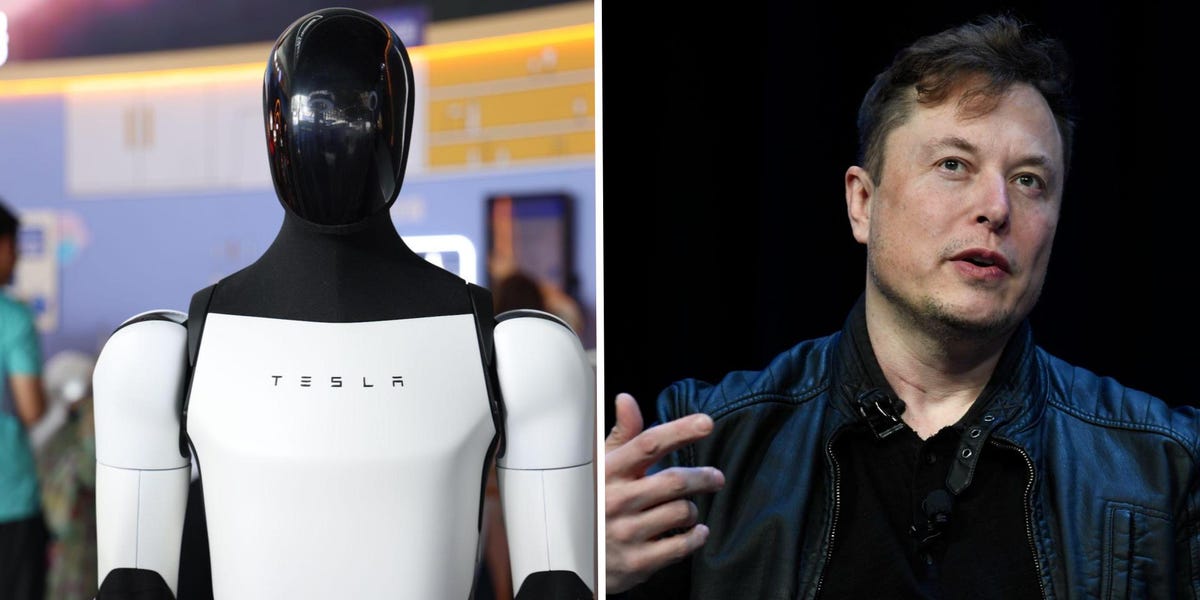
As Insider notes, that’s a similar strategy to the one Tesla has used to train its self-driving car models, forgoing expensive sensors like lidar and radar and relying instead on cameras and video. As is the case with its cars, using video to train Optimus — while cheaper and more easily scaled — has some drawbacks, including that it’s not as robust as more expensive methods.

More Tech

See all Tech
tech

OpenAI releases ChatGPT 5.5 — more complex “knowledge work” for fewer tokens

Right on the heels of Anthropic’s Claude Opus 4.7, OpenAI has also released the next incremental improvement to its flagship frontier model.

OpenAI says that ChatGPT 5.5 performs better on complex coding and data analysis tasks, and more carefully follows instructions, even when the instructions are vague.

Importantly, this gain in capability does not mean developers and companies have to shell out for more tokens (as is the case with Claude Opus 4.7) — the model uses fewer tokens that ChatGPT 5.4.

OpenAI says the new model has strengthened safeguards to ensure that the model’s strong cybersecurity capabilities aren’t used for malicious attacks.

Importantly, this gain in capability does not mean developers and companies have to shell out for more tokens (as is the case with Claude Opus 4.7) — the model uses fewer tokens that ChatGPT 5.4.

OpenAI says the new model has strengthened safeguards to ensure that the model’s strong cybersecurity capabilities aren’t used for malicious attacks.

🤖 75%
Jon Keegan

On Wednesday, Google CEO Sundar Pichai said in a blog post that AI is now writing 75% of new code at the company. This is up from 50% last fall. Pichai said all code is “approved by engineers.”

Google announced new TPU 8 chips today at its annual Cloud Next event. Pichai wrote:

“We’re now shifting to truly agentic workflows. Our engineers are orchestrating fully autonomous digital task forces, firing off agents and accomplishing incredible things.”

Latest Stories

Sherwood Media, LLC produces fresh and unique perspectives on topical financial news and is a fully owned subsidiary of Robinhood Markets, Inc., and any views expressed here do not necessarily reflect the views of any other Robinhood affiliate, including Robinhood Markets, Inc., Robinhood Financial LLC, Robinhood Securities, LLC, Robinhood Crypto, LLC, Robinhood Derivatives, LLC, or Robinhood Money, LLC. Futures and event contracts are offered through Robinhood Derivatives, LLC.
