
Tech
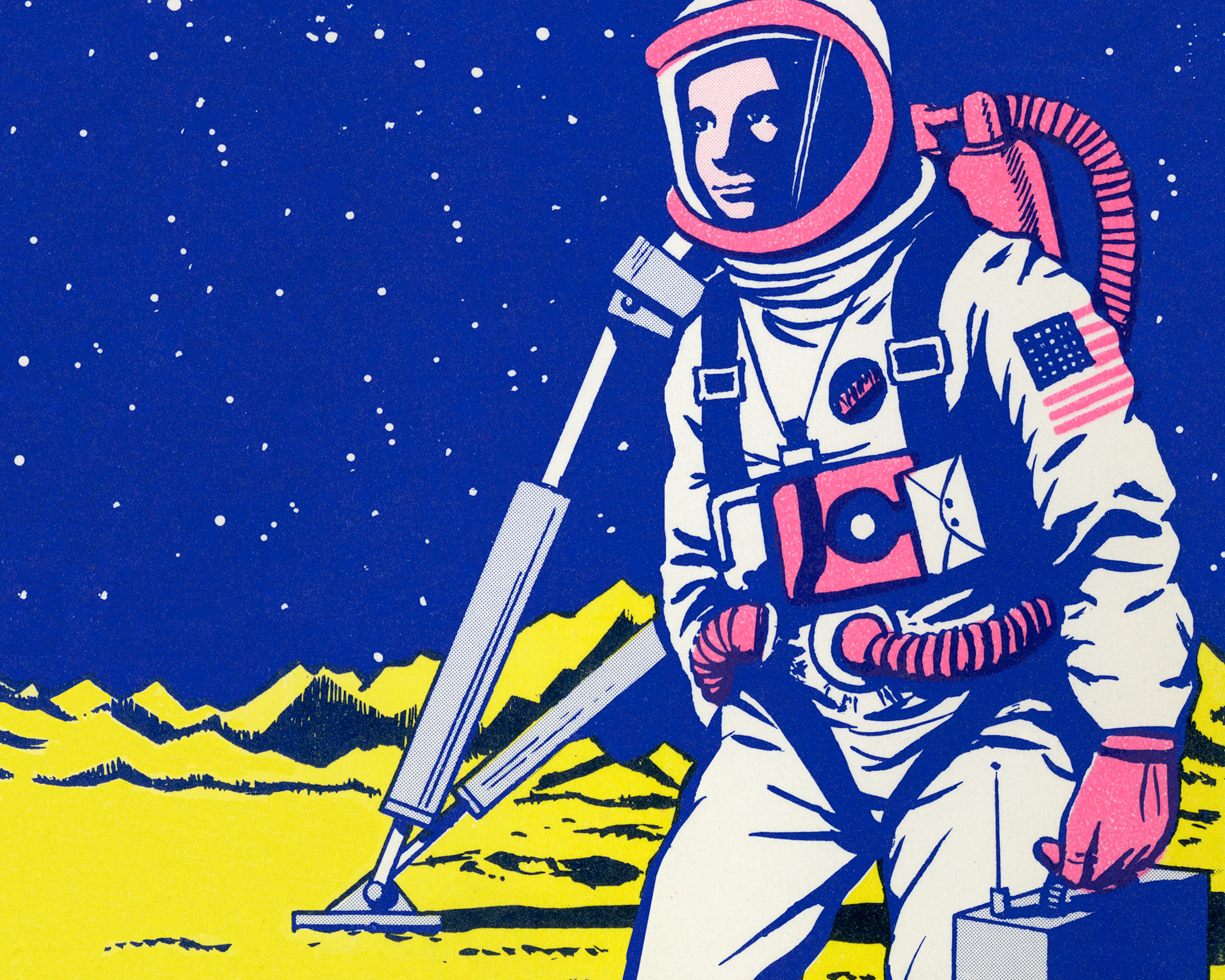
Astronaut on the Moon
Getty Images

Over 50 years since it last sent astronauts to the moon, the US is now reentering a very different space race

The successful launch of the Artemis II lunar flyby marked one small step for NASA, while China’s already making giant leaps in its own space program.

On Wednesday, a group of NASA astronauts set off on a flight around the moon, the first crewed lunar flyby since 1972. The world of space travel, much like life on Earth itself, has changed a lot in those 54 years.

The Space Launch System, for example, is considerably more advanced technology than Apollo’s Saturn V rocket; the crew is one person bigger, and includes a Canadian; the pace of launches leading up to it has been much slower; and the mission comes amid a rivalry with an Eastern nation that isn’t Russia.

Red star, blue star

In the days preceding the Artemis II launch, NASA Administrator Jared Isaacman commented that one of the main motives for the US to reinitiate its lunar exploration programs is the progress that China has been making in the space.

As outlined by The New York Times, China is the only country so far to have landed on and retrieved samples from the far side of the moon — the same side that the US aims to land human astronauts on by 2028 — with its seventh robotic mission exploring the lunar south pole slated for later this year. For its part, China aims to place its own astronauts on the nearer, Neil Armstrong-trodden side of the moon by 2030.

Right now, China’s astronomical ambitions appear to be slightly leaner than America’s, and are moving at a slower rate. Dr. Yuqi Qian, a lunar geologist at the University of Hong Kong, told the NYT, “I don’t think China regards this as a race.” Still, that hasn’t stopped the US from ramping up its moon mission efforts in recent years.

America space race
Sherwood News

Data from the NASA archive shows that the US kicked its lunar program back into motion in 2022, when the agency launched six missions in a single year, followed by five further missions in the years since. Russia’s lunar efforts have all but plateaued following the mid-20th-century space race, while China’s have accelerated significantly since it first launched its lunar initiative in 2004.

The lunar the better

Regardless of speed, both the US and China have similar plans once they get to the moon’s surface, including establishing outposts there to tap oxygen, water, hydrogen, helium, and rare earth elements and building nuclear reactors to power deep space missions.

Until then, wherever you are in the world, at least we can all find some strange comfort in the fact that there are officially 10 toilets in space right now (though this will go back down when Artemis II lands in nine days).


More Tech

See all Tech
CHINA-US-DIPLOMACY

Anthropic really doesn’t want the US to help China with AI

Anthropic made its case for freezing China out of the AI race as much as possible in a new policy paper. The company warned that letting China catch up to US AI companies could risk AI-powered mass surveillance and huge risks to monitoring AI safety.

Jon Keegan5/15/26
Tesla Robotaxi

Tesla finally reported un-redacted information about its Robotaxi crashes

There have been a total of 17 crashes so far among its Texas Robotaxis. Read about them all here.

Rani Molla5/15/26
tech
Rani Molla

Alphabet sold $3.6 billion in Japanese yen bonds — a record for a foreign company — likely to help its AI capex binge

We now have the value for Alphabet’s Japanese yen bond raise — 576.5 billion yen, or $3.6 billion — and it’s a record for a foreign issuer in Japan. The deal was spread across seven tranches with maturities ranging from 3 to 40 years, allowing the company to lock in rates as low as 1.965%.

The latest deal comes on the heels of Alphabet’s massive US and European bond deals, where the company has tapped global markets for nearly $60 billion in fresh capital over the last few months. In a filing earlier this week, the search giant said it would use the proceeds for “general corporate purposes.” That likely means fueling its AI infrastructure build-out, which has pushed its projected 2026 capex bill to a staggering $190 billion.

tech
Rani Molla

Bloomberg: Relationship between OpenAI and Apple has deteriorated and legal action may be imminent

The two-year-old alliance between Apple and OpenAI has deteriorated, Bloomberg reports, with the AI giant now consulting legal counsel about issuing a potential breach of contract notice.

OpenAI executives allege that Apple failed to adequately integrate and promote ChatGPT on the iPhone, causing the AI firm to lose out on billions a year in subscriptions and hurt its brand, according to the report.

Meanwhile, Apple has expressed concerns over OpenAI’s privacy protection, and has been miffed that OpenAI has been working on its own hardware with former Apple design lead Jony Ive.

More recently, Apple, which has trailed its peers in developing AI, has decided to offer users their choice of AI models, rather than aligning exclusively with OpenAI’s.

Meanwhile, Apple has expressed concerns over OpenAI’s privacy protection, and has been miffed that OpenAI has been working on its own hardware with former Apple design lead Jony Ive.

More recently, Apple, which has trailed its peers in developing AI, has decided to offer users their choice of AI models, rather than aligning exclusively with OpenAI’s.

Latest Stories

Sherwood Media, LLC and Chartr Limited produce fresh and unique perspectives on topical financial news and are fully owned subsidiaries of Robinhood Markets, Inc., and any views expressed here do not necessarily reflect the views of any other Robinhood affiliate, including Robinhood Markets, Inc., Robinhood Financial LLC, Robinhood Securities, LLC, Robinhood Crypto, LLC, Robinhood Money, LLC, Robinhood U.K. Ltd, Robinhood Derivatives, LLC, Robinhood Gold, LLC, Robinhood Asset Management, LLC, Robinhood Credit, Inc., Robinhood Ventures DE, LLC and, where applicable, its managed investment vehicles.
