

What we know about Tesla’s Terafab, the “most epic chip-building exercise in history by far”
The SpaceX and Tesla collab would be “bigger than everything else combined” in Giga Texas.
With Tesla’s Terafab project, the company is stepping into uncharted territory. Not only is it planning what could be the largest semiconductor fabrication plant in the world, it’s doing so with virtually no experience in chip manufacturing. Its ambitions are literally out of this world: Tesla has described it as a step toward “becoming a galactic civilization.”
Here’s what we know so far.
Who: Tesla and SpaceX, as well as its subsidiary xAI, will jointly run Terafab. It’s the latest example that Elon Musk, who is CEO of all three companies, increasingly views them as part of the same entity.
What: Terafab aims to bring all aspects of chip production — from design to fabrication to packaging — under one roof. Musk said the facility is intended to produce up to 1 terawatt of compute annually. The plant would manufacture inference chips for Tesla’s Robotaxis and Optimus robots, as well as custom AI chips for space-based applications, including solar-powered AI satellites. Morgan Stanley estimates the project could cost $35 billion to $45 billion in capital expenditure, likely shared between Tesla and SpaceX.
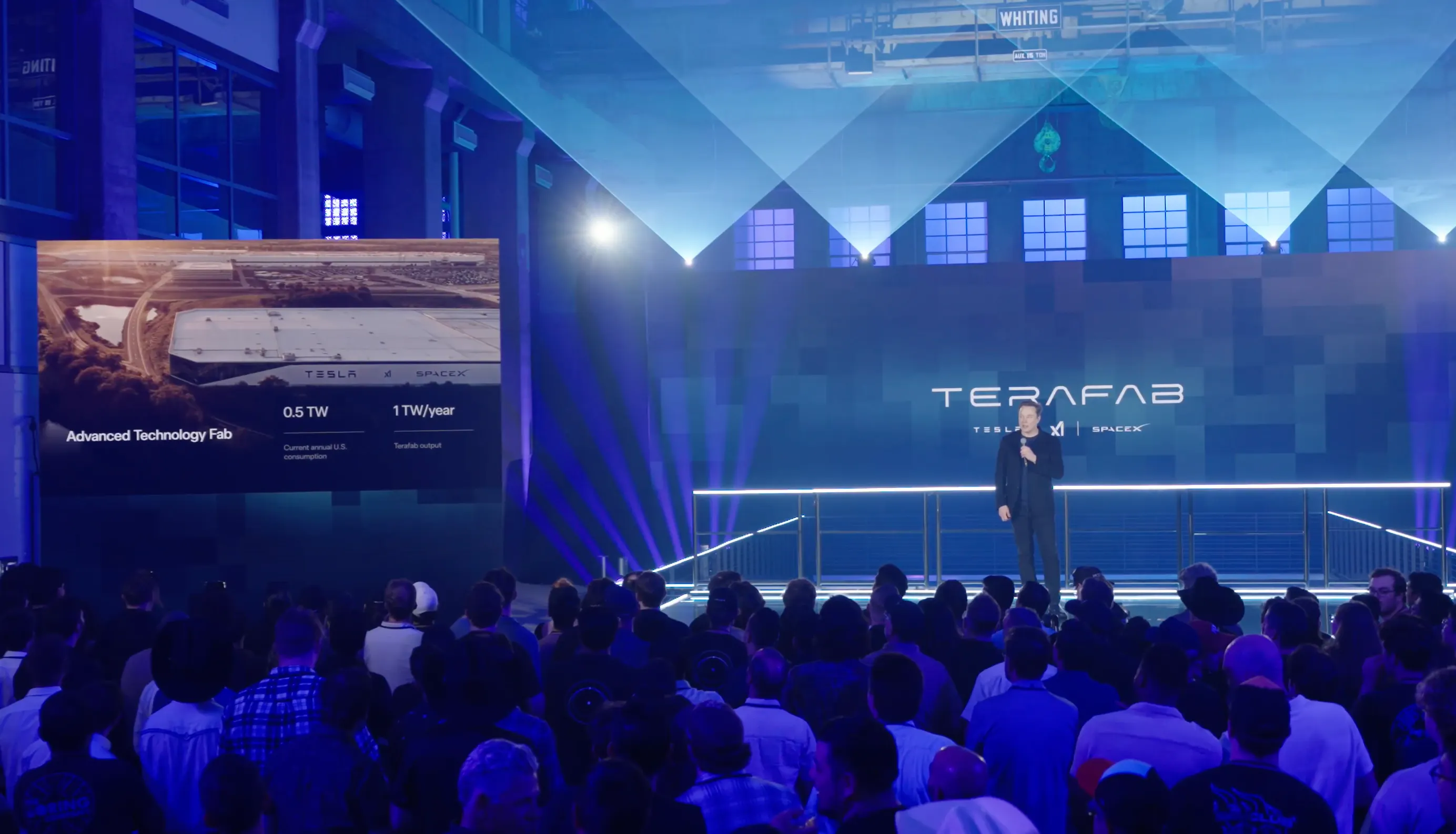
Where: Early reports suggested Terafab could be located on the north side of Tesla’s Giga Texas facility, based on a slide Musk presented showing an “Advanced Technology Fab” there. But Musk later clarified that this referred only to a smaller facility for iterating on chip designs. The Terafab itself, he said, would be “far bigger than everything else combined” on the Giga Texas campus and require “thousands of acres.” Tesla says the existing Giga Texas site spans about 2,500 acres with more than 10 million square feet of factory space. Musk added that “several locations for Terafab are under consideration.”
Why: The goal is to supply Tesla, SpaceX, and xAI with the ballooning number of AI chips they expect to need since Musk has said existing suppliers, including TSMC, Samsung, and Micron, can’t handle their future demand. On Tesla’s last earnings call, Musk said chip supply would be a “limiting factor” for Tesla’s growth in about three or four years.
When: Musk has not provided a timeline for the project, but even at his typical breakneck pace, it is likely years away. Building a semiconductor fab is one of the most complex industrial undertakings in the world, typically carried out by established players like TSMC, Intel, and Samsung, and often takes years to complete and ramp.
“Even under an aggressive scenario involving a retrofit of an existing facility, initial chip output would likely not occur until mid-2028 at the earliest,” Morgan Stanley analysts wrote last week. “A greenfield build would extend timelines further, with meaningful output more likely 4-5 years after project initiation.”



