

Tech
tech
Jon Keegan

WSJ: OpenAI is hitting a wall with GPT-5 training

After 18 months’ work and hundreds of millions of dollars’ worth of computing time training its next major foundational model, GPT-5, OpenAI seems to have hit a wall.

New reporting from The Wall Street Journal said that the company is not seeing the exponential leap in its next-gen model (known internally as “Orion”) that OpenAI researchers — and OpenAI investors — had expected.

The AI “scaling law” that has until now consistently delivered more powerful, more capable AI models by just feeding more into more expensive GPUs is showing signs of reaching a plateau. Researchers are scrambling to find reserves of fresh data to train the models, as most of the internet has already been harvested.

Much of the AI industry has followed this pattern of model development, so if the current approach is reaching its theoretical limits, it could shake up the power structure of the industry.

Companies like Meta, Amazon, xAI, Google, and others are spending billions of dollars on data centers powered by hundreds of thousands of specialized training GPUs, like Nvidia’s popular Hopper series. Investors have been promised continued leaps in AI technology in exchange for huge capital expenditures investing in computing infrastructure.

OpenAI just announced its new o3 “reasoning” models, which the company is hoping will help break through the current barriers.

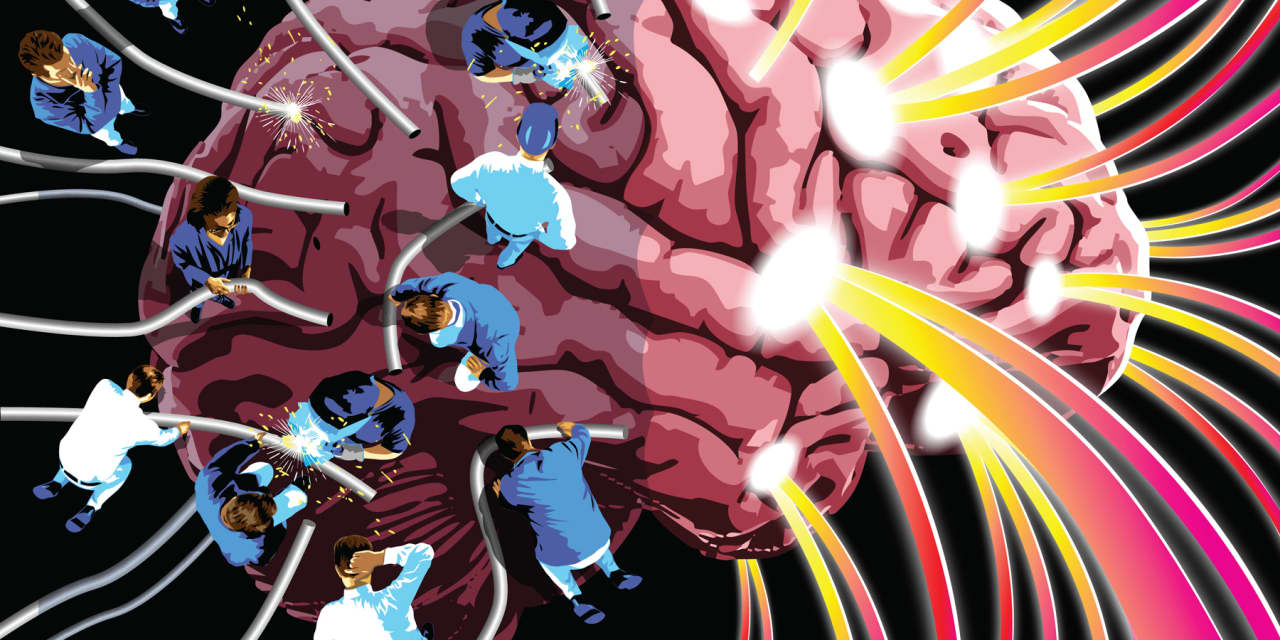
The AI “scaling law” that has until now consistently delivered more powerful, more capable AI models by just feeding more into more expensive GPUs is showing signs of reaching a plateau. Researchers are scrambling to find reserves of fresh data to train the models, as most of the internet has already been harvested.

Much of the AI industry has followed this pattern of model development, so if the current approach is reaching its theoretical limits, it could shake up the power structure of the industry.

Companies like Meta, Amazon, xAI, Google, and others are spending billions of dollars on data centers powered by hundreds of thousands of specialized training GPUs, like Nvidia’s popular Hopper series. Investors have been promised continued leaps in AI technology in exchange for huge capital expenditures investing in computing infrastructure.

OpenAI just announced its new o3 “reasoning” models, which the company is hoping will help break through the current barriers.

More Tech

See all Tech
Microsoft CEO Satya Nadella (R) greets OpenAI CEO Sam Altman during the OpenAI DevDay event

Emails show Microsoft wasn’t impressed by OpenAI’s early work, but wanted to keep it from Amazon

OpenAI wanted further Azure computing discounts, but Microsoft didn’t think it was on the verge of a breakthrough.

tech

Wedbush’s Dan Ives raises Apple price target to $400 on $15 billion AI services opportunity

Apple may not have a frontier AI model or a fully functional AI assistant, but that won’t stop the company from throwing its weight around in the “AI revolution,” according to Wedbush Securities analyst Dan Ives. That’s enough for Ives to raise his price target for Apple shares to $400 from $350.

Underpinning that jump is what Ives sees as a $15 billion annual revenue opportunity for Apple in AI services from monetizing other companies’ models by distributing them to its 2.5 billion iOS users. Ives estimates that in the coming years, roughly 20% of the world’s population will access AI through an Apple device, calling it the “consumer hub of AI.”

That new era, Ives expects, will officially kick off at Apple’s developer conference in June, where he expects Apple to “finally unveil its AI strategy.”

tech

Tesla’s Model Y just cleared a new federal safety bar

The National Highway Traffic Safety Administration announced today that Tesla Model Ys manufactured after November 12 were the first to pass the agency’s new advanced driver assistance system tests, which are now part of the New Car Assessment Program. According to NHTSA, Tesla tested the 2026 Model Y and submitted the test results to the organization for review.

“By successfully passing these new tests, the 2026 Tesla Model Y demonstrates the lifesaving potential of driver assistance technologies and sets a high bar for the industry,” NHTSA Administrator Jonathan Morrison wrote in the press release. “We hope to see many more manufacturers develop vehicles that can meet these requirements.”

The new tests include:

  • Pedestrian automatic emergency braking

  • Lane-keeping assistance

  • Blind spot warning

  • Blind spot intervention

The milestone offers Tesla highly coveted regulatory validation, as it seeks to spur usage of its Full Self-Driving (Supervised) tech.

80x

We knew Claude Code was driving crazy growth at Anthropic, but it may be much more than the company is expecting.

Speaking at the company’s developer conference yesterday, Anthropic CEO Dario Amodei said that while the company is planning for 10x growth this year, it could be as much as 80x, calling the overwhelming demand “crazy” and that he looked forward to more modest growth, saying such growth is “too hard to handle.”

The demand is so great that Anthropic partnered with Elon Musk’s xAI to buy up the bulk of computing from his Colossus data center in Tennessee.

Latest Stories

Sherwood Media, LLC produces fresh and unique perspectives on topical financial news and is a fully owned subsidiary of Robinhood Markets, Inc., and any views expressed here do not necessarily reflect the views of any other Robinhood affiliate, including Robinhood Markets, Inc., Robinhood Financial LLC, Robinhood Securities, LLC, Robinhood Crypto, LLC, Robinhood Derivatives, LLC, or Robinhood Money, LLC. Futures and event contracts are offered through Robinhood Derivatives, LLC.
