

Tech
tech
Jon Keegan

Zuckerberg: Meta is building “several multi-GW clusters” and spending “hundreds of billions of dollars” on AI data centers

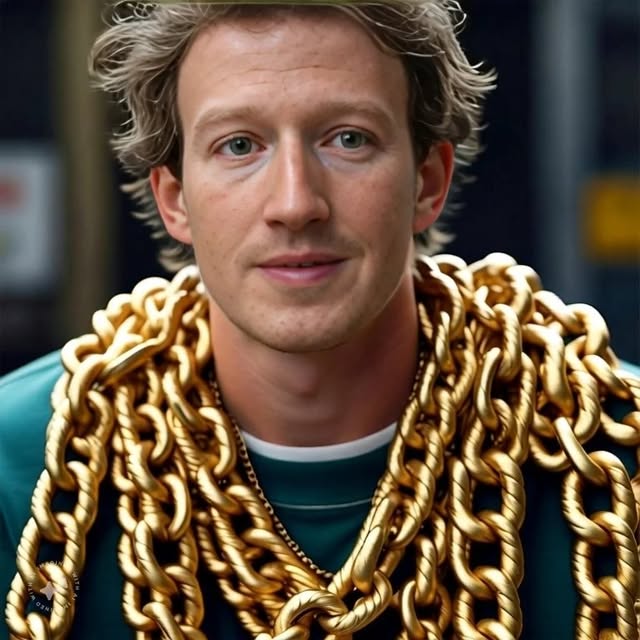
Meta CEO Mark Zuckerberg took to Threads today to promote his new all-star “superintelligence” team and announce that the company is investing “hundreds of billions of dollars” on AI data centers.

The statement underscores Meta’s trend toward heavy capex spend to enable its AI ambitions: the company said earlier this year that it would spend a whopping $64 billion to $72 billion on AI capex this year alone.

And the stock’s reaction — a knee-jerk move up as the news hit the wires — reinforces that the top risk around AI capex in the eyes of the market is not spending too much, but rather, spending too little.

Meta is likely realizing that it needs to get better at branding its massive AI capex projects; OpenAI’s five-gigawatt “Stargate” mega data center has all the buzz. So Zuckerberg is calling the Manhattan-sized data center Meta is building in Richland Parish, Louisiana, “Hyperion.” He originally described as a 2GW+” project, but now says it “will be able to scale up to 5GW over several years.”

Zuckerberg also mentioned “Prometheus,” which he said will be coming online in 2026, writing in the post that “we’re actually building several multi-GW clusters.”

Meta shares were recently up 0.9%.

The statement underscores Meta’s trend toward heavy capex spend to enable its AI ambitions: the company said earlier this year that it would spend a whopping $64 billion to $72 billion on AI capex this year alone.

And the stock’s reaction — a knee-jerk move up as the news hit the wires — reinforces that the top risk around AI capex in the eyes of the market is not spending too much, but rather, spending too little.

Meta is likely realizing that it needs to get better at branding its massive AI capex projects; OpenAI’s five-gigawatt “Stargate” mega data center has all the buzz. So Zuckerberg is calling the Manhattan-sized data center Meta is building in Richland Parish, Louisiana, “Hyperion.” He originally described as a 2GW+” project, but now says it “will be able to scale up to 5GW over several years.”

Zuckerberg also mentioned “Prometheus,” which he said will be coming online in 2026, writing in the post that “we’re actually building several multi-GW clusters.”

Meta shares were recently up 0.9%.
More Tech

See all Tech
tech

TSMC CEO on Tesla and Intel’s Terafab: “There are no shortcuts”

Tesla CEO Elon Musk has reportedly asked chip industry suppliers for his Terafab chipmaking project to move at “light speed” in an effort to help Tesla and SpaceX manufacture the AI chips they need.

On the company’s last earnings call Musk said chip supply would be the “limiting factor” for Tesla’s growth in about three or four years. During a presentation for the Terafab last month, Musk said, “We either build the Terafab or we don’t have the chips.” More established chipmaker Intel has since joined the effort.

Still, the world's largest chipmaker isn't convinced that “light speed” is physically possible. Speaking on an earnings call this morning, TSMC Chairman and CEO CC Wei offered a blunt assessment of the Terafab's ambitious timeline: “There are no shortcuts.” According to Wei, the physics of a modern foundry, which he says takes roughly five years to build and ramp, remains the ultimate speed limit, regardless of the customer's urgency. “That's a fundamental of the foundry industry,” he said.

Wei noted that Tesla remains a TSMC customer.

🚀 $100B

Alphabet’s 2015 investment in SpaceX is about to pay off handsomely with the company’s hotly anticipated IPO later this year, which is expected to be the largest in history.

Bloomberg reports that according to new financial filings, Alphabet’s investment could be worth up to $100 billion.

Google invested in SpaceX in 2015 when it, along with Fidelity, invested $1 billion in a round that valued SpaceX at $10 billion. At the end of 2025, Google owned just over 6% of SpaceX, per Bloomberg’s reporting on the more recent filings. That stake has likely been diluted due to SpaceX’s merger with xAI.

$1

Barclays says autonomous couriers — think sidewalk robots and drones — could push delivery costs down to as little as $1 per order, from between $5 and $7 today and closer to $9 for traditional deliveries in high-labor-cost markets. If robots save $4 on every delivery, and enough companies start using them, the food delivery industry, including companies like DoorDash and Uber, could end up with $16 billion in extra profit every year, according to Barclays.

The catch: we’re nowhere near that world yet. Robots and drones handle less than 1% of deliveries today. Even by 2035, Barclays only sees penetration hitting around 10%.

Google’s Wing and Amazon have also been trying to crack last-mile product delivery — a reminder that this is part of a broader race to automate the most expensive leg of e-commerce.

Latest Stories

Sherwood Media, LLC produces fresh and unique perspectives on topical financial news and is a fully owned subsidiary of Robinhood Markets, Inc., and any views expressed here do not necessarily reflect the views of any other Robinhood affiliate, including Robinhood Markets, Inc., Robinhood Financial LLC, Robinhood Securities, LLC, Robinhood Crypto, LLC, Robinhood Derivatives, LLC, or Robinhood Money, LLC. Futures and event contracts are offered through Robinhood Derivatives, LLC.
