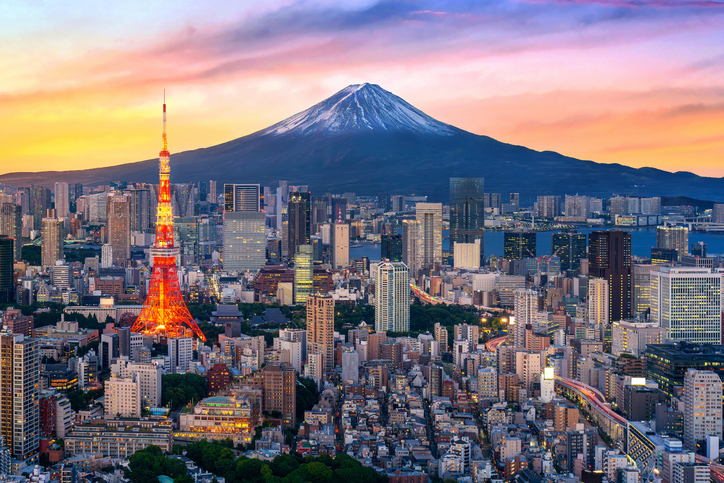
World
solar power station on the rooftop of the factory
A solar power station on the rooftop of a factory in China (Getty Images)
RED FLAG, GREEN FLAG

China, the world’s largest carbon polluter, has pledged to cut emissions for the first time

President Xi Jinping has announced that China is aiming to slash carbon emissions by up to 10% in the next decade.

Millie Giles

While roughly 100 countries have been making commitments to lower fossil fuel emissions at the United Nations climate summit in New York, one nation’s pledge matters most.

In a video statement yesterday, Chinese President Xi Jinping announced that the world’s largest carbon-polluting country — responsible for over 31% of global CO2 emissions — would aim to reduce its emissions by 7% to 10% by 2035, as reported by the Associated Press.

This is China’s first-ever commitment to an absolute emissions reduction target.

Futhermore, Xi pledged that the country will increase its wind and solar power sixfold from the level reported in 2020, helping to cement its contradictory position as both the world leader in renewables as well as the world’s biggest polluter.
China emissions CO2
Sherwood News

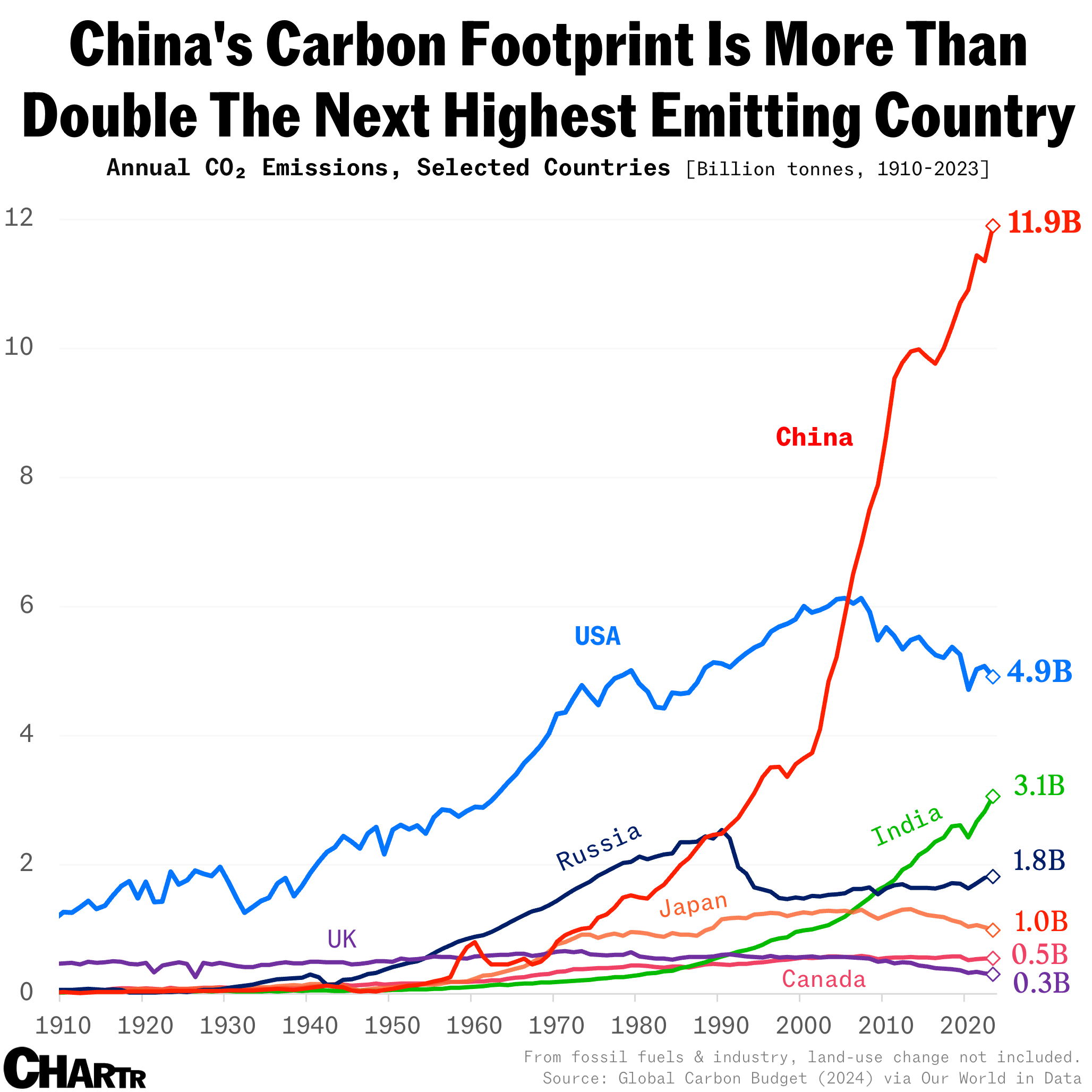
From a global perspective, China’s commitment is pivotal. The country produced a massive 11.9 billion tonnes of carbon emissions at the last count in 2023, per data from the Global Carbon Budget — more than the next five top carbon-polluting nations combined.

Emission impossible

China’s landmark pledge comes as countries scramble to submit new climate plans by the end of the month in preparation for COP30 in November. As part of the 2015 Paris climate agreement, world leaders are making further commitments to reduce fossil fuel emissions in an effort to cap the long-term global temperature rise at 1.5 degrees Celsius.

However, there’s also been some notable opposition, with President Trump doubling down on his anti-climate stance in his address to the UN on Tuesday. Indeed, Trump moved to withdraw the US — the second-largest carbon polluter globally — from the Paris agreement on his first day back in office earlier this year.

More World

See all World
world
Tom Jones

The UAE’s OPEC exit will hit the group in the barrels

After just shy of 60 years in OPEC, its membership even predating its status as a nation-state, the United Arab Emirates yesterday announced its shocking departure from the oil production group, effective May 1, as the knock-on effects of the Iran war continue to play out across the Middle East and the energy landscape.

For context, the UAE produces the third-highest amount of oil in the group, per April data and OPEC’s latest set of annual statistics.

According to the cartel’s 2025 Annual Statistical Bulletin, the OPEC group was collectively exporting some 19 million barrels of crude oil a day last year, with the United Arab Emirates accounting for some 14% of that daily output.

UAExit means UAExit

The nation, whose energy minister told Reuters yesterday that the decision was taken “after a careful look at current and future policies related to level of production” and wasn’t made following discussions with any other country, made up a healthy share of the group’s total confirmed crude oil reserves, as well.

OPEC exports chart
Sherwood News

Of the 12 nations in the core group, which was founded by just five oil superpowers back in September 1960, only two (Iraq and Saudi Arabia) exported more barrels of crude oil daily, pumping out 3.36 million and 6.05 million barrels, respectively, each day to nations around the world.

For its part, the UAE said it will “continue its responsible role by gradually and thoughtfully increasing production, in line with demand and market conditions,” per the official state news agency. Clearly, the nation now wants a little more control of just how much oil it can pump around the world, with the UAE having to eat a large proportion of lost revenues due to its healthy abundance and OPEC restrictions.

According to the cartel’s 2025 Annual Statistical Bulletin, the OPEC group was collectively exporting some 19 million barrels of crude oil a day last year, with the United Arab Emirates accounting for some 14% of that daily output.

UAExit means UAExit

The nation, whose energy minister told Reuters yesterday that the decision was taken “after a careful look at current and future policies related to level of production” and wasn’t made following discussions with any other country, made up a healthy share of the group’s total confirmed crude oil reserves, as well.

OPEC exports chart
Sherwood News

Of the 12 nations in the core group, which was founded by just five oil superpowers back in September 1960, only two (Iraq and Saudi Arabia) exported more barrels of crude oil daily, pumping out 3.36 million and 6.05 million barrels, respectively, each day to nations around the world.

For its part, the UAE said it will “continue its responsible role by gradually and thoughtfully increasing production, in line with demand and market conditions,” per the official state news agency. Clearly, the nation now wants a little more control of just how much oil it can pump around the world, with the UAE having to eat a large proportion of lost revenues due to its healthy abundance and OPEC restrictions.

Latest Stories

Sherwood Media, LLC and Chartr Limited produce fresh and unique perspectives on topical financial news and are fully owned subsidiaries of Robinhood Markets, Inc., and any views expressed here do not necessarily reflect the views of any other Robinhood affiliate, including Robinhood Markets, Inc., Robinhood Financial LLC, Robinhood Securities, LLC, Robinhood Crypto, LLC, Robinhood Money, LLC, Robinhood U.K. Ltd, Robinhood Derivatives, LLC, Robinhood Gold, LLC, Robinhood Asset Management, LLC, Robinhood Credit, Inc., Robinhood Ventures DE, LLC and, where applicable, its managed investment vehicles.