
World
Holidays Atmosphere In Italy Via Monte Napoleone
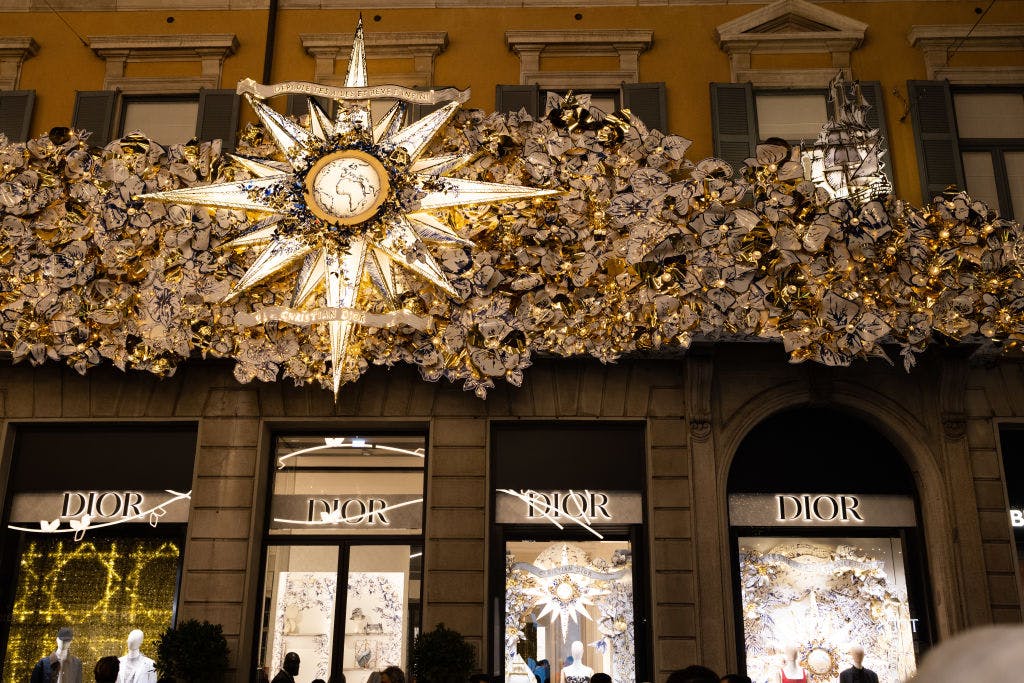
Christmas on Via Monte Napoleone in Milan in 2022 (Pietro D'Aprano/Getty Images)
VIA DOLCE VITA

Milan is home to the most expensive shopping street in the world

One square meter of store space will set you back ~$21,000 a year on Milan’s Via Monte Napoleone.

Millie Giles

Holiday shopping season is fast approaching, with post-Thanksgiving deals waiting in the wings and festive goodies filling the shelves even earlier than last year (a phenomenon known as “Christmas creep”).

Though some began stuffing their stockings months ago — a recent Bankrate survey found that almost half of holiday shoppers (48%) planned to begin buying presents before, hold your breath, Halloween — retailers are expecting a mixed bag in the coming months, with Target lowering its profit forecast for what is typically its busiest period of the year. Still, even if regular folks are scaling back their spending, it likely won’t be a light Christmas for the ultrarich, with 2024 seeing more billionaires than ever.

If you happen to be a billionaire reading this, and you’re looking to part with a lot of cash for designer labels while taking as few steps as possible, look no further than Italy’s fashion capital.
Milan most expensive shopping street
Sherwood News

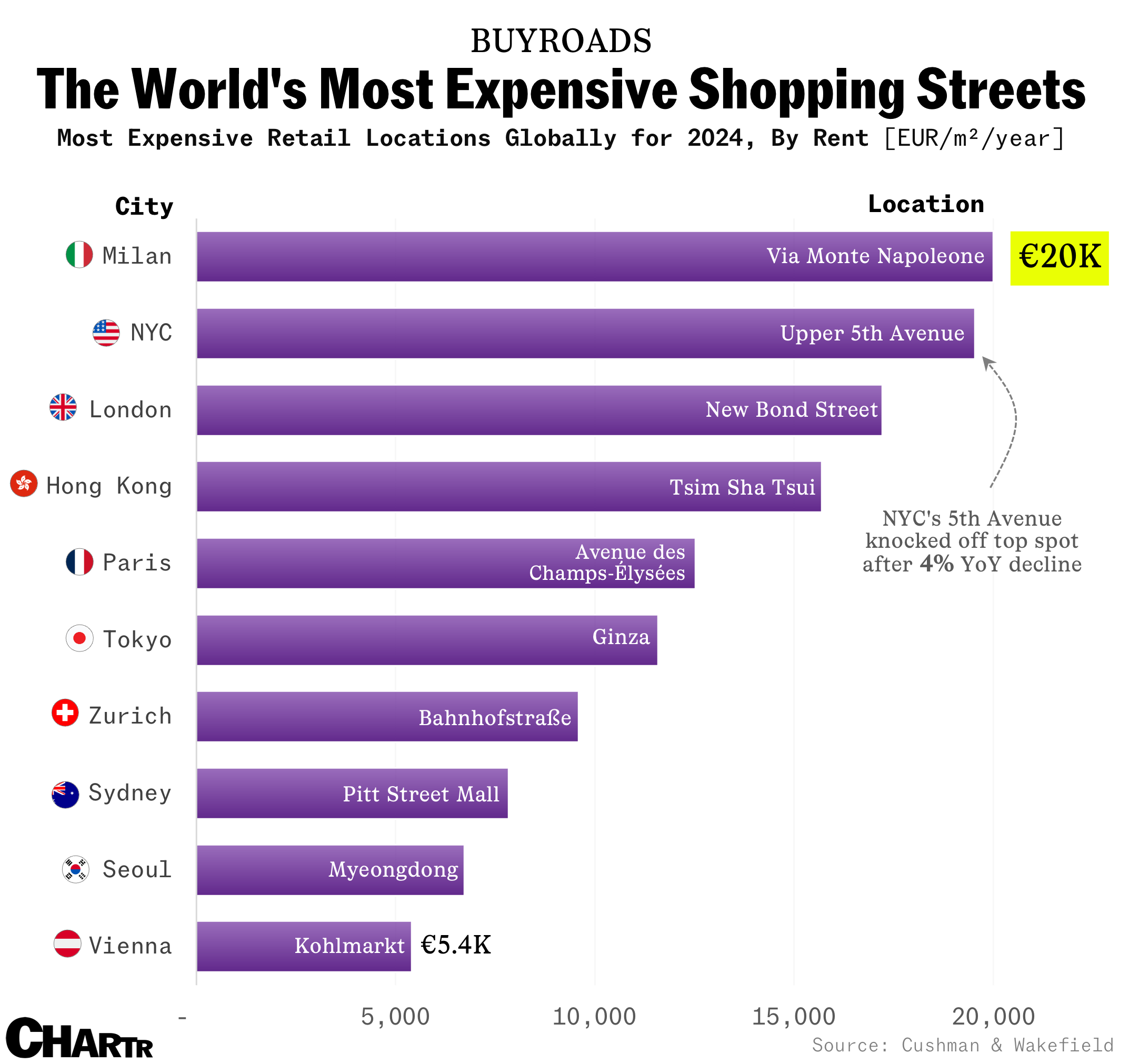
According to analysis from real-estate services firm Cushman & Wakefield, cited by the FT, Milan’s Via Monte Napoleone has overtaken NYC’s Upper 5th Avenue (where rents dropped 4% year over year) as the most expensive shopping street in the world, making it the first European city to top the list in 34 years.

The report found that landlords with units on the buzzy strip can charge luxury retailers — including Chanel and Gucci, which have both opened new locations on the street in the past year — some €20,000 ($21,000) per square meter annually in 2024. Admittedly, the Via Monte Napoleone may pose a size advantage for the rankings: at just 1,150 feet long, it’s roughly one-fifth the size of Paris’ Avenue des Champs-Élysées.

Vacation moda… Milan has seen a record number of tourists this summer, as well as a wave of high earners relocating to the business hub for its professional opportunities and generous tax breaks, including VAT refunds on luxury purchases like watches and handbags.

More World

See all World
world
Tom Jones

The UAE’s OPEC exit will hit the group in the barrels

After just shy of 60 years in OPEC, its membership even predating its status as a nation-state, the United Arab Emirates yesterday announced its shocking departure from the oil production group, effective May 1, as the knock-on effects of the Iran war continue to play out across the Middle East and the energy landscape.

For context, the UAE produces the third-highest amount of oil in the group, per April data and OPEC’s latest set of annual statistics.

According to the cartel’s 2025 Annual Statistical Bulletin, the OPEC group was collectively exporting some 19 million barrels of crude oil a day last year, with the United Arab Emirates accounting for some 14% of that daily output.

UAExit means UAExit

The nation, whose energy minister told Reuters yesterday that the decision was taken “after a careful look at current and future policies related to level of production” and wasn’t made following discussions with any other country, made up a healthy share of the group’s total confirmed crude oil reserves, as well.

OPEC exports chart
Sherwood News

Of the 12 nations in the core group, which was founded by just five oil superpowers back in September 1960, only two (Iraq and Saudi Arabia) exported more barrels of crude oil daily, pumping out 3.36 million and 6.05 million barrels, respectively, each day to nations around the world.

For its part, the UAE said it will “continue its responsible role by gradually and thoughtfully increasing production, in line with demand and market conditions,” per the official state news agency. Clearly, the nation now wants a little more control of just how much oil it can pump around the world, with the UAE having to eat a large proportion of lost revenues due to its healthy abundance and OPEC restrictions.

According to the cartel’s 2025 Annual Statistical Bulletin, the OPEC group was collectively exporting some 19 million barrels of crude oil a day last year, with the United Arab Emirates accounting for some 14% of that daily output.

UAExit means UAExit

The nation, whose energy minister told Reuters yesterday that the decision was taken “after a careful look at current and future policies related to level of production” and wasn’t made following discussions with any other country, made up a healthy share of the group’s total confirmed crude oil reserves, as well.

OPEC exports chart
Sherwood News

Of the 12 nations in the core group, which was founded by just five oil superpowers back in September 1960, only two (Iraq and Saudi Arabia) exported more barrels of crude oil daily, pumping out 3.36 million and 6.05 million barrels, respectively, each day to nations around the world.

For its part, the UAE said it will “continue its responsible role by gradually and thoughtfully increasing production, in line with demand and market conditions,” per the official state news agency. Clearly, the nation now wants a little more control of just how much oil it can pump around the world, with the UAE having to eat a large proportion of lost revenues due to its healthy abundance and OPEC restrictions.

Latest Stories

Sherwood Media, LLC and Chartr Limited produce fresh and unique perspectives on topical financial news and are fully owned subsidiaries of Robinhood Markets, Inc., and any views expressed here do not necessarily reflect the views of any other Robinhood affiliate, including Robinhood Markets, Inc., Robinhood Financial LLC, Robinhood Securities, LLC, Robinhood Crypto, LLC, Robinhood Money, LLC, Robinhood U.K. Ltd, Robinhood Derivatives, LLC, Robinhood Gold, LLC, Robinhood Asset Management, LLC, Robinhood Credit, Inc., Robinhood Ventures DE, LLC and, where applicable, its managed investment vehicles.