
World
Vegging out: Vegetarianism & veganism have lost some allure, but veganuary continues to rise

Vegging out: Vegetarianism & veganism have lost some allure, but veganuary continues to rise

Vegging out

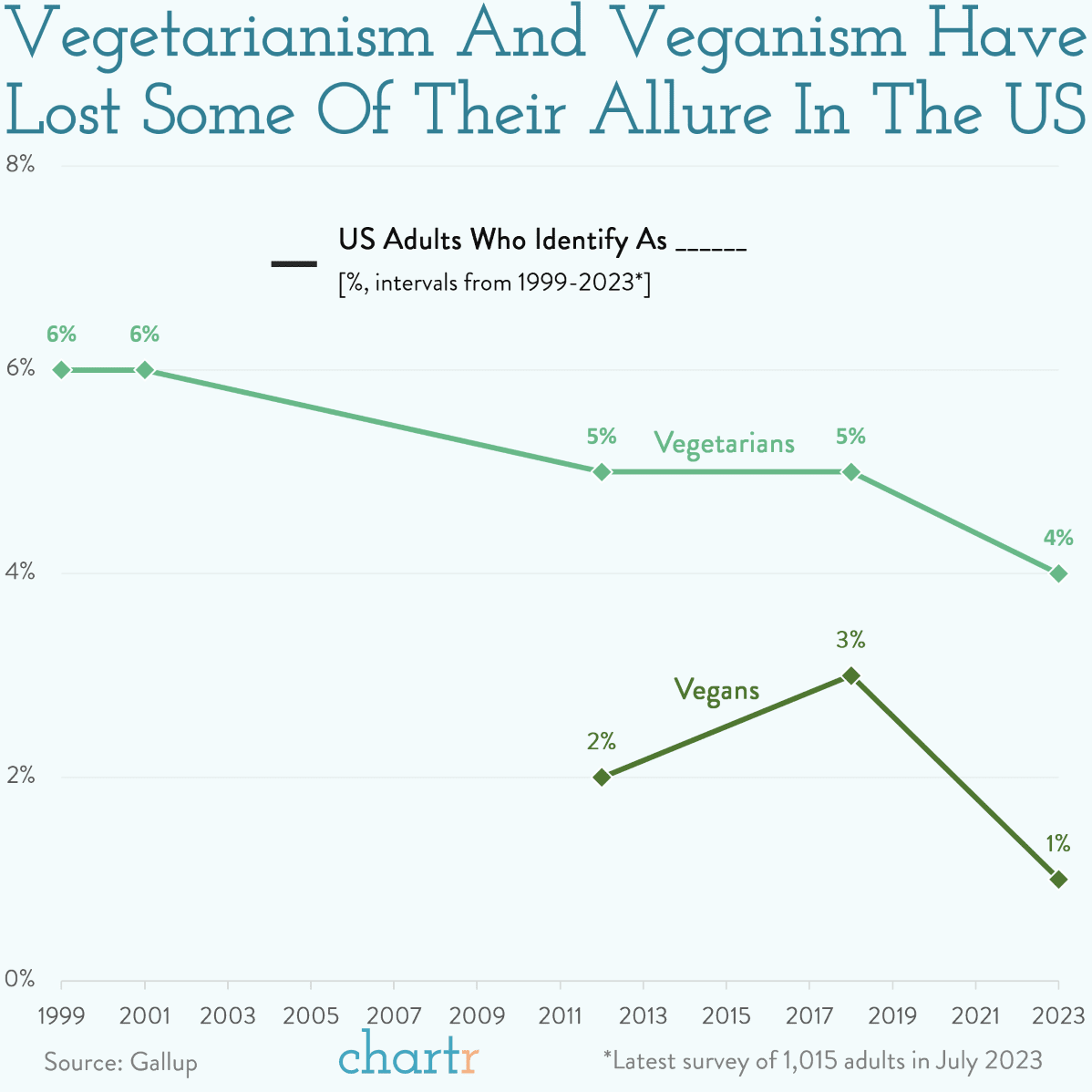
While it may feel as though the plant-based section of your local grocery store is always growing, and that more veggie offerings are cropping up on your favorite menus, the number of strict vegans and vegetarians in the US has actually been trending in the opposite direction in the last 4 years, according to new data from Gallup's Consumption Habits poll.
Vegging out: Vegetarianism & veganism have lost some allure, but veganuary continues to rise

The survey finds that meatless dietary choices have fallen to their lowest popularity since the late 1990s, with only 4% of Americans identifying as vegetarian in 2023, and just 1% placing themselves in the vegan category. While it’s too soon to call time on whether we’ve hit “peak vegan” in the US, the fact that the figures have slipped at all is somewhat surprising.

Ongoing debates around the health concerns associated with meat-heavy diets, increased public awareness of the environmental impacts of the industry, and an ever-growing list of celebrities eager to espouse the benefits of a plant-based lifestyle have clearly not swayed the wider population away from meat… at least not full-time, anyway.

Part-time veggies

Although only a slim proportion of Americans identify as strictly vegetarian or vegan, there does seem to be continued momentum around temporary dietary changes, as projects like “Meatless Mondays” and “Veganuary” gather steam.

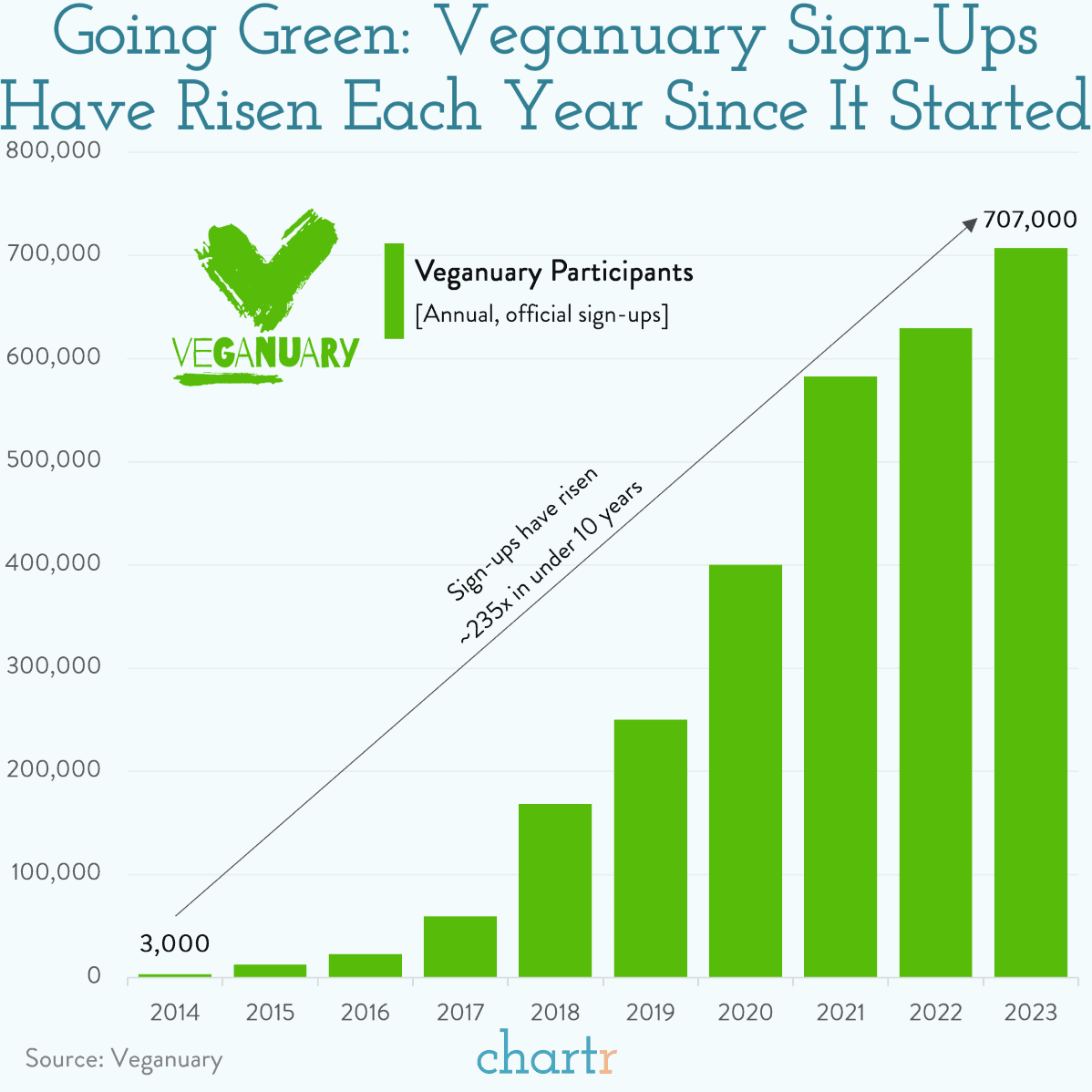
Indeed, since 2014, more than 2.5 million resolution-makers globally have signed up to participate in Veganuary, a non-profit annual event that challenges partakers to follow a vegan lifestyle for the entire month of January. This year, over 700,000 people signed up, with many more taking part unofficially, thanks in part to viral content on social media — posts with the tag #veganuary were watched more than a billion times on TikTok.
Vegging out: Vegetarianism & veganism have lost some allure, but veganuary continues to rise

Indeed, surveys commissioned by Veganuary found that 7% of Americans, 9% of Germans, and 4% of Brits had participated in Veganuary for at least part of the month, which suggests that taking a break from meat, either for the planet or health reasons, is increasingly popular, even if the change is never made permanent. This is consistent with other data from a recent YouGov survey, which saw few people who had previously sustained a plant-based diet actually remaining veggie. The poll found that, while nearly 1 in 5 Americans reported that they’d been a vegetarian at some point in their lives, only 7% identified as a vegetarian at the time of asking (interestingly, a higher number than the Gallup survey).

More World

See all World
world
Tom Jones

The UAE’s OPEC exit will hit the group in the barrels

After just shy of 60 years in OPEC, its membership even predating its status as a nation-state, the United Arab Emirates yesterday announced its shocking departure from the oil production group, effective May 1, as the knock-on effects of the Iran war continue to play out across the Middle East and the energy landscape.

For context, the UAE produces the third-highest amount of oil in the group, per April data and OPEC’s latest set of annual statistics.

According to the cartel’s 2025 Annual Statistical Bulletin, the OPEC group was collectively exporting some 19 million barrels of crude oil a day last year, with the United Arab Emirates accounting for some 14% of that daily output.

UAExit means UAExit

The nation, whose energy minister told Reuters yesterday that the decision was taken “after a careful look at current and future policies related to level of production” and wasn’t made following discussions with any other country, made up a healthy share of the group’s total confirmed crude oil reserves, as well.

OPEC exports chart
Sherwood News

Of the 12 nations in the core group, which was founded by just five oil superpowers back in September 1960, only two (Iraq and Saudi Arabia) exported more barrels of crude oil daily, pumping out 3.36 million and 6.05 million barrels, respectively, each day to nations around the world.

For its part, the UAE said it will “continue its responsible role by gradually and thoughtfully increasing production, in line with demand and market conditions,” per the official state news agency. Clearly, the nation now wants a little more control of just how much oil it can pump around the world, with the UAE having to eat a large proportion of lost revenues due to its healthy abundance and OPEC restrictions.

According to the cartel’s 2025 Annual Statistical Bulletin, the OPEC group was collectively exporting some 19 million barrels of crude oil a day last year, with the United Arab Emirates accounting for some 14% of that daily output.

UAExit means UAExit

The nation, whose energy minister told Reuters yesterday that the decision was taken “after a careful look at current and future policies related to level of production” and wasn’t made following discussions with any other country, made up a healthy share of the group’s total confirmed crude oil reserves, as well.

OPEC exports chart
Sherwood News

Of the 12 nations in the core group, which was founded by just five oil superpowers back in September 1960, only two (Iraq and Saudi Arabia) exported more barrels of crude oil daily, pumping out 3.36 million and 6.05 million barrels, respectively, each day to nations around the world.

For its part, the UAE said it will “continue its responsible role by gradually and thoughtfully increasing production, in line with demand and market conditions,” per the official state news agency. Clearly, the nation now wants a little more control of just how much oil it can pump around the world, with the UAE having to eat a large proportion of lost revenues due to its healthy abundance and OPEC restrictions.

Latest Stories

Sherwood Media, LLC and Chartr Limited produce fresh and unique perspectives on topical financial news and are fully owned subsidiaries of Robinhood Markets, Inc., and any views expressed here do not necessarily reflect the views of any other Robinhood affiliate, including Robinhood Markets, Inc., Robinhood Financial LLC, Robinhood Securities, LLC, Robinhood Crypto, LLC, Robinhood Money, LLC, Robinhood U.K. Ltd, Robinhood Derivatives, LLC, Robinhood Gold, LLC, Robinhood Asset Management, LLC, Robinhood Credit, Inc., Robinhood Ventures DE, LLC and, where applicable, its managed investment vehicles.