Business
Whole Foods Supplier United Natural Foods Pauses Deliveries After Cyber Attack
(Justin Sullivan/Getty Images)
Groce negligence

Amazon bought Whole Foods eight years ago — now it’s bringing it deeper into the fold

As competitors like Walmart up their e-commerce game, Amazon is unifying its grocery strategy.

Eight years after acquiring Whole Foods Market, Amazon is finally exerting more control over the company. As reported by Business Insider last week, corporate staff at Whole Foods will be brought under Amazon’s employee programs, with leadership changes expected at the top as well, as it works to grow its wider grocery business.

Execs at Walmart and Costco will be watching carefully for any signs of a change in strategy at Whole Foods, with the high-end grocer having been broadly left to its own devices since being picked up by Amazon in 2017 for $13.7 billion.

At the top of Amazon’s grocery empire is Jason Buechel. Promoted to the role after running Whole Foods since 2022, Buechel has assembled a leadership team to streamline processes and deepen the integration between Whole Foods and Amazon’s wider grocery business — his “One Grocery” plan.

“Too frequently we are duplicating efforts and missing easy opportunities for efficiency,” Buechel said in an internal memo seen by BI.
Amazon's grocery business
Sherwood News

Given Amazon’s expertise in logistics and technology — as well as access to an almost unlimited amount of capital for new investments — the company’s new grocery chief should have all of the tools for success.

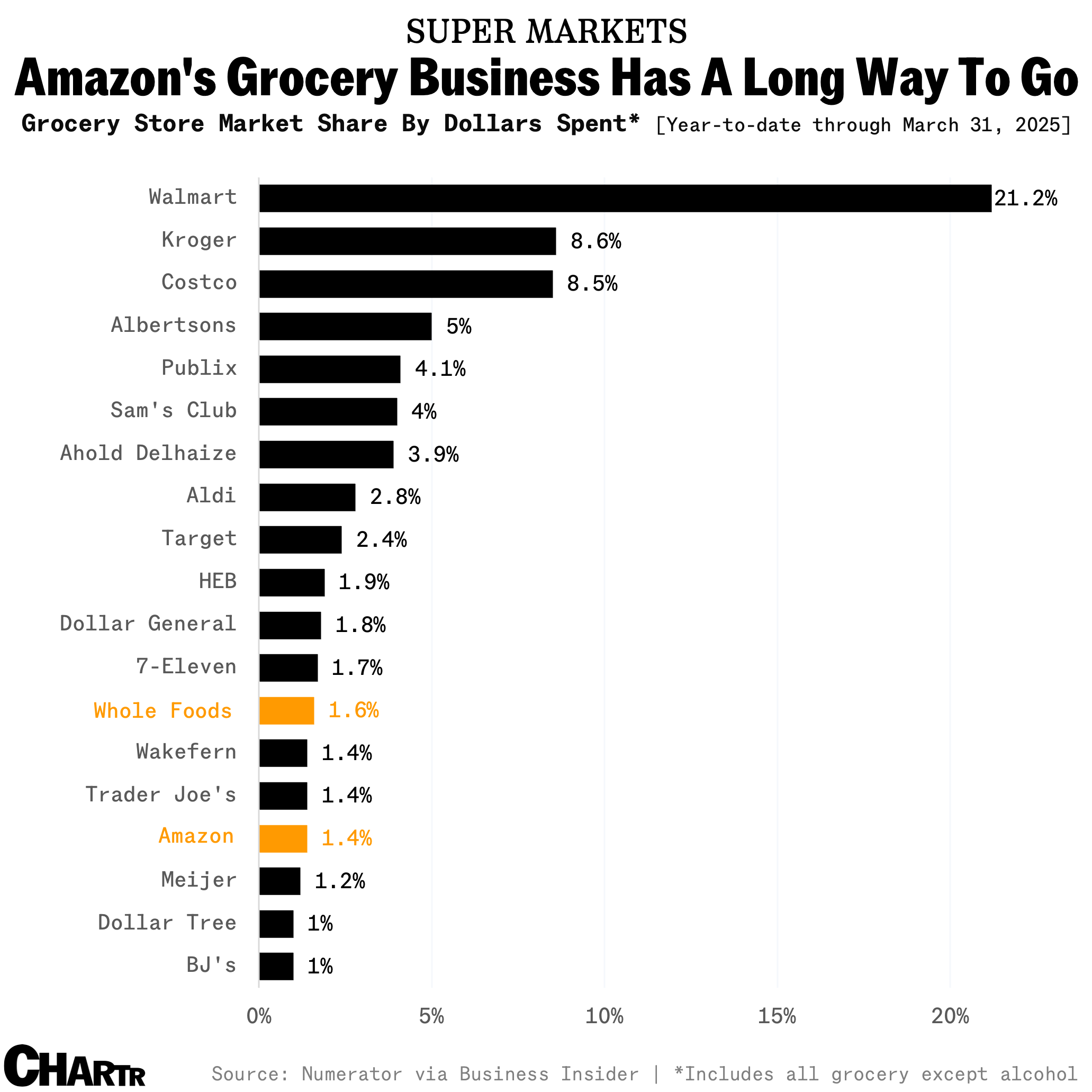
But the company still remains a relatively minor player in the US grocery world. Whole Foods and Amazon respectively had just 1.6% and 1.4% dollar market share as of March, which was way behind Walmart’s 21.2%, according to research firm Numerator. And Walmart’s efforts in e-commerce, like adding automated distribution centers, are starting to bear serious fruit: a new study out this week from Coresight found that more Amazon Prime members bought groceries online from Walmart than from the retail giant itself.

More Business

See all Business
The entrance of Allbirds seen from Hayes St. in San Francisco, Calif.

Allbirds, the once buzzy multibillion-dollar sneaker startup, is selling up for $39 million

That’s less than 1% of its peak market cap about four years ago.

Tom Jones3/31/26
business

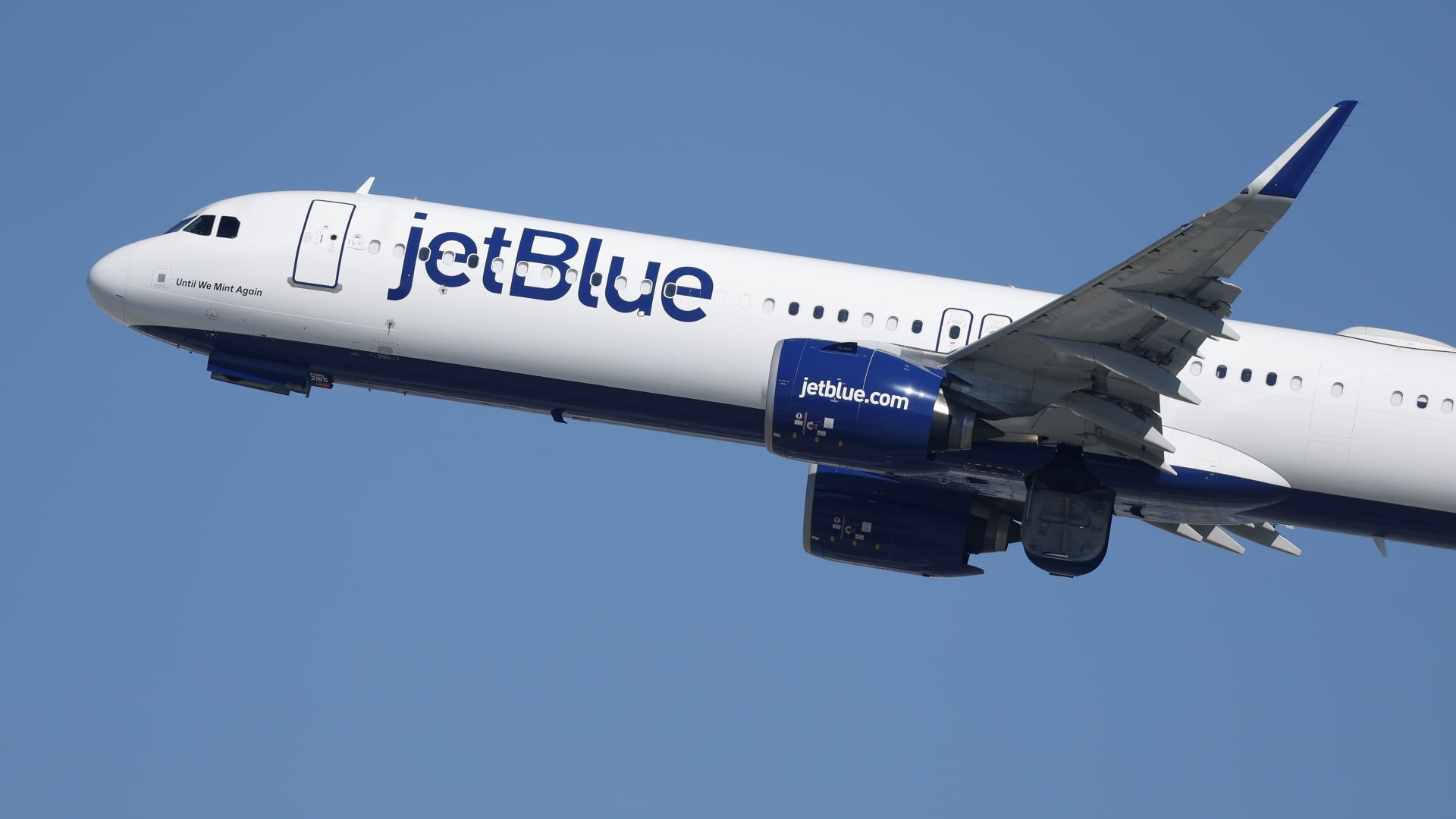
JetBlue is raising its bag fees as fuel costs squeeze airlines

JetBlue will reportedly hike its bag fees, as the cost of jet fuel continues to climb amid the war in Iran. It’s the latest example of carriers finding ways to push rising costs onto travelers.

Last week, United Airlines CEO Scott Kirby said that if fuel prices remain elevated, fares would need to rise another 20% for his airline to break even this year.

As CNBC reported, when one airline raises fees, others tend to follow.

Earlier this month, JetBlue hiked its first-quarter outlook for operating revenue per seat mile to between 5% and 7%, saying that strong Q1 demand helped “partially offset additional expenses realized from operational disruptions and rising fuel costs.” Now, the carrier appears to be making moves to further boost revenue to offset those costs.

Earlier on Monday, JetBlue rival Alaska Air lowered its Q1 profit forecast. The refining margins for the carrier’s cheapest fuel option — sourced from Singapore and representing about 20% of Alaska’s overall supply — have spiked 400% since February.

JetBlue did not immediately respond to a request for comment.

As CNBC reported, when one airline raises fees, others tend to follow.

Earlier this month, JetBlue hiked its first-quarter outlook for operating revenue per seat mile to between 5% and 7%, saying that strong Q1 demand helped “partially offset additional expenses realized from operational disruptions and rising fuel costs.” Now, the carrier appears to be making moves to further boost revenue to offset those costs.

Earlier on Monday, JetBlue rival Alaska Air lowered its Q1 profit forecast. The refining margins for the carrier’s cheapest fuel option — sourced from Singapore and representing about 20% of Alaska’s overall supply — have spiked 400% since February.

JetBlue did not immediately respond to a request for comment.

Latest Stories

Sherwood Media, LLC produces fresh and unique perspectives on topical financial news and is a fully owned subsidiary of Robinhood Markets, Inc., and any views expressed here do not necessarily reflect the views of any other Robinhood affiliate, including Robinhood Markets, Inc., Robinhood Financial LLC, Robinhood Securities, LLC, Robinhood Crypto, LLC, Robinhood Derivatives, LLC, or Robinhood Money, LLC. Futures and event contracts are offered through Robinhood Derivatives, LLC.