Business
Vintage poster with tailoring elements
(Getty Images)
At a loose end

Can AI fix Stitch Fix?

The clothing subscription service posted its first quarter of sales growth in three years — now it’s doubling down on AI.

Claire Yubin Oh

Stitch Fix, the online personal styling service that sends handpicked outfits to your door, has had a rough few years.

Founded in 2011, the company’s relatively narrow appeal — to those who didn’t like clothes shopping and didn’t want to choose what they wear — widened massively during the pandemic, as shops shuttered and fashion went online. But as quickly as the hype came, it disappeared, with the SFIX’s stock dropping more than 90% between January 2021 and the summer of 2022 as customers ditched the platform for rival subscriptions, or just went back to shopping in real life again.

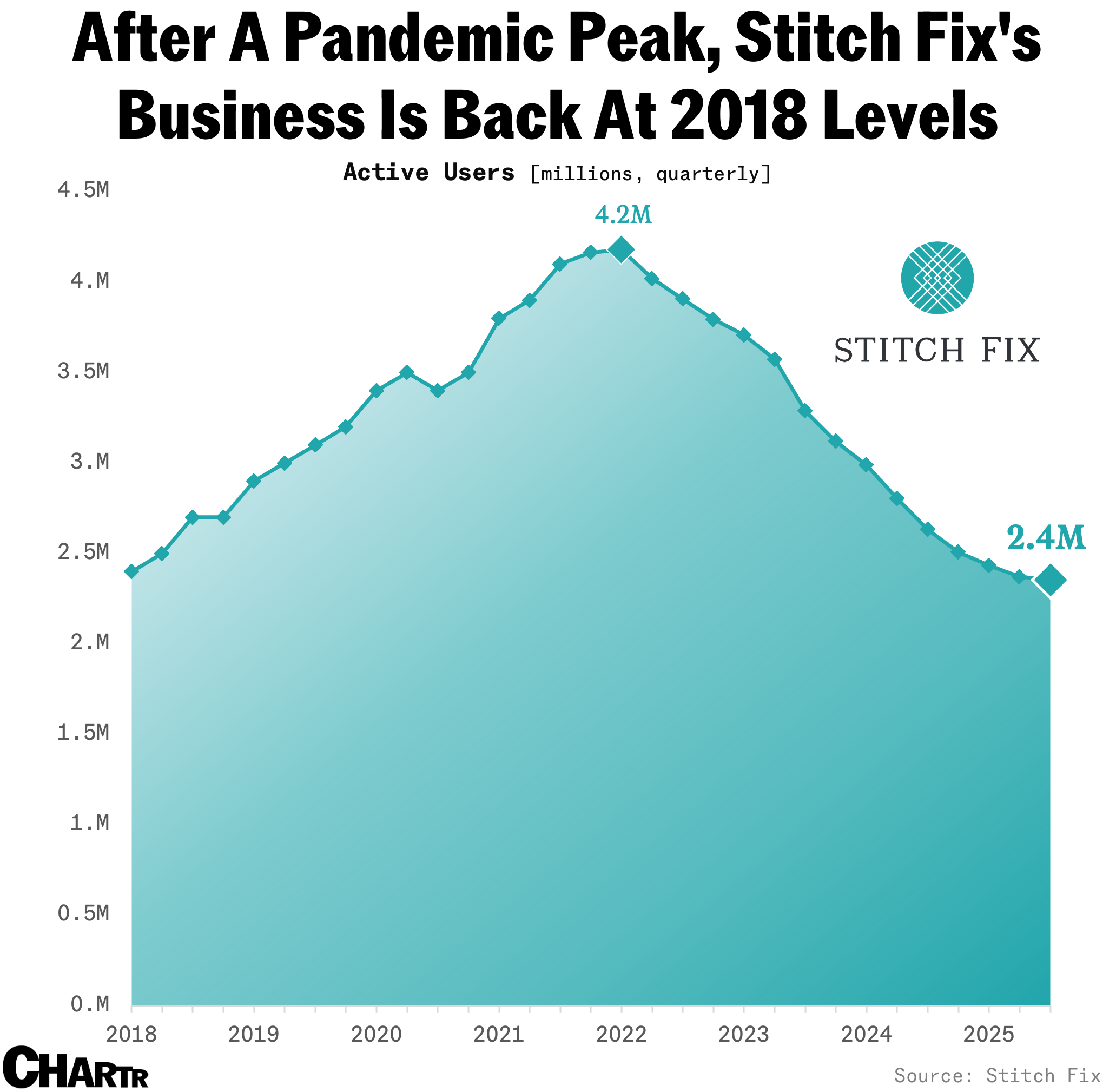
There are some positive signs, however, as the company posted its first top-line growth in three years, with net revenues climbing 0.7% year over year in its latest quarter. Unfortunately, its key active user figure is still dropping: falling from a pandemic-era peak of 4.3 million users, the company now counts a threadbare 2.4 million as of the end of May.
Stitch fix active user chart
Sherwood News

Now the company — which makes money by charging a $20 styling fee for all “fixes” alongside the clothes themselves — is hoping AI can help drive growth.

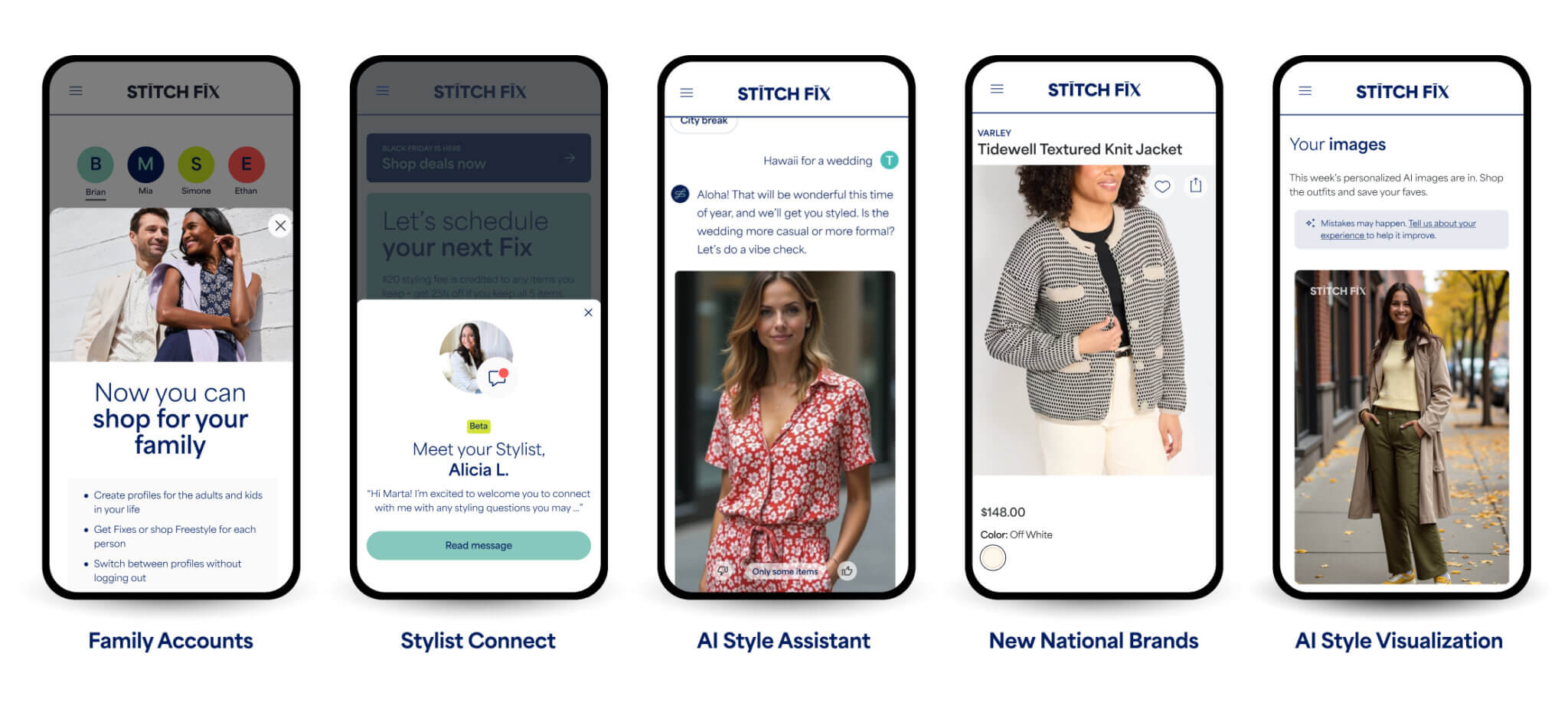
This week the company announced a new AI “Style Assistant” for clients, as well as new AI-powered visual tools to help you see what you might look like wearing that new scarf, sweater, or T-shirt.
Stitch Fix AI
Stitch Fix

Will millions of people rush out to ask an AI’s opinion of how they look in their new clothes? Considering that many already use AI as a therapist, a boyfriend/girlfriend, or a career counselor, it doesn’t feel like much of a stretch to think they’d also ask it for fashion advice.

The problem SFIX might run into is: what if ChatGPT or DeepSeek or Claude can also do this — will people open a separate AI app just for fashion? Stitch Fix’s new boss, Matt Baer, who was tasked with fixing Stitch Fix when he became CEO in June 2023, is betting the answer is yes.

More Business

See all Business
Family Watching Baseball On Tv

Netflix and Disney+ probably only added ad-tier subscribers this year, says Morgan Stanley

As streaming prices climb, ad-free subscribers are becoming a rarity.

Aldi Grand Opening

Discount stores are having a moment in America, drawing high- and low-income consumers alike

Everyone loves a deal in 2025 — and Aldi, Walmart, and Dollar Tree are all cashing in.

Millie Giles12/17/25
business

Report: OpenAI won’t pay a dime in cash for its 3-year licensing deal for Disney IP

More financial details behind the landmark deal that will grant OpenAI three years of access to Disney intellectual property are coming out, and they’re pretty surprising.

The deal will reportedly see OpenAI pay zero dollars in licensing fees, instead compensating Disney in stock warrants. It was previously reported that Disney would invest $1 billion into OpenAI as part of the agreement.

It’s very abnormal for Disney to grant anyone access to its massive IP library without a cash payment, and the entertainment juggernaut has been known to strike down even crocheted Etsy Yodas for infringing on its turf. In its fiscal year 2025, Disney booked more than $10 billion in revenue from licensing fees across merchandising, television, and theatrical distribution.

It’s very abnormal for Disney to grant anyone access to its massive IP library without a cash payment, and the entertainment juggernaut has been known to strike down even crocheted Etsy Yodas for infringing on its turf. In its fiscal year 2025, Disney booked more than $10 billion in revenue from licensing fees across merchandising, television, and theatrical distribution.

business

Ford says it will take $19.5 billion in charges in a massive EV write-down

The EV business has marked a long stretch of losing for Ford, and today the automaker announced it will take $19.5 billion in charges tied, for the most part, to its EV division.

Ford said it’s launching a battery energy storage business, leveraging battery plants in Kentucky and Michigan to “provide solutions for energy infrastructure and growing data center demand.”

According to Ford, the changes will drive Ford’s electrified division to profitability by 2029. The company will stop making its electric F-150, the Lightning, and instead shift to an “extended-range electric vehicle” that includes a gas-powered generator.

The Detroit automaker also raised its adjusted earnings before interest and taxes outlook to “about $7 billion” from a range of $6 billion to $6.5 billion.

Ford’s write-down is one of the largest taken by a company as legacy automakers scale back on EVs, giving EV-only automakers a market share boost.

Latest Stories

Sherwood Media, LLC produces fresh and unique perspectives on topical financial news and is a fully owned subsidiary of Robinhood Markets, Inc., and any views expressed here do not necessarily reflect the views of any other Robinhood affiliate, including Robinhood Markets, Inc., Robinhood Financial LLC, Robinhood Securities, LLC, Robinhood Crypto, LLC, or Robinhood Money, LLC.