Business
China: The context behind the CCP's 20th National Congress

China: The context behind the CCP's 20th National Congress

On Sunday, the 20th National Congress of the Chinese Communist Party kicked off with General Secretary Xi Jinping consolidating his power after a decade leading the world’s most-populous country.

The backdrop for this year’s congress is arguably the most uncertain of Xi’s leadership, even as he remains poised to secure an unprecedented third term in power. Last Thursday, a man strung anti-Xi banners across a bridge in Beijing, a rare public protest in a nation that has become accustomed to swift suppression of dissent. The protest targeted the incumbent president after over 2-and-a-half years of some of the strictest COVID policies in the world which — whilst they saved lives — put the people of China under enormous strain.

Shifting sands

The country’s economy is also starting to slow, just as Xi turns his focus to national security and geopolitics. The closely-watched GDP figures, which were scheduled for release yesterday, were delayed without explanation. The last few quarters that have been released show a sharp slowdown, although China is hardly unique in dealing with economic struggles in 2022.

In a speech made at the congress, the president offered a bleak future insight into China’s already-strained relations with the US, and wariness clearly goes both ways in the nations’ relationship too. Biden’s latest semiconductor restrictions have reportedly hit China hard and a major shift in the US electorate’s view of the country is testament to how sharply relations have deteriorated, with around 80% of Americans now viewing China as an "enemy".

More Business

See all Business
business

Paramount reportedly receives $24 billion from Gulf funds to back its Warner Bros. takeover

Three Middle East sovereign wealth funds have agreed to back Paramount’s takeover of Warner Bros. Discovery to the tune of roughly $24 billion, according to Wall Street Journal reporting.

The company’s triumph over Netflix in the bidding war came thanks in part to financial backing from Oracle cofounder Larry Ellison, billionaire father of Paramount CEO David Ellison.

Saudi Arabia’s PIF, which last year led the $55 billion deal to take Electronic Arts private, will provide about $10 billion in the deal. The Qatar Investment Authority and Abu Dhabi’s L’imad Holding Co. is also involved.

According to the WSJ, the funds will not receive voting rights in the combined Paramount-Warner company. Those working on the deal don’t expect the Gulf funds’ involvement to spark any additional regulatory reviews.

The company’s triumph over Netflix in the bidding war came thanks in part to financial backing from Oracle cofounder Larry Ellison, billionaire father of Paramount CEO David Ellison.

Saudi Arabia’s PIF, which last year led the $55 billion deal to take Electronic Arts private, will provide about $10 billion in the deal. The Qatar Investment Authority and Abu Dhabi’s L’imad Holding Co. is also involved.

According to the WSJ, the funds will not receive voting rights in the combined Paramount-Warner company. Those working on the deal don’t expect the Gulf funds’ involvement to spark any additional regulatory reviews.

The entrance of Allbirds seen from Hayes St. in San Francisco, Calif.

Allbirds, the once buzzy multibillion-dollar sneaker startup, is selling up for $39 million

That’s less than 1% of its peak market cap about four years ago.

Tom Jones3/31/26
business

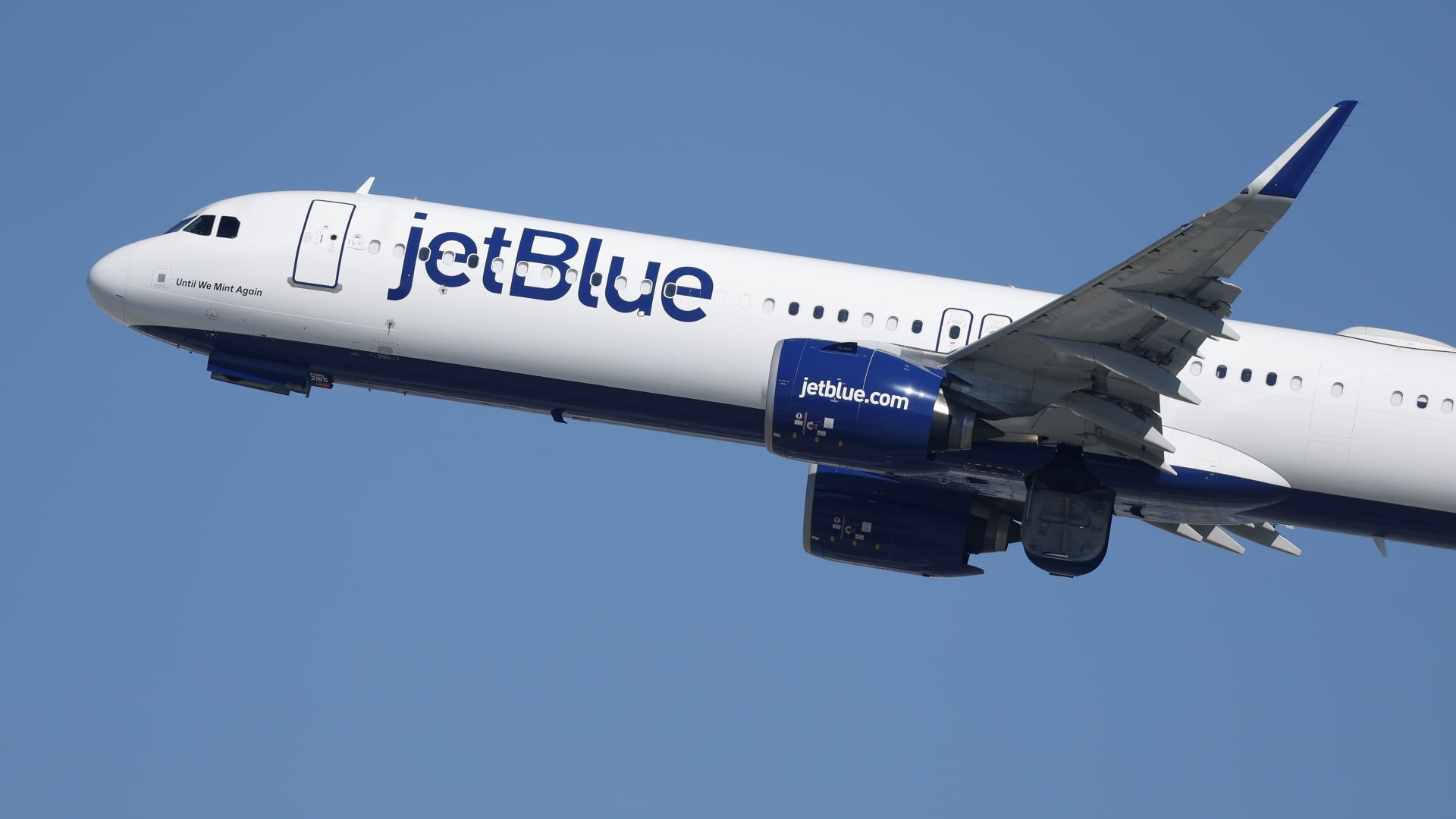
JetBlue is raising its bag fees as fuel costs squeeze airlines

JetBlue will reportedly hike its bag fees, as the cost of jet fuel continues to climb amid the war in Iran. It’s the latest example of carriers finding ways to push rising costs onto travelers.

Last week, United Airlines CEO Scott Kirby said that if fuel prices remain elevated, fares would need to rise another 20% for his airline to break even this year.

As CNBC reported, when one airline raises fees, others tend to follow.

Earlier this month, JetBlue hiked its first-quarter outlook for operating revenue per seat mile to between 5% and 7%, saying that strong Q1 demand helped “partially offset additional expenses realized from operational disruptions and rising fuel costs.” Now, the carrier appears to be making moves to further boost revenue to offset those costs.

Earlier on Monday, JetBlue rival Alaska Air lowered its Q1 profit forecast. The refining margins for the carrier’s cheapest fuel option — sourced from Singapore and representing about 20% of Alaska’s overall supply — have spiked 400% since February.

JetBlue did not immediately respond to a request for comment.

As CNBC reported, when one airline raises fees, others tend to follow.

Earlier this month, JetBlue hiked its first-quarter outlook for operating revenue per seat mile to between 5% and 7%, saying that strong Q1 demand helped “partially offset additional expenses realized from operational disruptions and rising fuel costs.” Now, the carrier appears to be making moves to further boost revenue to offset those costs.

Earlier on Monday, JetBlue rival Alaska Air lowered its Q1 profit forecast. The refining margins for the carrier’s cheapest fuel option — sourced from Singapore and representing about 20% of Alaska’s overall supply — have spiked 400% since February.

JetBlue did not immediately respond to a request for comment.

Latest Stories

Sherwood Media, LLC produces fresh and unique perspectives on topical financial news and is a fully owned subsidiary of Robinhood Markets, Inc., and any views expressed here do not necessarily reflect the views of any other Robinhood affiliate, including Robinhood Markets, Inc., Robinhood Financial LLC, Robinhood Securities, LLC, Robinhood Crypto, LLC, Robinhood Derivatives, LLC, or Robinhood Money, LLC. Futures and event contracts are offered through Robinhood Derivatives, LLC.