
Business
Delta Air Lines
(Kent Nishimura/Getty Images)

Everyone's flying but there's still too many planes

Delta was overly optimistic about how many seats it could fill at profitable prices.

Airline stocks hit turbulence Thursday, after Delta’s Q2 results just missed expectations and the company’s forecast for the coming quarter was well below expectations.

Sales at America’s second-largest airline were still strong, rising 7% to $16.6 billion, suggesting that travel demand remains robust. But rising costs, including increases for fuel and labor, rose an even faster 10%.

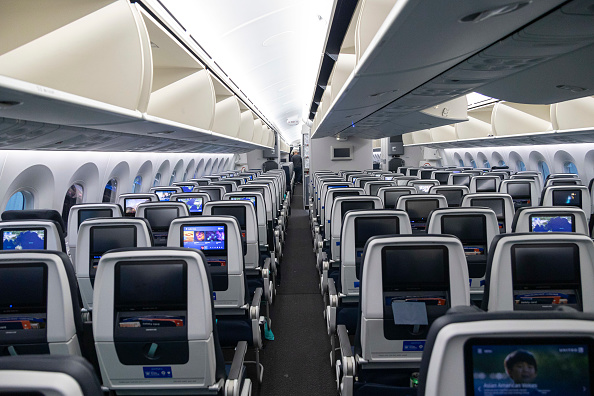
Also, the airline’s “load factor,” the percentage of seats filled, slipped a percentage point to 87%, suggesting the company — or, as Delta executives put it, the industry — had been a bit optimistic about the number of planes it could fill at profitable prices.

Delta executives suggested that the industry as a whole was already adjusting to cut capacity and bring it into line with demand, potentially firming ticket prices.

“This is an industry that’s always challenging itself for how much capacity can be in the marketplace,” Delta President Glen Hauenstein told analysts on a post-earnings conference call, adding “we’ve really only been in an oversupply situation for a couple of months here, and the industry has already reacted.”

The market seemed to take some solace from such comments, after falling as much as 9% in premarket trading, Delta Air Lines cut those losses a bit during the trading session. United Airlines and American Airlines Group were also down.

More Business

See all Business
Aldi Grand Opening

Discount stores are having a moment in America, drawing high- and low-income consumers alike

Everyone loves a deal in 2025 — and Aldi, Walmart, and Dollar Tree are all cashing in.

business

Report: OpenAI won’t pay a dime in cash for its 3-year licensing deal for Disney IP

More financial details behind the landmark deal that will grant OpenAI three years of access to Disney intellectual property are coming out, and they’re pretty surprising.

The deal will reportedly see OpenAI pay zero dollars in licensing fees, instead compensating Disney in stock warrants. It was previously reported that Disney would invest $1 billion into OpenAI as part of the agreement.

It’s very abnormal for Disney to grant anyone access to its massive IP library without a cash payment, and the entertainment juggernaut has been known to strike down even crocheted Etsy Yodas for infringing on its turf. In its fiscal year 2025, Disney booked more than $10 billion in revenue from licensing fees across merchandising, television, and theatrical distribution.

It’s very abnormal for Disney to grant anyone access to its massive IP library without a cash payment, and the entertainment juggernaut has been known to strike down even crocheted Etsy Yodas for infringing on its turf. In its fiscal year 2025, Disney booked more than $10 billion in revenue from licensing fees across merchandising, television, and theatrical distribution.

business

Ford says it will take $19.5 billion in charges in a massive EV write-down

The EV business has marked a long stretch of losing for Ford, and today the automaker announced it will take $19.5 billion in charges tied, for the most part, to its EV division.

Ford said it’s launching a battery energy storage business, leveraging battery plants in Kentucky and Michigan to “provide solutions for energy infrastructure and growing data center demand.”

According to Ford, the changes will drive Ford’s electrified division to profitability by 2029. The company will stop making its electric F-150, the Lightning, and instead shift to an “extended-range electric vehicle” that includes a gas-powered generator.

The Detroit automaker also raised its adjusted earnings before interest and taxes outlook to “about $7 billion” from a range of $6 billion to $6.5 billion.

Ford’s write-down is one of the largest taken by a company as legacy automakers scale back on EVs, giving EV-only automakers a market share boost.

business

GM adds Apple Music to select new vehicles, racing to fill the gap left by CarPlay’s absence

Earlier this year, General Motors said it plans to end support for in-vehicle phone projection systems like Apple CarPlay and Android Auto on all of its vehicles (a big expansion of the move it announced for its EVs back in 2023).

Now, the automaker appears to be stocking its replacement system with native apps to fill the void. On Monday, GM announced it was rolling out Apple Music to select 2025 Chevrolet and Cadillac models.

Losing CarPlay is a sore subject for many drivers: 39% of respondents to an American Trucks survey this month said a lack of the system (or Android Auto) is a “deal-breaker” when it comes to buying a new vehicle.

Many automakers appear willing to risk alienating those potential customers in exchange for access to lucrative data. Others, including Tesla, are working to allow CarPlay to boost sagging sales, according to reporting by Bloomberg.

Losing CarPlay is a sore subject for many drivers: 39% of respondents to an American Trucks survey this month said a lack of the system (or Android Auto) is a “deal-breaker” when it comes to buying a new vehicle.

Many automakers appear willing to risk alienating those potential customers in exchange for access to lucrative data. Others, including Tesla, are working to allow CarPlay to boost sagging sales, according to reporting by Bloomberg.

Latest Stories

Sherwood Media, LLC produces fresh and unique perspectives on topical financial news and is a fully owned subsidiary of Robinhood Markets, Inc., and any views expressed here do not necessarily reflect the views of any other Robinhood affiliate, including Robinhood Markets, Inc., Robinhood Financial LLC, Robinhood Securities, LLC, Robinhood Crypto, LLC, or Robinhood Money, LLC.