Business
Drive-thru design: Taco Bell is testing a new drive-thru format

Drive-thru design: Taco Bell is testing a new drive-thru format

Taco Bell is testing a new drive-thru format with four lanes and vertical drops for food in Minnesota. The concept is dubbed Taco Bell Defy and focuses on mobile ordering and making fast food, well, even faster.

Taco Bell's goal is to get drive-thru ordering times down to 2 minutes or less — a bold goal for a fast food chain that is already the fastest in the business (of the 10 largest chains).

Faster food

Indeed, data from a QSR study reveals that last year the average Taco Bell drive-thru time from entry to exit was a speedy 268 seconds. That was the fastest of any of the largest chains, and less than half of the time that the typical Chick-fil-A drive-thru took.

The only problem is that the speed seems to have compromised on accuracy as the study also showed that Chick-fil-A orders were correct an impressive 100% of the time, while Taco Bell drive-thru orders were only correct 87% of the time — meaning that roughly one-in-seven orders had some kind of problem or mistake.

You can't sit with us

Although it's only one store, this Taco Bell concept is a response to changing habits from the pandemic. Drive-thru sales skyrocketed during COVID, and they've stayed high in some areas — which is why the Taco Bell Defy doesn't have any seating whatsoever inside. One franchisee, Border Foods, has seen drive-thru orders account for 90%+ of its sales at its 200+ locations, up from around 65% pre-COVID.

See a video of Taco Bell Defy in action.

More Business

See all Business
business

Delta to increase bag fees by $10 on domestic flights this week, following JetBlue and United, as jet fuel surges

As the price of jet fuel surges amid the war in Iran, Delta Air Lines on Tuesday announced that it will hike its checked bag fees by $10 beginning this week.

Checking one bag on a domestic Delta flight will now cost $45, up from $35. A second bag will cost $55, up from $45, and a third will cost $200, up from $150. In a statement to Sherwood News, Delta issued the following announcement:

“For tickets purchased on or after April 8, Delta will increase fees for first and second checked bags by $10 and for a third checked bag by $50 on domestic and select short-haul international routes. These updates are part of Delta’s ongoing review of pricing across its business and reflect the impact of evolving global conditions and industry dynamics. Delta SkyMiles Medallion Members; customers traveling in First Class, Delta Premium Select and Delta One; active-duty military customers; and those with eligible co-branded Delta SkyMiles American Express Cards will continue to receive their allotment of complimentary checked bags.”

The move follows similar hikes by JetBlue and United Airlines last week. More are likely to come: when one major airline adjusts its fees, others tend to follow quickly behind. Delta last raised its bag fees in 2024, along with other major airlines.

Jet fuel prices were $4.69 a gallon on Monday, per the Argus US Jet Fuel Index. That’s up from the low $2 range for much of January.

business

Paramount reportedly receives $24 billion from Gulf funds to back its Warner Bros. takeover

Three Middle East sovereign wealth funds have agreed to back Paramount’s takeover of Warner Bros. Discovery to the tune of roughly $24 billion, according to Wall Street Journal reporting.

The company’s triumph over Netflix in the bidding war came thanks in part to financial backing from Oracle cofounder Larry Ellison, billionaire father of Paramount CEO David Ellison.

Saudi Arabia’s PIF, which last year led the $55 billion deal to take Electronic Arts private, will provide about $10 billion in the deal. The Qatar Investment Authority and Abu Dhabi’s L’imad Holding Co. is also involved.

According to the WSJ, the funds will not receive voting rights in the combined Paramount-Warner company. Those working on the deal don’t expect the Gulf funds’ involvement to spark any additional regulatory reviews.

The company’s triumph over Netflix in the bidding war came thanks in part to financial backing from Oracle cofounder Larry Ellison, billionaire father of Paramount CEO David Ellison.

Saudi Arabia’s PIF, which last year led the $55 billion deal to take Electronic Arts private, will provide about $10 billion in the deal. The Qatar Investment Authority and Abu Dhabi’s L’imad Holding Co. is also involved.

According to the WSJ, the funds will not receive voting rights in the combined Paramount-Warner company. Those working on the deal don’t expect the Gulf funds’ involvement to spark any additional regulatory reviews.

The entrance of Allbirds seen from Hayes St. in San Francisco, Calif.

Allbirds, the once buzzy multibillion-dollar sneaker startup, is selling up for $39 million

That’s less than 1% of its peak market cap about four years ago.

Tom Jones3/31/26
business

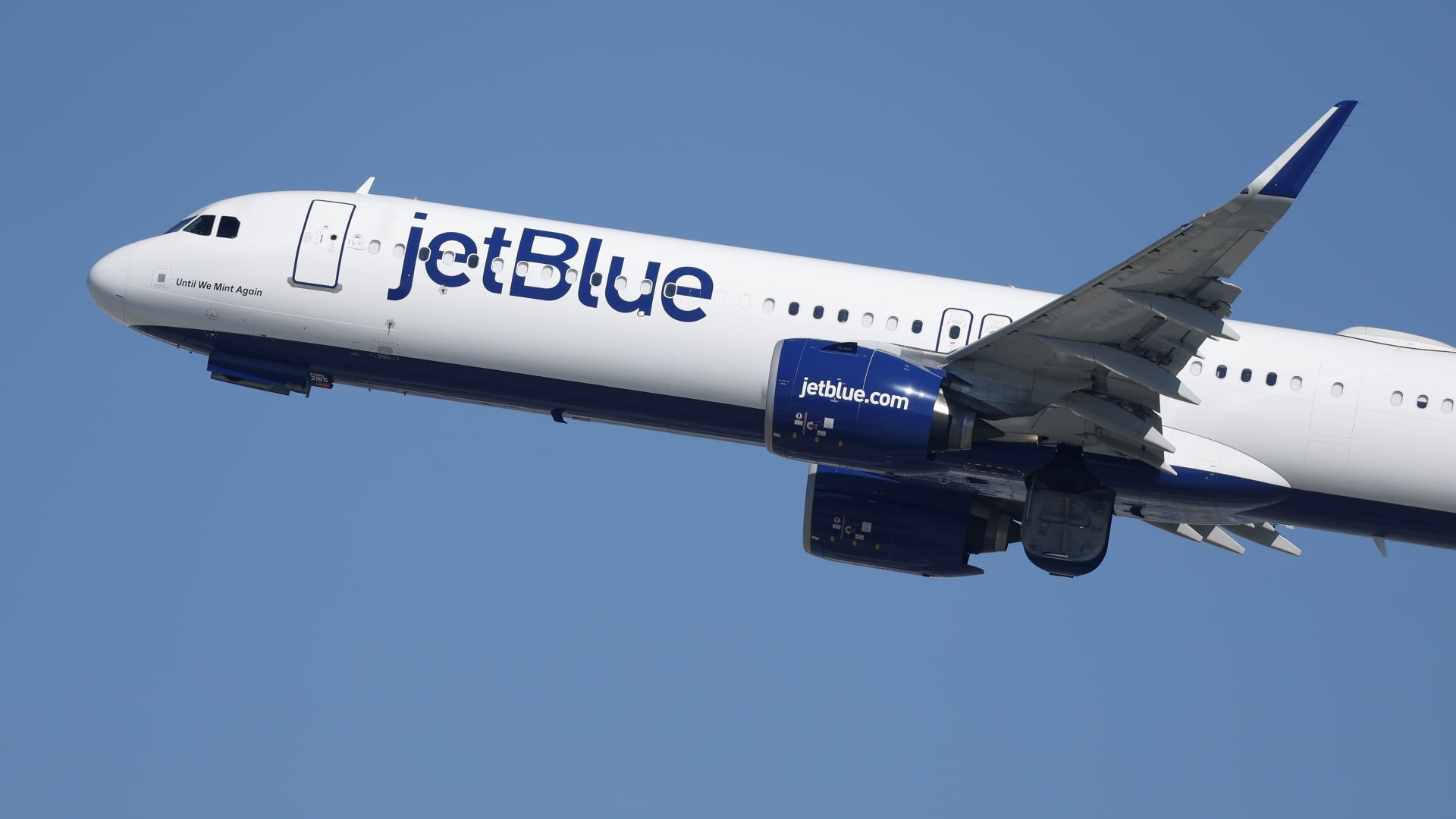
JetBlue is raising its bag fees as fuel costs squeeze airlines

JetBlue will reportedly hike its bag fees, as the cost of jet fuel continues to climb amid the war in Iran. It’s the latest example of carriers finding ways to push rising costs onto travelers.

Last week, United Airlines CEO Scott Kirby said that if fuel prices remain elevated, fares would need to rise another 20% for his airline to break even this year.

As CNBC reported, when one airline raises fees, others tend to follow.

Earlier this month, JetBlue hiked its first-quarter outlook for operating revenue per seat mile to between 5% and 7%, saying that strong Q1 demand helped “partially offset additional expenses realized from operational disruptions and rising fuel costs.” Now, the carrier appears to be making moves to further boost revenue to offset those costs.

Earlier on Monday, JetBlue rival Alaska Air lowered its Q1 profit forecast. The refining margins for the carrier’s cheapest fuel option — sourced from Singapore and representing about 20% of Alaska’s overall supply — have spiked 400% since February.

JetBlue did not immediately respond to a request for comment.

As CNBC reported, when one airline raises fees, others tend to follow.

Earlier this month, JetBlue hiked its first-quarter outlook for operating revenue per seat mile to between 5% and 7%, saying that strong Q1 demand helped “partially offset additional expenses realized from operational disruptions and rising fuel costs.” Now, the carrier appears to be making moves to further boost revenue to offset those costs.

Earlier on Monday, JetBlue rival Alaska Air lowered its Q1 profit forecast. The refining margins for the carrier’s cheapest fuel option — sourced from Singapore and representing about 20% of Alaska’s overall supply — have spiked 400% since February.

JetBlue did not immediately respond to a request for comment.

Latest Stories

Sherwood Media, LLC produces fresh and unique perspectives on topical financial news and is a fully owned subsidiary of Robinhood Markets, Inc., and any views expressed here do not necessarily reflect the views of any other Robinhood affiliate, including Robinhood Markets, Inc., Robinhood Financial LLC, Robinhood Securities, LLC, Robinhood Crypto, LLC, Robinhood Derivatives, LLC, or Robinhood Money, LLC. Futures and event contracts are offered through Robinhood Derivatives, LLC.