

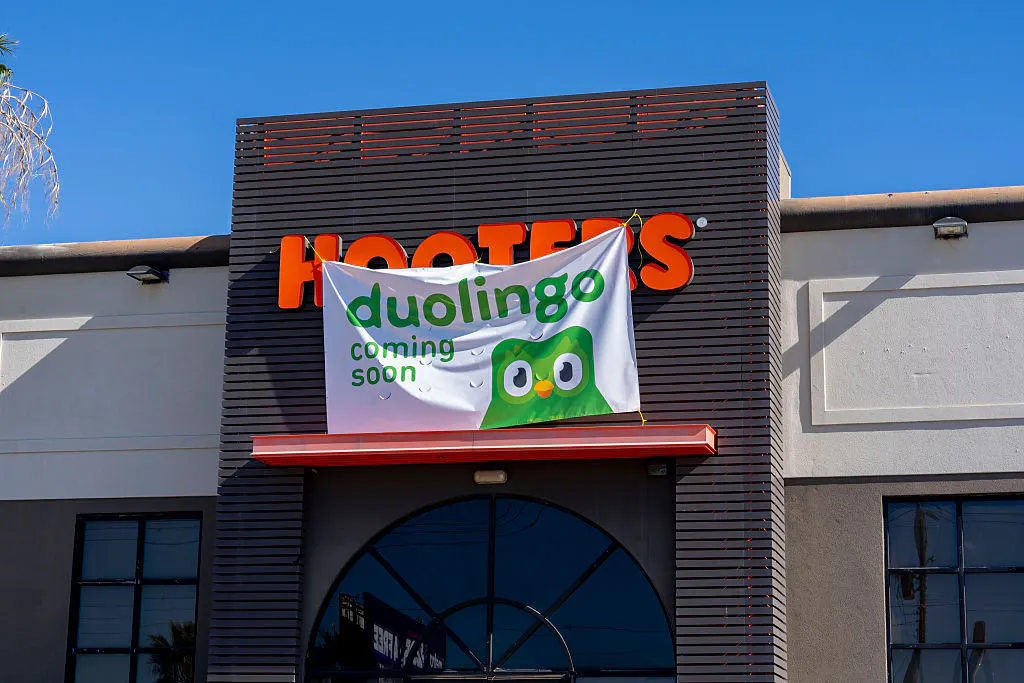
Duolingo’s business was supposed to soar with AI — now it’s getting its wings clipped
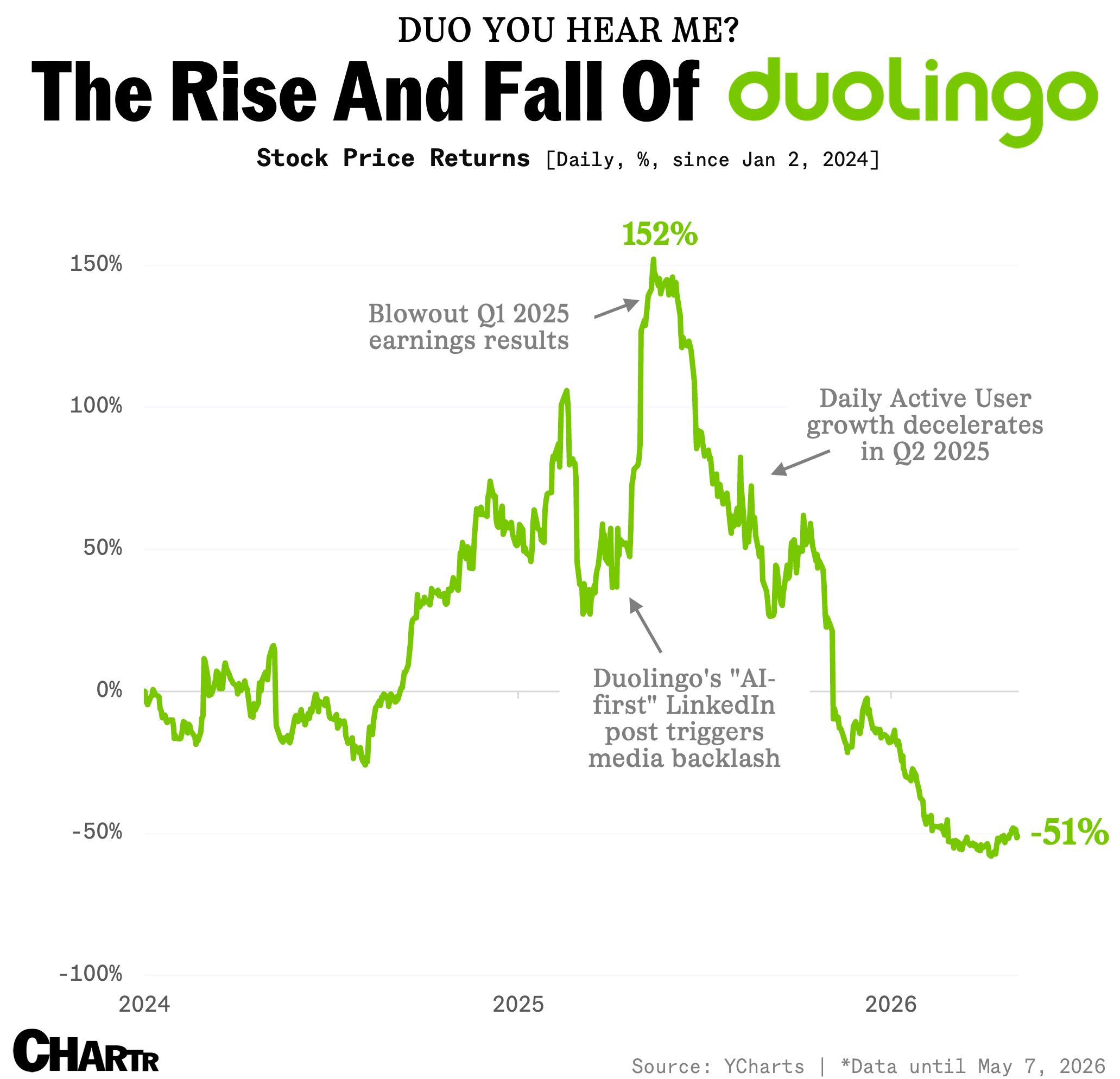
The language-learning app’s shares have plunged almost 80% in the past year.
Duolingo has been a battleground stock for a while. For some time, investors saw it as an artificial intelligence winner — AI would boost its content output, optimize learning, and open up new languages. But looking at Duolingo over the last year or so tells you all you need to know about how that perception has soured, as the company flaps to keep up in a world of chatbot translators where people can build their own personalized language-learning tools.
And the bears won the battle this week. Despite the app with the owl mascot and maddening notifications beating expectations on all fronts in its Q1 earnings — and even boosting its full-year profit guidance — the stock sank once again, taking its loss over the last year to some 77%.
Duo reverse card
In a May 2025 note, JPMorgan analysts said that Duolingo’s AI-supported effort to double its language library and boost its educational content “will support user & paid subscriber growth.” The company’s CEO even defended its “AI-first” strategy, in spite of a swath of backlash to comments about AI being a better teacher than humans.
Despite ruffling feathers with its early adoption of AI tools, Duolingo has ended up in a similar place to many other software companies: staring down the barrel of a threat from OpenAI, Anthropic, and Google, which have launched new AI tools and functions. Those have given users the ability to create language-learning tools based on short prompts, threatening to clip the green bird’s wings. Though daily active users met expectations last quarter, monthly active users were weak — coming in close to 138 million compared to Wall Street estimates for 143 million, perhaps signaling a continued slowdown in growth.
Even if CEO Luis von Ahn could utilize AI to realize his ambition of creating an app that can “teach really, really well. Much better than anything that humanity has seen before,” Duo’s slowing growth — which the CEO previously blamed on dialing down some of its “unhinged” marketing tactics — and other AI alternatives might make the achievement a moot point.



