Business
Same energy: Energy stocks are reporting weaker earnings, but the stocks are still flying high

Same energy: Energy stocks are reporting weaker earnings, but the stocks are still flying high

Last week was the busiest for second-quarter earnings season, and corporate America didn’t have much good news. Indeed, companies in the S&P 500 are currently on track to report the worst operating quarter since 2020, with data cited by the Wall Street Journal revealing that earnings for the flagship S&P 500 Index are down 5.2% on this time last year.

Same energy

In 2022, energy was the bright spot in the market. Soaring oil prices may have hurt your wallet when you filled up your tank, but it was a boom time for oil companies like ExxonMobil and Chevron. This year, the going isn’t quite so easy for the sector. ExxonMobil, for example, reported net income for the second quarter of $7.9 billion, less than half of the remarkable $17.9 billion it reported in the same quarter last year. Chevron, a smaller rival, also reported a leaner quarter, with a 28% decline in revenue.

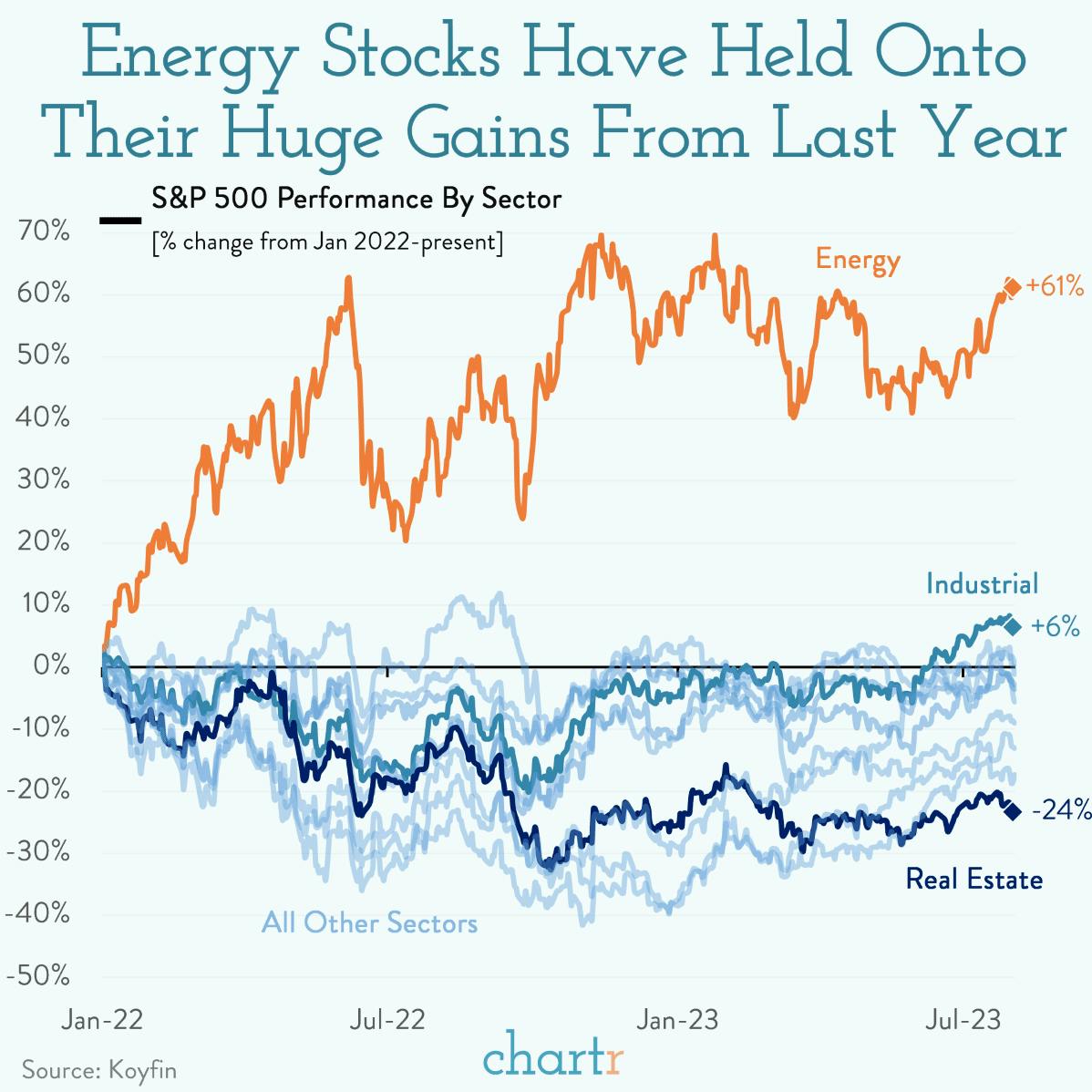
However, even if the earnings aren’t quite as ludicrous as they were last year, energy stocks as a whole have broadly held onto their gains — rising more than 60% since the start of 2022.

Taking stock

Beyond energy, the performance of America's stock market has been fairly underwhelming since Jan 2022. Industrials have been the second-best performer, with a modest 6% increase, and while the headlines have been dominated by AI — propelling Nvidia, Microsoft, Alphabet, Apple, Amazon, and Meta to add a total of $3.1 trillion in market cap this year — the tech sector as a whole hasn't gained since 2022. Meanwhile, the real estate sector has been the hardest hit, grappling with fears of rising mortgage payments and empty office spaces.


More Business

See all Business
The entrance of Allbirds seen from Hayes St. in San Francisco, Calif.

Allbirds, the once buzzy multibillion-dollar sneaker startup, is selling up for $39 million

That’s less than 1% of its peak market cap about four years ago.

business

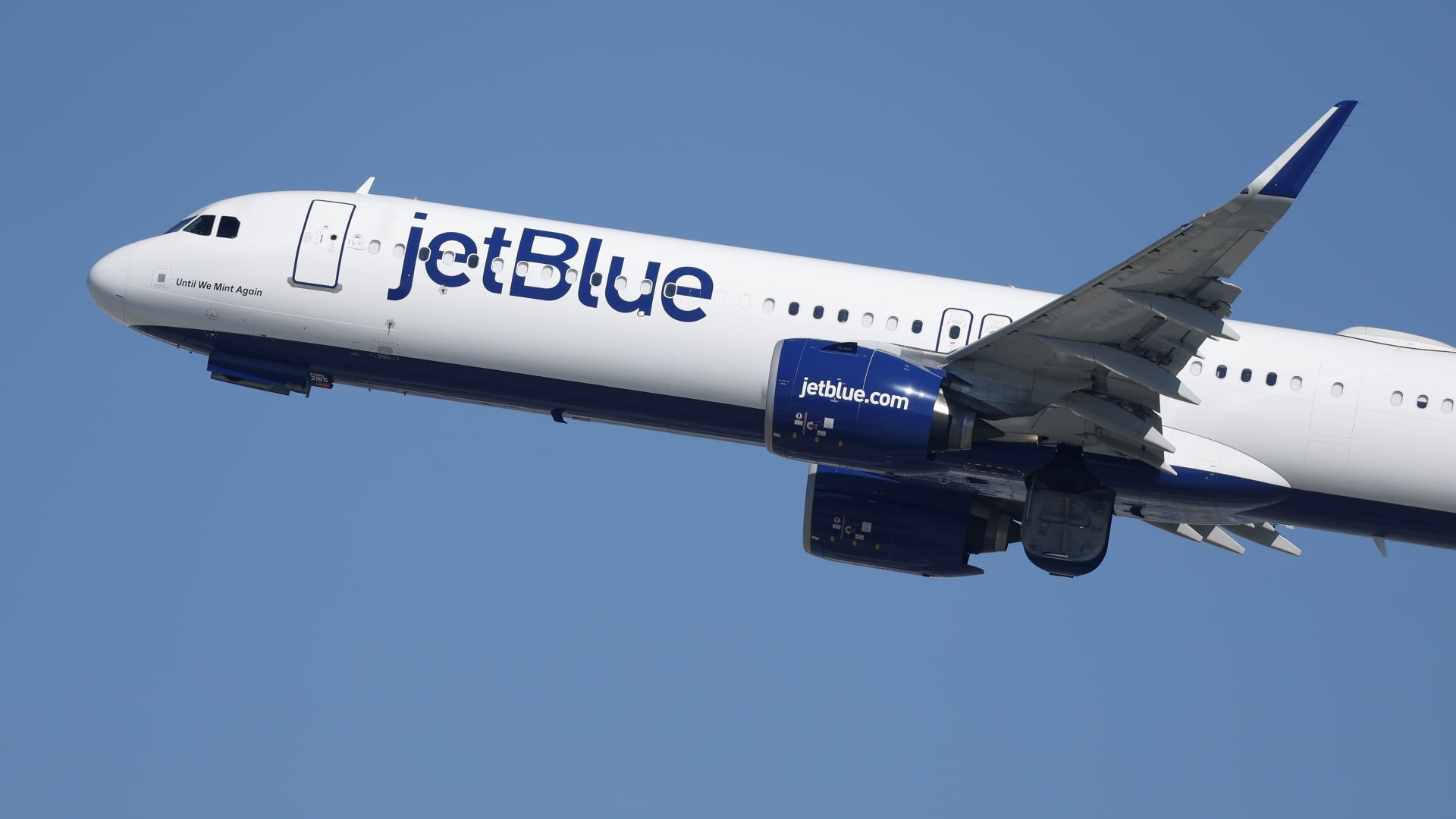
JetBlue is raising its bag fees as fuel costs squeeze airlines

JetBlue will reportedly hike its bag fees, as the cost of jet fuel continues to climb amid the war in Iran. It’s the latest example of carriers finding ways to push rising costs onto travelers.

Last week, United Airlines CEO Scott Kirby said that if fuel prices remain elevated, fares would need to rise another 20% for his airline to break even this year.

As CNBC reported, when one airline raises fees, others tend to follow.

Earlier this month, JetBlue hiked its first-quarter outlook for operating revenue per seat mile to between 5% and 7%, saying that strong Q1 demand helped “partially offset additional expenses realized from operational disruptions and rising fuel costs.” Now, the carrier appears to be making moves to further boost revenue to offset those costs.

Earlier on Monday, JetBlue rival Alaska Air lowered its Q1 profit forecast. The refining margins for the carrier’s cheapest fuel option — sourced from Singapore and representing about 20% of Alaska’s overall supply — have spiked 400% since February.

JetBlue did not immediately respond to a request for comment.

As CNBC reported, when one airline raises fees, others tend to follow.

Earlier this month, JetBlue hiked its first-quarter outlook for operating revenue per seat mile to between 5% and 7%, saying that strong Q1 demand helped “partially offset additional expenses realized from operational disruptions and rising fuel costs.” Now, the carrier appears to be making moves to further boost revenue to offset those costs.

Earlier on Monday, JetBlue rival Alaska Air lowered its Q1 profit forecast. The refining margins for the carrier’s cheapest fuel option — sourced from Singapore and representing about 20% of Alaska’s overall supply — have spiked 400% since February.

JetBlue did not immediately respond to a request for comment.

business

Netflix is hiking its prices again

Netflix is raising its subscription prices for the fourth time in four years, a move first spotted by Android Authority.

Per Netflix’s US pricing page, the cost of an ad-supported plan is climbing $1 to $8.99 per month, while the cost of a standard ad-free plan is going up $2 to $19.99 per month. The premium tier has also risen $2 to $26.99 per month.

The streamer last raised its subscription costs more than a year ago in January 2025. It also hiked prices in 2023, 2022, 2020, and 2019. Netflix shares climbed about 2% on the news.

“Our approach remains the same: we continue offering a range of prices and plans to meet a variety of needs, and as we deliver more value to our members we are updating our prices to enable us to reinvest in quality entertainment and improve their experience by updating our prices,” said a Netflix spokesperson, in a statement to Sherwood News.

The streamer last raised its subscription costs more than a year ago in January 2025. It also hiked prices in 2023, 2022, 2020, and 2019. Netflix shares climbed about 2% on the news.

“Our approach remains the same: we continue offering a range of prices and plans to meet a variety of needs, and as we deliver more value to our members we are updating our prices to enable us to reinvest in quality entertainment and improve their experience by updating our prices,” said a Netflix spokesperson, in a statement to Sherwood News.

Latest Stories

Sherwood Media, LLC produces fresh and unique perspectives on topical financial news and is a fully owned subsidiary of Robinhood Markets, Inc., and any views expressed here do not necessarily reflect the views of any other Robinhood affiliate, including Robinhood Markets, Inc., Robinhood Financial LLC, Robinhood Securities, LLC, Robinhood Crypto, LLC, Robinhood Derivatives, LLC, or Robinhood Money, LLC. Futures and event contracts are offered through Robinhood Derivatives, LLC.