


Estée Lauder’s Jo Malone is launching an “AI Scent Advisor” to convince people to buy perfumes without smelling them
Gen Z is driving a perfume and fragrance boom.
Gen Z is driving something of a fragrance boom at the moment, and Estée Lauder is looking to continue cashing in by debuting an “AI Scent Advisor,” developed with Google Cloud, that it hopes will convince online shoppers to spend north of $100 on fragrances through a chatbot conversation that tries to capture the intangible experience of smelling. Perhaps a dream-come-true moment for the so-called “frag heads” who look for seriously unique scents to match bizarre situations, or even memes.
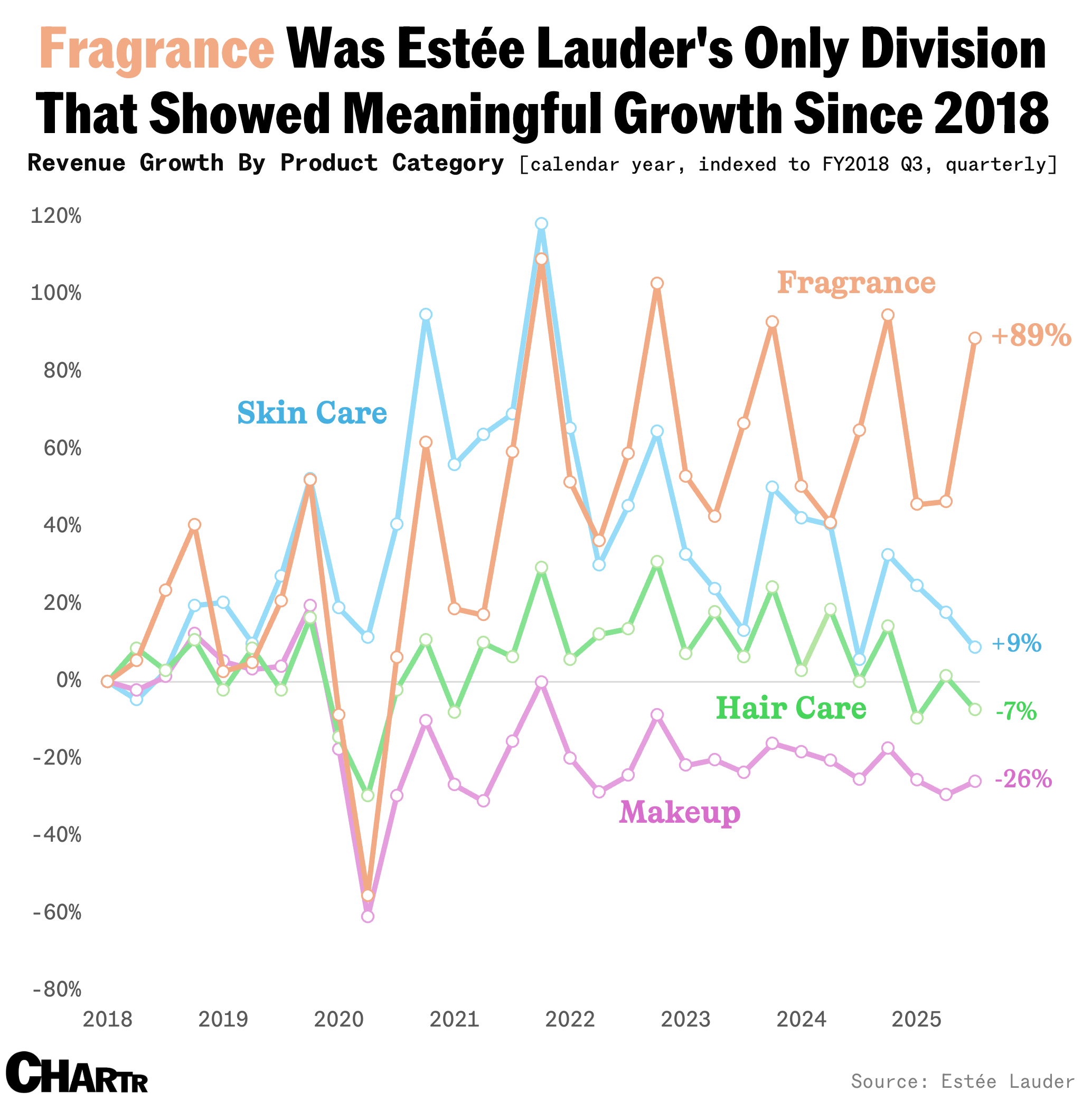
The launch of the AI scent stylist gives another avenue for Estée Lauder to grow its stable of fragrance and perfume brands — a roster that includes Tom Ford, Frederic Malle, Le Labo, and Kilian. Indeed, the debut marks a pivotal step for a company that was late to go all in on online retail, but has been catching up quickly, with its fragrance division now the company’s fastest-growing segment, growing its sales 14.4% year on year as of the latest quarter.

In fact, it’s the only division of the 79-year-old company that has managed constant, meaningful growth for the past few years, with fragrances notching an 89% jump in net sales since the first three months of 2018 — even as the wider beauty industry slumped.
Smells like teen spirit
Fragrance’s digital focus is not new: Spanish beauty giant Puig, whose fragrance and fashion segment, with labels like Carolina Herrera and Byredo, accounts for 73% of its entire business, is also doubling down on the visual appeal of perfume to attract younger consumers online. Last year, 26% of Puig’s revenues came from digital channels, more than the company had anticipated five years ago, thanks to the brand’s film-like marketing strategy… and teenage boys who became “obsessed with fragrance” through TikTok, in CEO Marc Puig’s words.
In fact, it’s very much not just girls driving the growth for the latest hype, too — annual fragrance spending reportedly jumped some 44% for teenage boys last year, per Piper Sandler research. And thanks to increasingly popular review websites like Fragrantica and big perfume houses’ push for visual focus and greater exposure in TikTok shops, many of these new, younger consumers love to “blind buy,” buying fragrances without even smelling them.
Teens wanting to be unique and special is certainly not a new thing, but in the perfumery world, that youthful desire, combined with new terms and trends like “scent layering” and “smellmaxxing” (meaning enhancing one’s own body scent, if you had to google), translates into, well, a lot of money.



