

Faking your influencer status just got way more expensive
The FTC's new rule outlines heavy penalties for folks who buy fake engagement on their social media accounts.
Most headlines about the Federal Trade Commission (FTC) over the past few years have involved the agency suing to block big tech acquisitions (see here, here, and here). However, preventing anticompetitive business practices is only part of their job description.
Per the FTC’s website, the mission of the FTC is “to prevent business practices that are anticompetitive or deceptive or unfair to consumers; to enhance informed consumer choice and public understanding of the competitive process; and to accomplish this without unduly burdening legitimate business activity.”
Earlier today, my colleague Jon Keegan highlighted excellent news from the CFTC on the “deceptive to consumers” front: The FTC today announced a final rule that will combat fake reviews and testimonials by prohibiting their sale or purchase and allowing the agency to seek civil penalties against knowing violators, with civil penalties of up to $51,744 per violation.
The new rule prohibits six actions, the first five of which are related to manipulation of reviews:
Fake or false consumer reviews, consumer testimonials, or celebrity testimonials
Buying positive or negative reviews
Insider reviews and consumer testimonials
Company-controlled review websites
Review suppression
However, it’s the sixth rule that I find the most interesting:
Misuse of fake social media indicators
The FTC further defined “fake social media indicators” as such:
It is an unfair or deceptive act or practice and a violation of this part for anyone to:
(a) sell or distribute fake indicators of social media influence that they knew or should have known to be fake and that can be used by individuals or businesses to materially misrepresent their influence or importance for a commercial purpose; or
(b) purchase or procure fake indicators of social media influence that they knew or should have known to be fake and that materially misrepresent their influence or importance for a commercial purpose.
One of the more annoying parts of social media is the existence of “influencers” who purchase fake followers to mislead their actual audiences and/or deceive potential business partners for financial gain. For example, showing that you have 1.2 million “followers” on Instagram, while maybe 100,000 of those are real people, for the sake of landing sponsorship deals or speaking engagements, or using Twitter bots to amplify your content to mislead other users on your reach, validity or influence.
Punishment for these bad actors has been long-overdue, and it’s interesting that the FTC emphasized that it can seek civil penalties against violators, adding teeth to the rule:
As an additional benefit, the rule will enable the Commission to seek civil penalties against violators. Without an efficient way to seek civil penalties, bad actors have little fear of being penalized for using fraud and deception in connection with reviews and endorsements. Increased deterrence will have consumer welfare benefits and will benefit honest competition. Moreover, the final rule is likely to impose relatively small compliance costs on honest businesses.
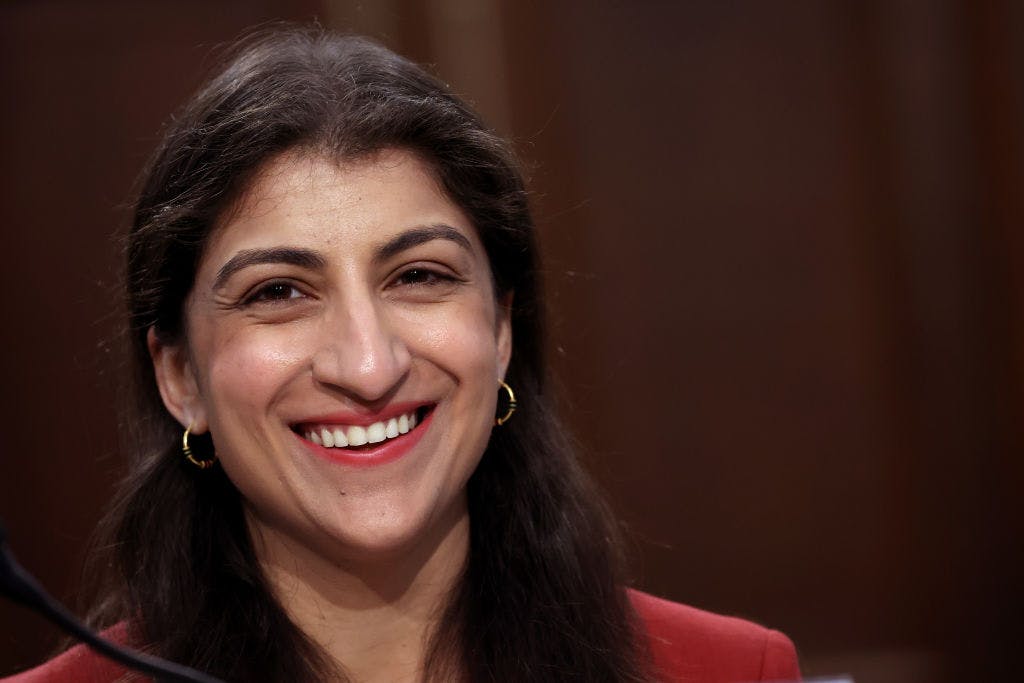
Basically, if you get caught cheating the system, the consequences could be expensive. Huge W for Lina Khan — the internet thanks you.



