Business
Kohl’s
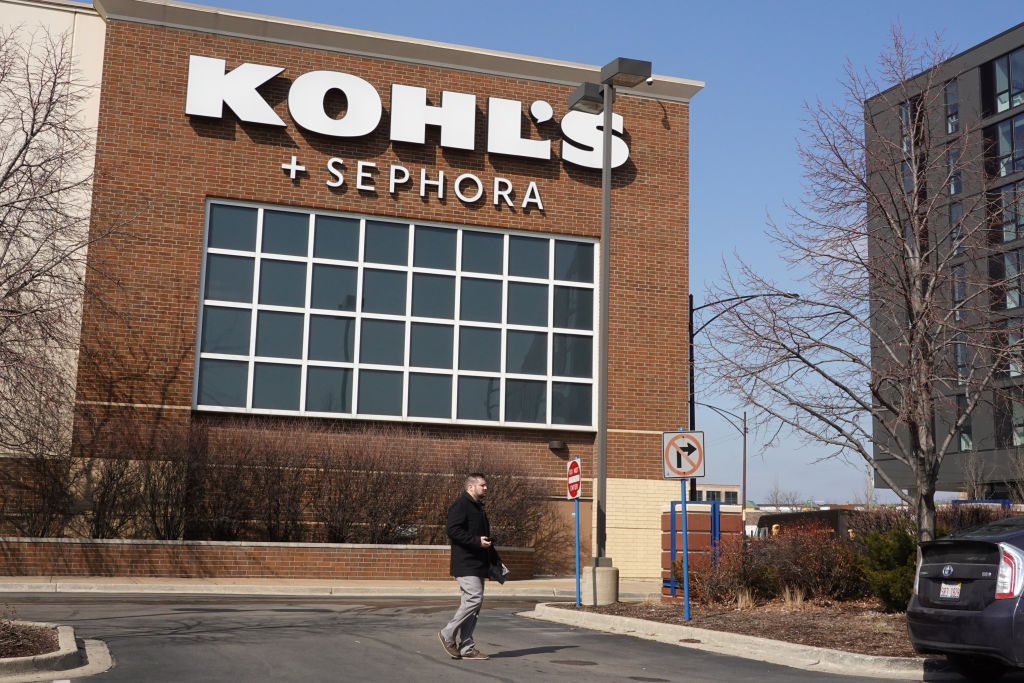
(Photo by Scott Olson/Getty Images)
Sale

Turns out the activist investors didn’t have the secret sauce for Kohl’s

Nate Becker

Kohl’s stock tanked today after it slashed guidance and doled out a lackluster earnings report. That’s surely not pleasing to any of its investors, but it’s an especially bad look for the activists who started shaking things up at the department store company in 2021.

Back then, Kohl’s struck a deal with a handful of activist investors you probably haven’t heard of (Macellum Advisors, Ancora Holdings, Legion Partners, and 4010 Capital) after they agitated for change. The company agreed to add two of their hand-picked directors to the board, as well as a mutually agreed upon third director. (One of the activists’ picks retired just this month.)

In mid-2022, Kohl’s tried to sell itself to the owner of Vitamin Shoppe for around $8 billion, but the talks fell apart. Then in late 2022, Ancora ramped up the pressure, seeking even more directors and trying to remove Kohl’s CEO, Michelle Gass, who soon left to become the CEO-in-waiting at Levi Strauss. Tom Kingsbury, one of the directors the activists had picked, took over as Kohl’s CEO. 

One of the main concerns the activists had from the start was that Kohl’s wasn’t moving fast enough to address stagnant sales and declining operating margins, The Wall Street Journal reported at the time

Turns out, that’s still a problem. In today’s earnings report, revenue and profit fell short of analysts’ estimates, with overall sales sliding 5.3% and same-store sales dropping 4.4%. Operating margin dropped to 1.4% from 2.9%, and the company lowered its operating margin forecast for the year. 

In response, the stock dropped 23% on Thursday. That put it at $21.02, which is about 60% lower than where it was trading when reports of the activists’ presence surfaced. 

Of course, it’s tough to pinpoint prices at which activist investors buy and sell stocks, so it’s possible they made money on their investments. The firms combined to control about 9.5% of Kohl’s in 2021, according to reports at the time. Bloomberg data show Ancora owned about 1.4% of the stock at the end of the first quarter this year. Macellum, meanwhile, slashed its position dramatically in the first quarter and owned just 0.2% as of quarter end. Legion and 4010 exited the stock by the end of 2021 and middle of 2022, respectively. 

But two of their three picks still sit on the board — one of them at the helm of the company — and their ideas certainly didn’t light a fire under the stock price for the long term, or in some cases, couldn’t gain traction with shareholders.

In Kohl’s earnings presentation Thursday, Kingsbury said the results “did not meet our expectations and are not reflective of the direction we are heading with our strategic initiatives.”

Gass, Kohl’s former CEO, may get the last laugh: She took over running Levi’s from longtime CEO Chip Bergh in January, and the stock is up 44% so far this year. Kohl’s, meanwhile, is down 25%.

More Business

See all Business
The entrance of Allbirds seen from Hayes St. in San Francisco, Calif.

Allbirds, the once buzzy multibillion-dollar sneaker startup, is selling up for $39 million

That’s less than 1% of its peak market cap about four years ago.

business

JetBlue is raising its bag fees as fuel costs squeeze airlines

JetBlue will reportedly hike its bag fees, as the cost of jet fuel continues to climb amid the war in Iran. It’s the latest example of carriers finding ways to push rising costs onto travelers.

Last week, United Airlines CEO Scott Kirby said that if fuel prices remain elevated, fares would need to rise another 20% for his airline to break even this year.

As CNBC reported, when one airline raises fees, others tend to follow.

Earlier this month, JetBlue hiked its first-quarter outlook for operating revenue per seat mile to between 5% and 7%, saying that strong Q1 demand helped “partially offset additional expenses realized from operational disruptions and rising fuel costs.” Now, the carrier appears to be making moves to further boost revenue to offset those costs.

Earlier on Monday, JetBlue rival Alaska Air lowered its Q1 profit forecast. The refining margins for the carrier’s cheapest fuel option — sourced from Singapore and representing about 20% of Alaska’s overall supply — have spiked 400% since February.

JetBlue did not immediately respond to a request for comment.

As CNBC reported, when one airline raises fees, others tend to follow.

Earlier this month, JetBlue hiked its first-quarter outlook for operating revenue per seat mile to between 5% and 7%, saying that strong Q1 demand helped “partially offset additional expenses realized from operational disruptions and rising fuel costs.” Now, the carrier appears to be making moves to further boost revenue to offset those costs.

Earlier on Monday, JetBlue rival Alaska Air lowered its Q1 profit forecast. The refining margins for the carrier’s cheapest fuel option — sourced from Singapore and representing about 20% of Alaska’s overall supply — have spiked 400% since February.

JetBlue did not immediately respond to a request for comment.

business

Netflix is hiking its prices again

Netflix is raising its subscription prices for the fourth time in four years, a move first spotted by Android Authority.

Per Netflix’s US pricing page, the cost of an ad-supported plan is climbing $1 to $8.99 per month, while the cost of a standard ad-free plan is going up $2 to $19.99 per month. The premium tier has also risen $2 to $26.99 per month.

The streamer last raised its subscription costs more than a year ago in January 2025. It also hiked prices in 2023, 2022, 2020, and 2019. Netflix shares climbed about 2% on the news.

“Our approach remains the same: we continue offering a range of prices and plans to meet a variety of needs, and as we deliver more value to our members we are updating our prices to enable us to reinvest in quality entertainment and improve their experience by updating our prices,” said a Netflix spokesperson, in a statement to Sherwood News.

The streamer last raised its subscription costs more than a year ago in January 2025. It also hiked prices in 2023, 2022, 2020, and 2019. Netflix shares climbed about 2% on the news.

“Our approach remains the same: we continue offering a range of prices and plans to meet a variety of needs, and as we deliver more value to our members we are updating our prices to enable us to reinvest in quality entertainment and improve their experience by updating our prices,” said a Netflix spokesperson, in a statement to Sherwood News.

Latest Stories

Sherwood Media, LLC produces fresh and unique perspectives on topical financial news and is a fully owned subsidiary of Robinhood Markets, Inc., and any views expressed here do not necessarily reflect the views of any other Robinhood affiliate, including Robinhood Markets, Inc., Robinhood Financial LLC, Robinhood Securities, LLC, Robinhood Crypto, LLC, Robinhood Derivatives, LLC, or Robinhood Money, LLC. Futures and event contracts are offered through Robinhood Derivatives, LLC.