Business
Meal Deals
(Getty Images)

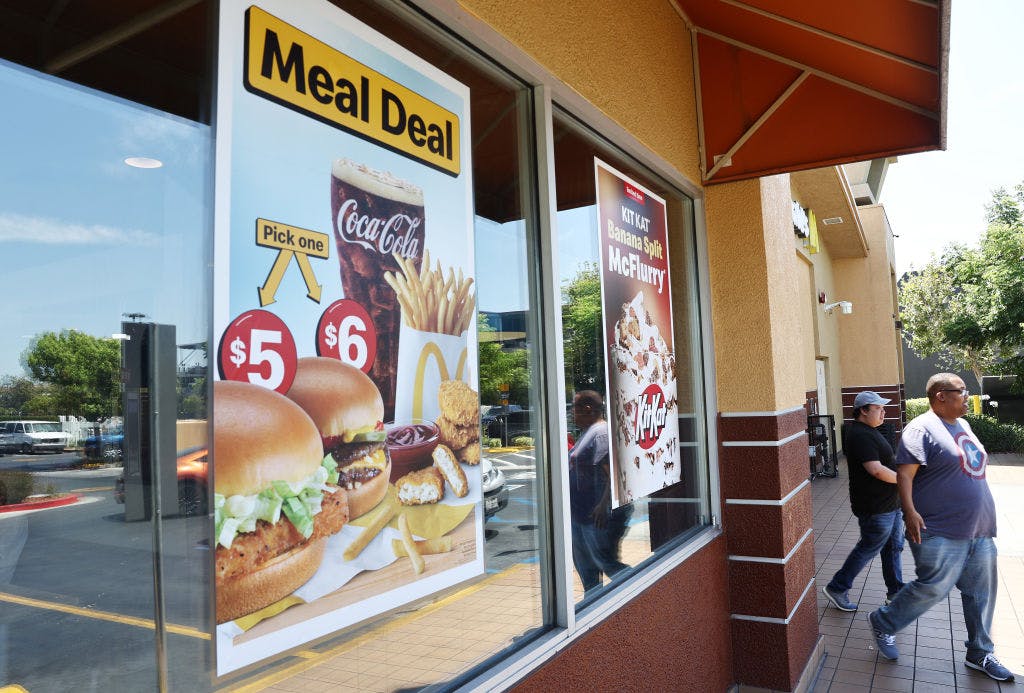
McDonald's is in a tough spot. It thinks meal deals will save it.

The fast-food chain used the word “value” at least 94 times on their earnings call as its CEO stressed the need to serve cheap food.

McDonald's is losing its grip on the American consumer. The only way it sees itself getting them back is by going back to their roots: cheap food.

The fast food chain reported disappointing earnings on Monday, missing Wall Street expectations. By some key measures, it reported its worst quarter since the start of the pandemic.

McDonald’s, like most companies that sell food, saw their costs increase with inflation over the past few years. They have passed on to consumers while increasing their margins. Price hikes allowed them to grow profits even when less people ate at McDonalds, because the people who did spent more.

But now consumers are eating out less, and when they do eat out, they don't want to feel like they're getting ripped off. "These price increases disrupted long running value programs and led consumers to reconsider their buying habits," Christopher Kempczinsk, CEO of McDonald’s, told analysts Monday morning.

Kempczinsk noted that customers don't perceive McDonald's as a "value leader" like they used to. The word "value" was used at least 94 times in the call.

"We are working to fix that with pace," he said.

The company rolled out a $5 meal deal this summer, which it reported has gotten great traction. Other chains, such as Taco Bell and Wendy's, have followed suit.

McDonald’s quarterly revenue was flat from last year, and same-store sales in the US declined by 0.7%, marking the first time that measure has declined since the beginning of pandemic-era lockdowns.

Wall Street seems either inspired by McDonald's push toward value, or unphased by the dip in sales growth, and its stock was up about 3.5% Monday morning.

More Business

See all Business
business

Texas sues Netflix, accusing streamer of spying on children and collecting user data without consent

The state of Texas filed a lawsuit Monday against streaming giant Netflix, alleging that the company has built a “behavioral-surveillance program of staggering scale.”

The suit alleges that Netflix is “deceptively designed” to be addictive, using features like autoplay to get viewers hooked, “mining those users for data, and then converting that data into lucrative intelligence for global advertising juggernauts.”

“When you watch Netflix, Netflix watches you,” the lawsuit reads.

“This lawsuit lacks merit and is based on inaccurate and distorted information,” Netflix said in a statement to Sherwood News. “Netflix takes our members’ privacy seriously and complies with privacy and data‑protection laws everywhere we operate.”

Texas is seeking civil penalties of “up to $10,000 per violation” of the Texas Deceptive Trade Practices-Consumer Protection Act, along with an additional penalty of up to $250,000 per violation involving a consumer aged 65 or older.

“Netflix is not the ad-free and kid-friendly platform it claims to be. Instead, it has misled consumers while exploiting their private data to make billions,” said Texas Attor­ney Gen­er­al Ken Pax­ton in the press release announcing the lawsuit.

Netflix did not immediately respond to a request for comment.

“This lawsuit lacks merit and is based on inaccurate and distorted information,” Netflix said in a statement to Sherwood News. “Netflix takes our members’ privacy seriously and complies with privacy and data‑protection laws everywhere we operate.”

Texas is seeking civil penalties of “up to $10,000 per violation” of the Texas Deceptive Trade Practices-Consumer Protection Act, along with an additional penalty of up to $250,000 per violation involving a consumer aged 65 or older.

“Netflix is not the ad-free and kid-friendly platform it claims to be. Instead, it has misled consumers while exploiting their private data to make billions,” said Texas Attor­ney Gen­er­al Ken Pax­ton in the press release announcing the lawsuit.

Netflix did not immediately respond to a request for comment.

business

Used car prices dip in April but remain at 2023 levels as gas prices surge

Used car prices ticked down in April, the first drop in 2026, according to fresh data from Cox Automotive.

Cox’s Manheim Used Vehicle Value Index, which tracks wholesale prices, dipped 1.6% in April from March, but remains around highs not seen since 2023 as shoppers react to surging gas prices.

“Affordability remains front and center, and that’s driving some increased demand for older vehicles... as well as changing the calculus for consumers shopping for EVs,” said Cox’s chief economist, Jeremy Robb.

As reported in March, used car retailers including CarMax have told Sherwood News that gas prices are driving more shoppers to look toward EVs. Cox’s EV index is up 7.2% from April 2025, compared to a 1.1% hike for its non-EV index.

Latest Stories

Sherwood Media, LLC produces fresh and unique perspectives on topical financial news and is a fully owned subsidiary of Robinhood Markets, Inc., and any views expressed here do not necessarily reflect the views of any other Robinhood affiliate, including Robinhood Markets, Inc., Robinhood Financial LLC, Robinhood Securities, LLC, Robinhood Crypto, LLC, Robinhood Derivatives, LLC, or Robinhood Money, LLC. Futures and event contracts are offered through Robinhood Derivatives, LLC.