
Business
Tesla's First-ever Diner And Supercharger Opens In Los Angeles
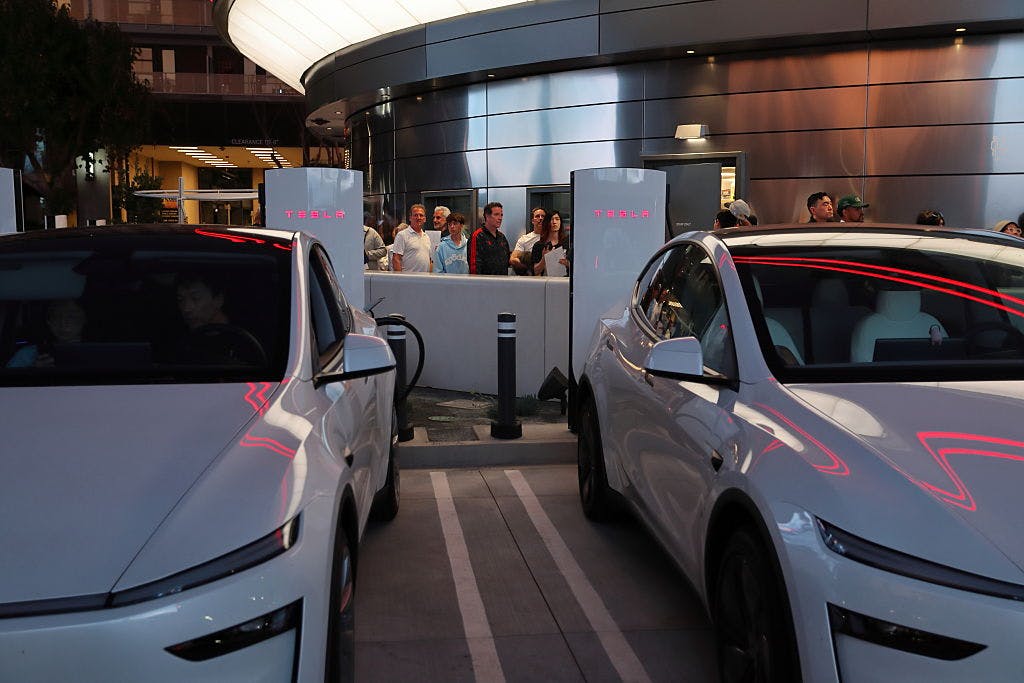
Tesla electric vehicles charge outside the Tesla Diner and Drive-In restaurant, July 21, 2025 in Los Angeles, California (Photo by I RYU/VCG via Getty Images)
service charge

Tesla’s energy business has been juicing its top line for years — but now it’s starting to slow down too

Tesla’s services business is the new bright spot, as the EV maker’s energy division dropped 7% year on year.

Claire Yubin Oh

The last time we looked into Tesla’s energy business — and all the other parts of Tesla that aren’t selling cars — the world looked very different. The company’s CEO was growing increasingly close to presidential candidate Donald Trump, automotive sales were still growing (if only just), and the company’s robotaxi and AI efforts were future upside, rather than the core narrative of the stock today.

A lot has changed and there was no clearer signal of that than the latest earnings report on Wednesday, marking one of Tesla’s worst quarters in over a decade: revenue fell 12% year on year in Q2, including a 16% drop in automobile revenue.

With its traditional car-making business struggling with the rise of stronger rivals, deteriorating brand equity, and escalating tensions with President Trump, more investor focus is on the et cetera part of the company than ever before. But with just 10 to 20 robotaxis on the ground and AI-powered humanoid robots still a long way away, those are far from contributing commercially to the company’s bottom line.

Indeed, in the latest quarter, most Tesla divisions shrunk year on year, with revenue from regulatory credits — made from selling credits to legacy automakers that manufacture gas-burning cars to avoid fines — dropping 51% from the year before.

One bright spot was the the carmaker’s services and other business. That division includes used vehicle sales and maintenance services, but the main boost appears to be down to the continued growth of Tesla’s supercharger network, which has exploded ~7x in both the number of EV charging stations and connectors since 2018.
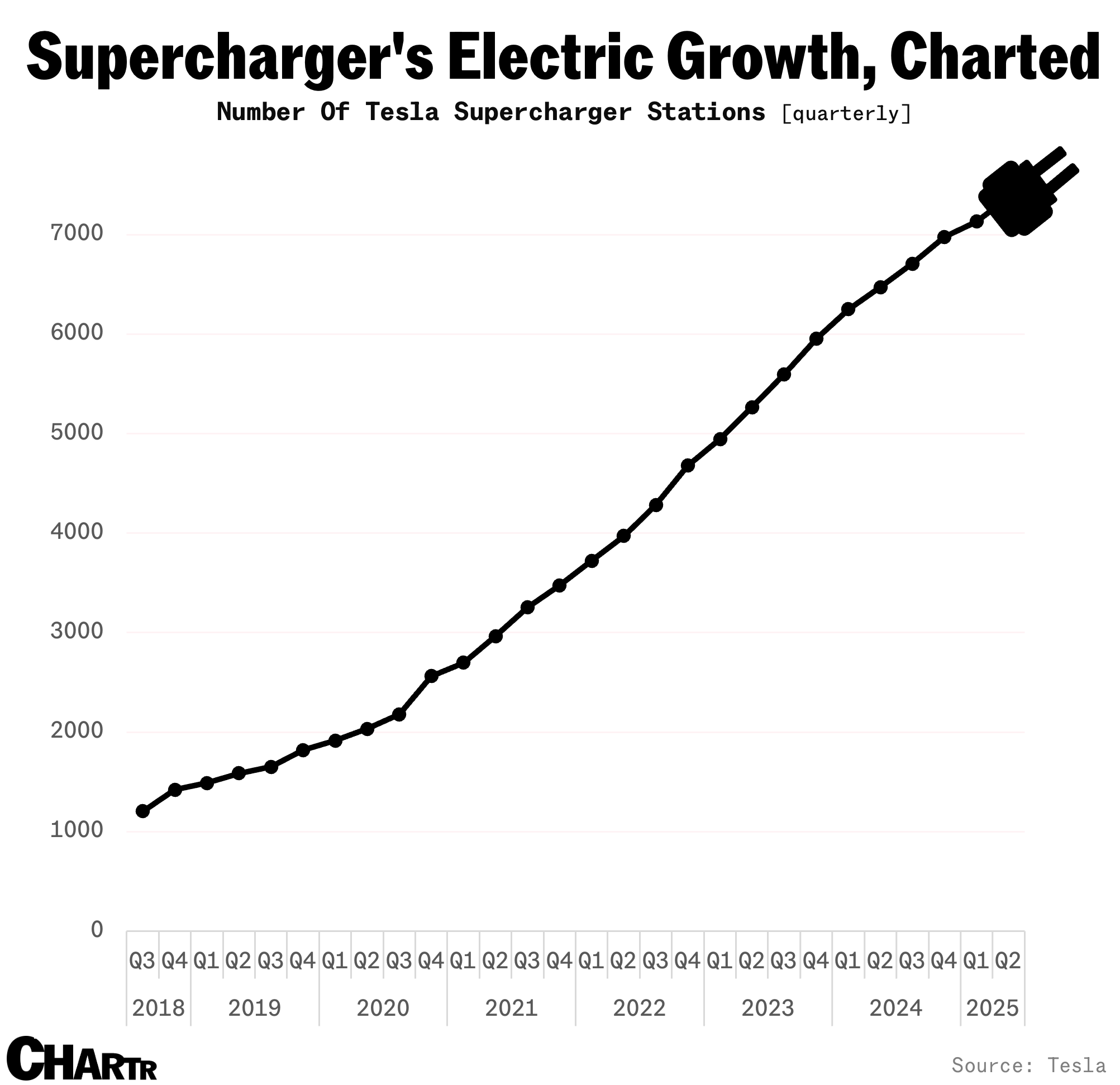
Tesla's superchargers are charging ahead
Sherwood News

As Tesla opened up the network to other brands, its been raking in more profits from non-Tesla drivers who use the superior charging facility at a cost, per a recent customer satisfaction survey of EV drivers.

That reversal of fortunes is particularly interesting, especially when looking at Tesla’s services division side-by-side with the energy business, which includes its solar energy generation and energy storage offerings. While its energy division is humming along, making a record $846 million gross profit this quarter, it’s no longer growing like wildfire as it was a year ago, back when it was the fastest-growing part of the company. It actually shrunk this quarter.
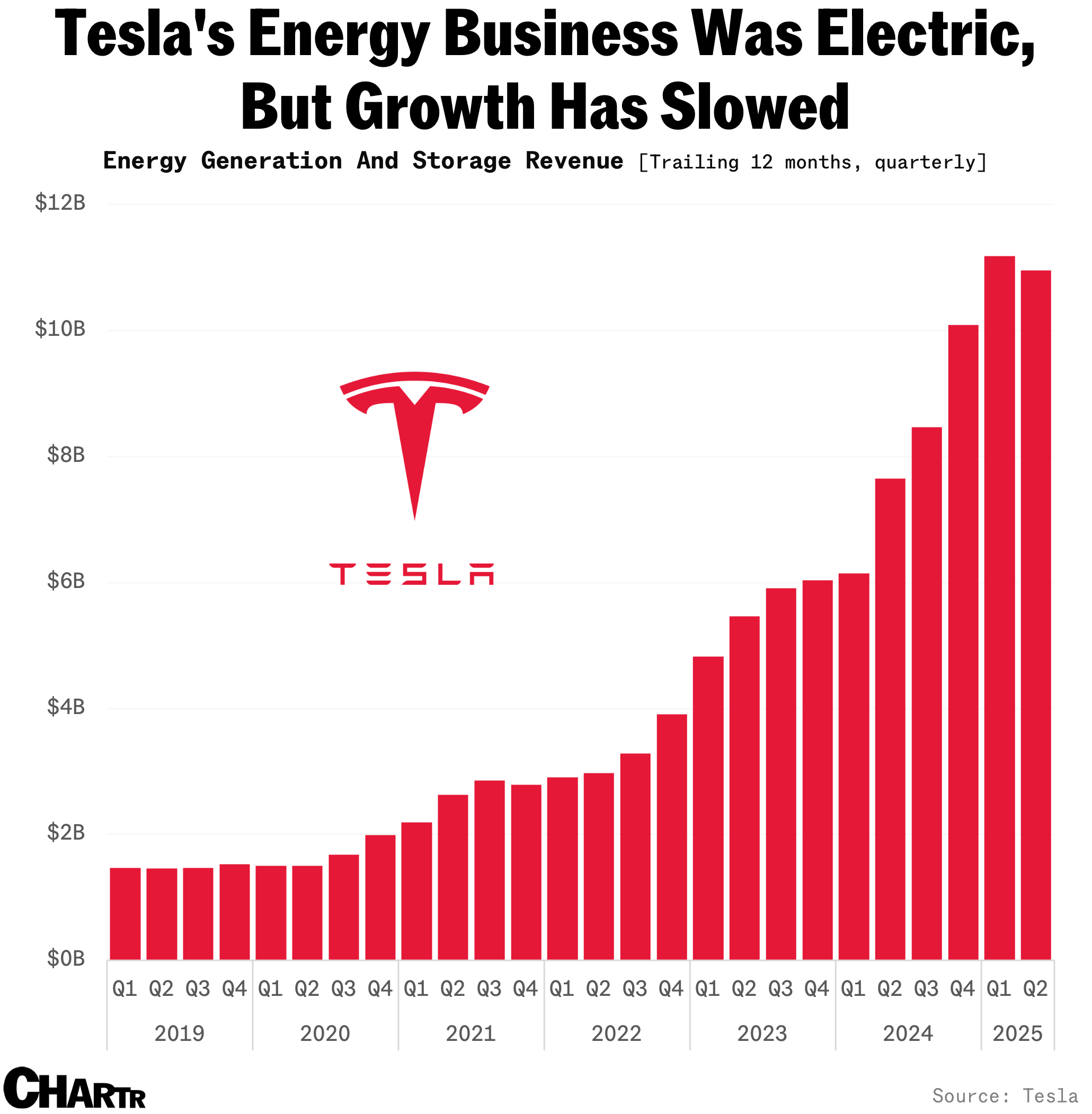
Tesla's energy business
Sherwood News

But hey, if the less sexy side hustles are working well, they might be worth doubling down on. Maybe in a few years time we’ll be writing about the billions that Tesla’s new diner division is raking in?

More Business

See all Business
The entrance of Allbirds seen from Hayes St. in San Francisco, Calif.

Allbirds, the once buzzy multibillion-dollar sneaker startup, is selling up for $39 million

That’s less than 1% of its peak market cap about four years ago.

Tom Jones3/31/26
business

JetBlue is raising its bag fees as fuel costs squeeze airlines

JetBlue will reportedly hike its bag fees, as the cost of jet fuel continues to climb amid the war in Iran. It’s the latest example of carriers finding ways to push rising costs onto travelers.

Last week, United Airlines CEO Scott Kirby said that if fuel prices remain elevated, fares would need to rise another 20% for his airline to break even this year.

As CNBC reported, when one airline raises fees, others tend to follow.

Earlier this month, JetBlue hiked its first-quarter outlook for operating revenue per seat mile to between 5% and 7%, saying that strong Q1 demand helped “partially offset additional expenses realized from operational disruptions and rising fuel costs.” Now, the carrier appears to be making moves to further boost revenue to offset those costs.

Earlier on Monday, JetBlue rival Alaska Air lowered its Q1 profit forecast. The refining margins for the carrier’s cheapest fuel option — sourced from Singapore and representing about 20% of Alaska’s overall supply — have spiked 400% since February.

JetBlue did not immediately respond to a request for comment.

As CNBC reported, when one airline raises fees, others tend to follow.

Earlier this month, JetBlue hiked its first-quarter outlook for operating revenue per seat mile to between 5% and 7%, saying that strong Q1 demand helped “partially offset additional expenses realized from operational disruptions and rising fuel costs.” Now, the carrier appears to be making moves to further boost revenue to offset those costs.

Earlier on Monday, JetBlue rival Alaska Air lowered its Q1 profit forecast. The refining margins for the carrier’s cheapest fuel option — sourced from Singapore and representing about 20% of Alaska’s overall supply — have spiked 400% since February.

JetBlue did not immediately respond to a request for comment.

Latest Stories

Sherwood Media, LLC produces fresh and unique perspectives on topical financial news and is a fully owned subsidiary of Robinhood Markets, Inc., and any views expressed here do not necessarily reflect the views of any other Robinhood affiliate, including Robinhood Markets, Inc., Robinhood Financial LLC, Robinhood Securities, LLC, Robinhood Crypto, LLC, Robinhood Derivatives, LLC, or Robinhood Money, LLC. Futures and event contracts are offered through Robinhood Derivatives, LLC.
