


After getting rejected by Zyn, Tucker Carlson says he'll start his own brand
Tucker Carlson, the former Fox News host, said he will release his own brand of nicotine pouches after a kerfuffle with the maker of Zyn, the largest brand in the US.
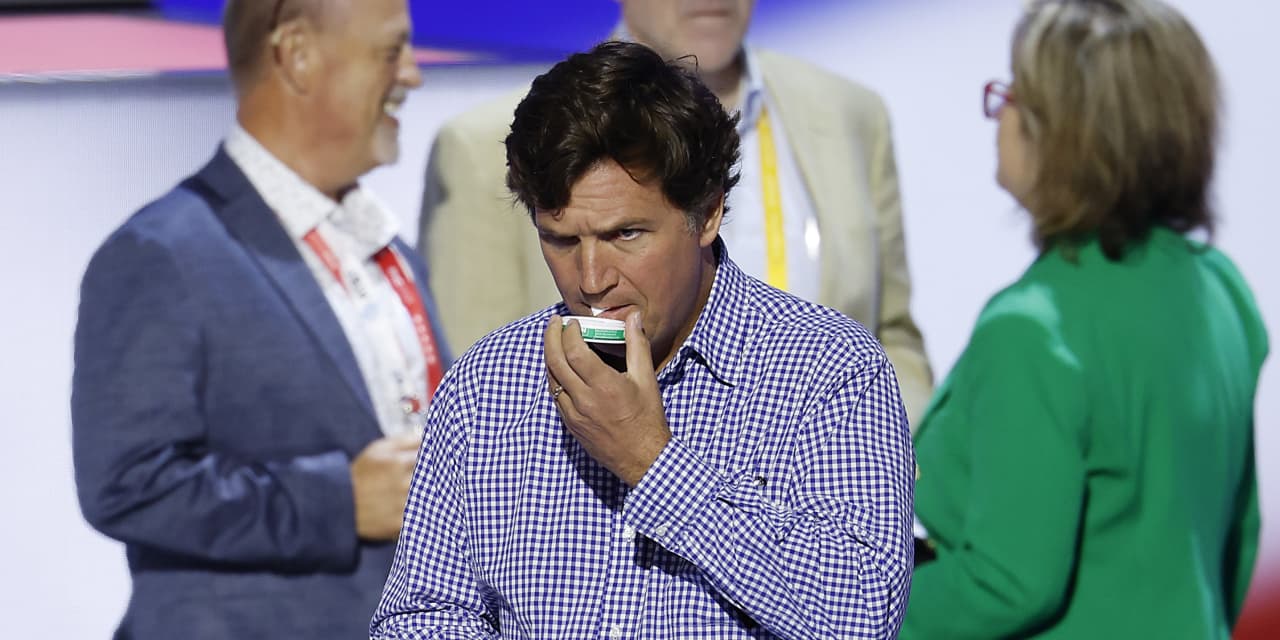
Carlson was a big fan of Zyn, so much so that he once said that he uses it “every second I’m awake.” As an unpaid promoter for Zyn, he led a growing right-wing, hypermasculine obsession for nicotine pouches.
But his enthusiasm for the brand was so strong that it came with unfounded claims that it can treat erectile dysfunction, among other things. Philip Morris International, a legacy tobacco company that knows a thing or two about strict Food and Drug Administration rules on its industry, pushed back on Carlson’s statements, saying they “lack a scientific foundation.”
Carlson told the Journal that he was “just joking” when he made those claims. He then announced that he would start his own brand, Alp, in November.
In an interview with the social media account Old Row, he said he was “embarrassed” that he used Zyn. He noted that Phillip Morris donates to Kamala Harris, the Democratic presidential nominee. (It has in fact donated $18,200 to her campaign.)
“It's good for your girlfriend, or whatever," Carlson said of Zyn. "I don’t think men should use that brand."
Using masculinity to market a product that isn't obviously gendered isn't new (See: Dude Wipes). But tobacco products require an FDA marketing order in order to be sold in stores. Even if Carlson secures one for Alp by November, the FDA takes unfounded medical claims pretty seriously, which is why Phillip Morris distanced itself from Carlson in the first place.
And with an army of masculinity-obsessed young men behind his product, what could go wrong?

But his enthusiasm for the brand was so strong that it came with unfounded claims that it can treat erectile dysfunction, among other things. Philip Morris International, a legacy tobacco company that knows a thing or two about strict Food and Drug Administration rules on its industry, pushed back on Carlson’s statements, saying they “lack a scientific foundation.”
Carlson told the Journal that he was “just joking” when he made those claims. He then announced that he would start his own brand, Alp, in November.
In an interview with the social media account Old Row, he said he was “embarrassed” that he used Zyn. He noted that Phillip Morris donates to Kamala Harris, the Democratic presidential nominee. (It has in fact donated $18,200 to her campaign.)
“It's good for your girlfriend, or whatever," Carlson said of Zyn. "I don’t think men should use that brand."
Using masculinity to market a product that isn't obviously gendered isn't new (See: Dude Wipes). But tobacco products require an FDA marketing order in order to be sold in stores. Even if Carlson secures one for Alp by November, the FDA takes unfounded medical claims pretty seriously, which is why Phillip Morris distanced itself from Carlson in the first place.
And with an army of masculinity-obsessed young men behind his product, what could go wrong?

