Business
Cosmic capitalism: Branson pulls funding on Virgin Galactic

Cosmic capitalism: Branson pulls funding on Virgin Galactic

Moonshots

After NASA’s founding in 1958, the elusive idea of “the future” looked to many like robot cleaners, flying cars, and taking in the vistas of outer space on your commute. Just 11 years later, one giant leap towards that vision was taken — when man first visited the moon — but, for many decades after the lunar expeditions, progress in space was more small steps than giant leaps.

Recently, however, space travel has been blasting back into the headlines, as private enterprise has taken up the mantle of exploration, with trips to space, zero-gravity experiences, and even a space hotel just some of the projects underway. At the forefront of space tourism are billionaires Bezos, Musk and Branson, with ‘cosmic one-upmanship’ peaking in 2021 amidst competing launches, massive PR pushes, and celebrity-packed flight crews.

Cosmic capitalism

These endeavors promise a bright future for humans in space, with commercial and scientific interests briefly aligning, upending the government-funded model that defined the previous century. But, much like the US government discovered in the 1960s… space travel requires almost infinitely deep pockets — and some billionaires have had enough of pouring their capital into a black hole.

Feeling the weight

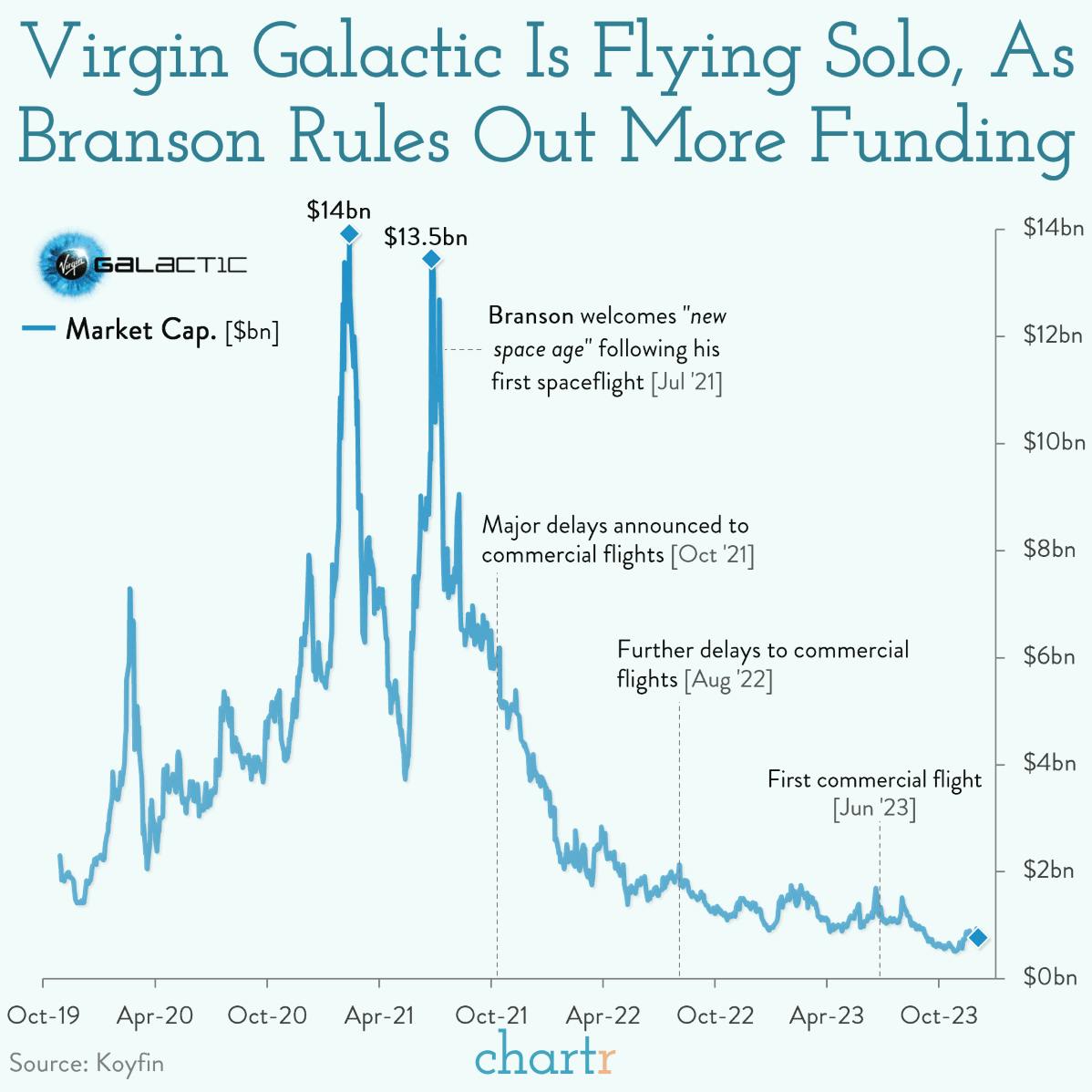
Indeed, only a month after laying off 18% of its workforce, Sir Richard Branson announced last week that Virgin Group will no longer be investing in Virgin Galactic. That was a big blow to the company which had finally flown its first commercial customers in June; a launch that took 3 tourists, including a mother-daughter duo, to the edge of space, where they experienced a few minutes of weightlessness.

Branson’s pullback sent Virgin Galactic shares tumbling on Monday, and although they've since recovered some of that fall, the stock remains down 44% in the last 6 months, and a whopping 96% from its peak in 2021. Even at $450k per ticket, Virgin Galactic has a very long mission to making any kind of profit.

To put it simply, Branson’s rivals in the billionaire space race — Bezos’s BlueOrigin and Musk’s SpaceX — simply have a lot more cash, with Musk’s personal $200bn+ hoard often gaining or losing Branson’s entire net worth (~$3bn) in a single day, depending on what Tesla’s stock is doing.


More Business

See all Business
The entrance of Allbirds seen from Hayes St. in San Francisco, Calif.

Allbirds, the once buzzy multibillion-dollar sneaker startup, is selling up for $39 million

That’s less than 1% of its peak market cap about four years ago.

business

JetBlue is raising its bag fees as fuel costs squeeze airlines

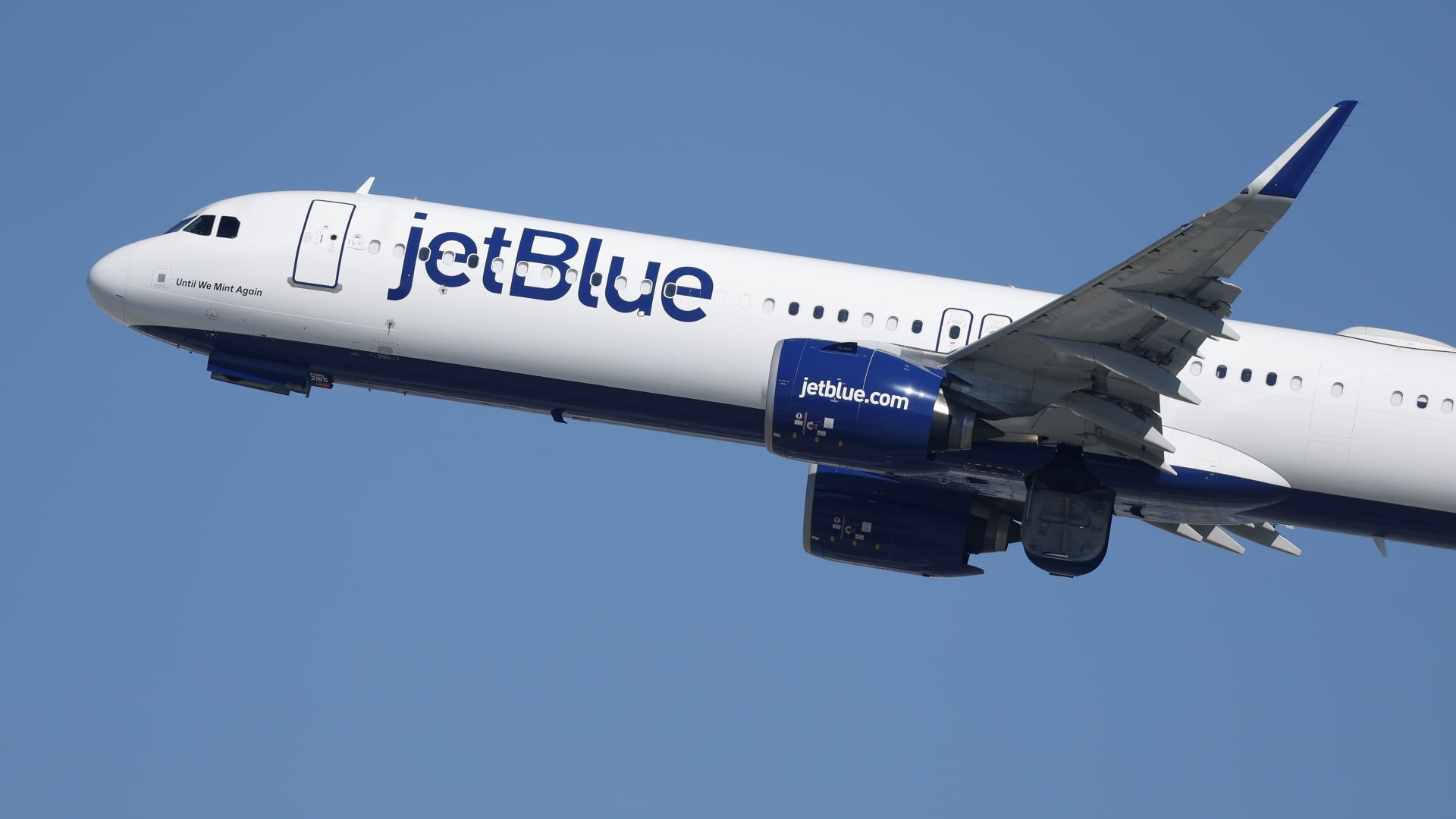
JetBlue will reportedly hike its bag fees, as the cost of jet fuel continues to climb amid the war in Iran. It’s the latest example of carriers finding ways to push rising costs onto travelers.

Last week, United Airlines CEO Scott Kirby said that if fuel prices remain elevated, fares would need to rise another 20% for his airline to break even this year.

As CNBC reported, when one airline raises fees, others tend to follow.

Earlier this month, JetBlue hiked its first-quarter outlook for operating revenue per seat mile to between 5% and 7%, saying that strong Q1 demand helped “partially offset additional expenses realized from operational disruptions and rising fuel costs.” Now, the carrier appears to be making moves to further boost revenue to offset those costs.

Earlier on Monday, JetBlue rival Alaska Air lowered its Q1 profit forecast. The refining margins for the carrier’s cheapest fuel option — sourced from Singapore and representing about 20% of Alaska’s overall supply — have spiked 400% since February.

JetBlue did not immediately respond to a request for comment.

As CNBC reported, when one airline raises fees, others tend to follow.

Earlier this month, JetBlue hiked its first-quarter outlook for operating revenue per seat mile to between 5% and 7%, saying that strong Q1 demand helped “partially offset additional expenses realized from operational disruptions and rising fuel costs.” Now, the carrier appears to be making moves to further boost revenue to offset those costs.

Earlier on Monday, JetBlue rival Alaska Air lowered its Q1 profit forecast. The refining margins for the carrier’s cheapest fuel option — sourced from Singapore and representing about 20% of Alaska’s overall supply — have spiked 400% since February.

JetBlue did not immediately respond to a request for comment.

business

Netflix is hiking its prices again

Netflix is raising its subscription prices for the fourth time in four years, a move first spotted by Android Authority.

Per Netflix’s US pricing page, the cost of an ad-supported plan is climbing $1 to $8.99 per month, while the cost of a standard ad-free plan is going up $2 to $19.99 per month. The premium tier has also risen $2 to $26.99 per month.

The streamer last raised its subscription costs more than a year ago in January 2025. It also hiked prices in 2023, 2022, 2020, and 2019. Netflix shares climbed about 2% on the news.

“Our approach remains the same: we continue offering a range of prices and plans to meet a variety of needs, and as we deliver more value to our members we are updating our prices to enable us to reinvest in quality entertainment and improve their experience by updating our prices,” said a Netflix spokesperson, in a statement to Sherwood News.

The streamer last raised its subscription costs more than a year ago in January 2025. It also hiked prices in 2023, 2022, 2020, and 2019. Netflix shares climbed about 2% on the news.

“Our approach remains the same: we continue offering a range of prices and plans to meet a variety of needs, and as we deliver more value to our members we are updating our prices to enable us to reinvest in quality entertainment and improve their experience by updating our prices,” said a Netflix spokesperson, in a statement to Sherwood News.

Latest Stories

Sherwood Media, LLC produces fresh and unique perspectives on topical financial news and is a fully owned subsidiary of Robinhood Markets, Inc., and any views expressed here do not necessarily reflect the views of any other Robinhood affiliate, including Robinhood Markets, Inc., Robinhood Financial LLC, Robinhood Securities, LLC, Robinhood Crypto, LLC, Robinhood Derivatives, LLC, or Robinhood Money, LLC. Futures and event contracts are offered through Robinhood Derivatives, LLC.