Business
Harris fundraising
(Dominic Gwinn/Getty Images)

Zoom has become a hub for Kamala Harris' fundraising efforts

...though its own financials aren't so buzzy

Tom Jones, Millie Giles

The Kamala Harris campaign has reportedly raised $200 million in just over a week, after President Biden announced he’d be dropping out of the race and endorsed his VP as the Democrat Party’s next nominee. 

Perhaps even more staggering than the amount being raised in such a brief period, though, is where a significant chunk of it has been coming from. Indeed, an arena better associated with drawn-out work calls and lockdown meet-ups is now fertile ground for political party fundraising: Zoom.

Within hours of the president confirming he’d be stepping aside, the Win With Black Women collective held a Zoom call that attracted ~40,000 users to rally around Harris, raising a whopping $1.5 million. When news of the meeting’s success caught on, a host of other Zoom calls were organized by different groups, including an apparently record-breaking online conference on Thursday, where 164,000 attendees raised a further $8.5 million for the Harris campaign — making it the “largest Zoom meeting in history”. 

Muted results

Despite its latest function as a fundraising vehicle, Zoom has struggled in recent quarters to maintain the momentum observed during its pandemic-era boom. While year-over-year revenue growth already consistently rose above 100% throughout FY 2019, and stayed relatively high in the year after, 2021 saw revenue growth expand by as much as 370% in a single quarter, as we migrated our work and social lives online.

Zoom growth
Sherwood News

However, since late 2022, the tech company’s quarterly earnings have pretty much plateaued at a not inconsiderable ~$1.1B. Politics aside, Zoom has been trying new ways to adapt to an increasingly in-person world: last October, the annual “Zoomtopia” conference announced new return-to-office mandates within the company itself to help employees develop new face-to-face collaboration products.

Correction: An earlier version of this story incorrectly stated that Zoom company revenue declined by 3% YoY in Q3 '24. This has now been amended.

More Business

See all Business
The entrance of Allbirds seen from Hayes St. in San Francisco, Calif.

Allbirds, the once buzzy multibillion-dollar sneaker startup, is selling up for $39 million

That’s less than 1% of its peak market cap about four years ago.

Tom Jones3/31/26
business

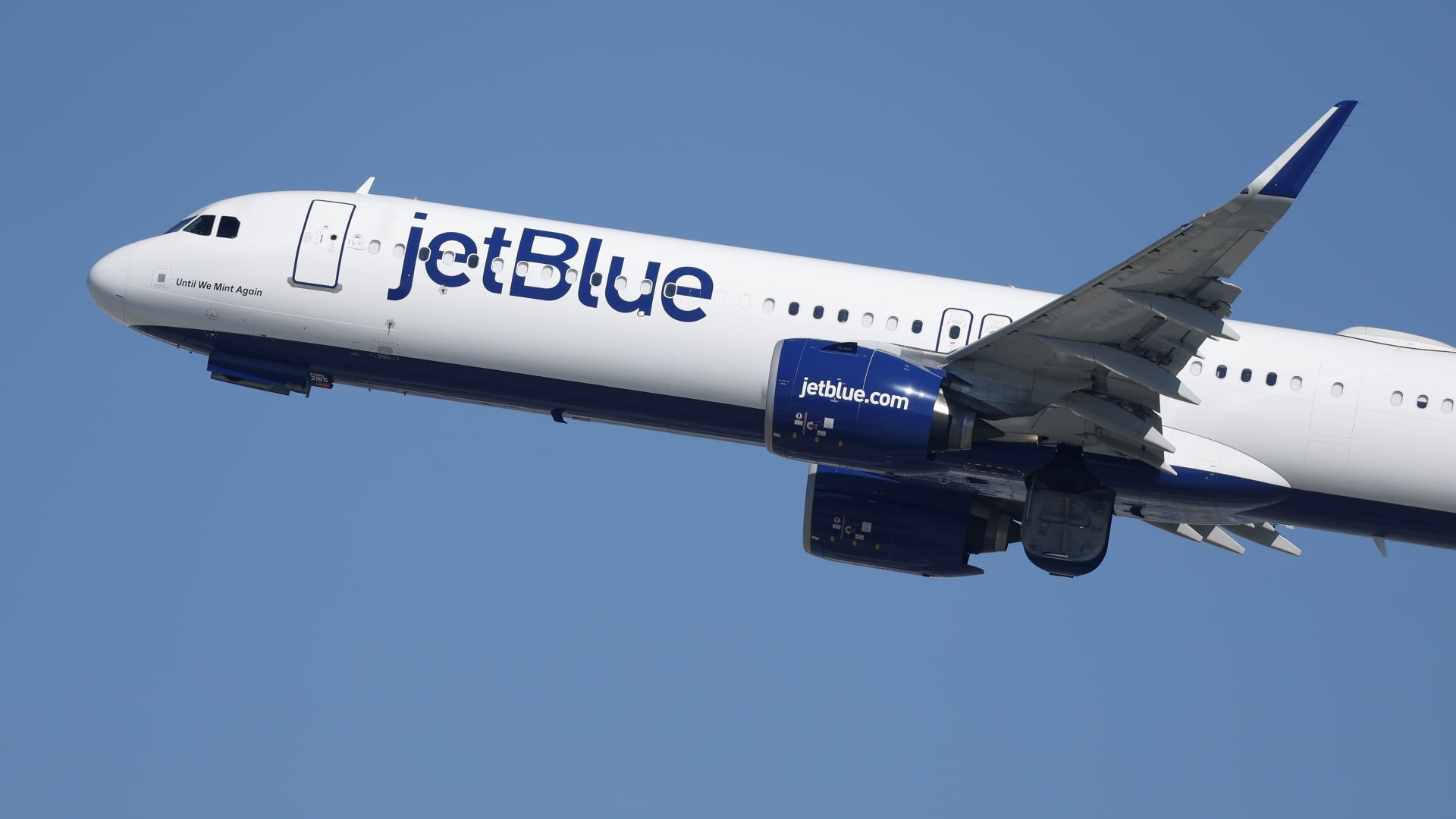
JetBlue is raising its bag fees as fuel costs squeeze airlines

JetBlue will reportedly hike its bag fees, as the cost of jet fuel continues to climb amid the war in Iran. It’s the latest example of carriers finding ways to push rising costs onto travelers.

Last week, United Airlines CEO Scott Kirby said that if fuel prices remain elevated, fares would need to rise another 20% for his airline to break even this year.

As CNBC reported, when one airline raises fees, others tend to follow.

Earlier this month, JetBlue hiked its first-quarter outlook for operating revenue per seat mile to between 5% and 7%, saying that strong Q1 demand helped “partially offset additional expenses realized from operational disruptions and rising fuel costs.” Now, the carrier appears to be making moves to further boost revenue to offset those costs.

Earlier on Monday, JetBlue rival Alaska Air lowered its Q1 profit forecast. The refining margins for the carrier’s cheapest fuel option — sourced from Singapore and representing about 20% of Alaska’s overall supply — have spiked 400% since February.

JetBlue did not immediately respond to a request for comment.

As CNBC reported, when one airline raises fees, others tend to follow.

Earlier this month, JetBlue hiked its first-quarter outlook for operating revenue per seat mile to between 5% and 7%, saying that strong Q1 demand helped “partially offset additional expenses realized from operational disruptions and rising fuel costs.” Now, the carrier appears to be making moves to further boost revenue to offset those costs.

Earlier on Monday, JetBlue rival Alaska Air lowered its Q1 profit forecast. The refining margins for the carrier’s cheapest fuel option — sourced from Singapore and representing about 20% of Alaska’s overall supply — have spiked 400% since February.

JetBlue did not immediately respond to a request for comment.

Latest Stories

Sherwood Media, LLC produces fresh and unique perspectives on topical financial news and is a fully owned subsidiary of Robinhood Markets, Inc., and any views expressed here do not necessarily reflect the views of any other Robinhood affiliate, including Robinhood Markets, Inc., Robinhood Financial LLC, Robinhood Securities, LLC, Robinhood Crypto, LLC, Robinhood Derivatives, LLC, or Robinhood Money, LLC. Futures and event contracts are offered through Robinhood Derivatives, LLC.